
“Where is Najeeb?”: Ten years on, student groups accuse agencies, administration, then JNUSU leadership of complicity in denying justice
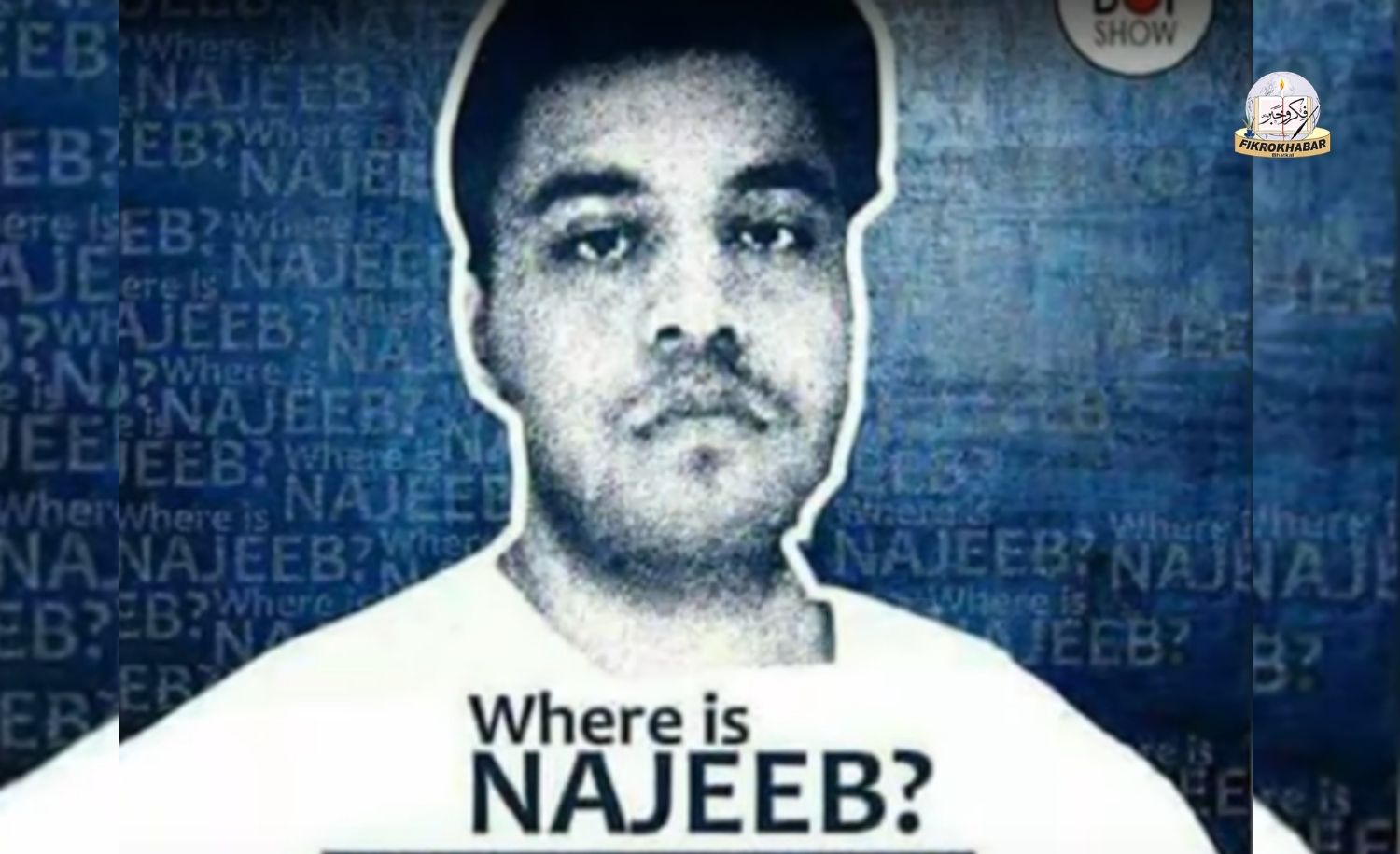

BAPSA, Fraternity Movement and MSF have called a joint “Justice for Najeeb” march at Jawaharlal Nehru University on October 14, ahead of the tenth anniversary of Najeeb Ahmad’s forced disappearance, demanding answers about his whereabouts and accountability for those responsible.
The march will begin at 9 pm from Barak Hostel and proceed to Ganga Dhaba. In a joint statement titled “Does JNU Remember Najeeb?”, the organisations accused investigating agencies, the university administration and the then left-led JNU Students’ Union leadership of contributing to the criminalisation of Najeeb and the continued denial of justice.
“Even after 10 years, the question remains, ‘Where is Najeeb?’” the statement said. “To this we must add one more, ‘Who is responsible for his forced disappearance?’ and ‘What happens to the culprits?’”
Najeeb was a first-year MSc Biotechnology student when he disappeared from the university campus on October 15. The organisations said he had been brutally assaulted by a right wing ABVP mob in the university hostel the previous night.
Describing his disappearance as a “forced disappearance”, the organisations argued that the failure to find him could not be attributed to investigating agencies alone. They alleged that the JNU administration and the then JNUSU leadership helped construct and circulate narratives that portrayed Najeeb as a culprit rather than a victim of violence.
The statement said the CBI had stated in May 2018 that it found no evidence that a crime had been committed against Najeeb. The organisations accused the then left-led students’ union of negligence and alleged active collaboration in his criminalisation.
They specifically alleged that then JNUSU president Mohit Pandey of AISA and another AISA student signed a letter to the hostel warden portraying Najeeb as a criminal, and another declaring him mentally ill. The statement said these letters initiated a narrative subsequently adopted by the JNU administration, Delhi Police and the CBI, which, it alleged, refused to recognise that a crime had taken place against him.
‘Projected him as a culprit’
The organisations said that, from the beginning, people and institutions that could have protected Najeeb, including his roommate, hostel authorities and the university administration, instead projected him as responsible for the violence. The statement also criticised media houses for contributing to this portrayal.
It alleged that those who physically attacked Najeeb spread the claim that he had initiated the violence, presenting their assault as a counter-attack and turning him into a suspect.
The organisations argued that this narrative drew on established stereotypes depicting Muslims as intolerant, prone to violence and a threat to coexistence. They said the violence against Najeeb was obscured and justified through claims that he had attacked hostel residents who had come to his room without provocation.
The statement also rejected the narrative that Najeeb had been “provoked” by the sight of a red thread on someone’s hand, describing it as an implausible claim that was circulated unchecked.
It further alleged that his roommate wrote a letter claiming to feel threatened by Najeeb’s behaviour, before later denying it on what the organisations described as “flimsy grounds”.
Together, these actions left Najeeb vulnerable and isolated in the hostel, the statement said, alleging that he faced physical assault, anti-Muslim slurs and the prospect of expulsion from the hostel.
The organisations accused the Mahi-Mandavi hostel administration and the then JNUSU leadership of identifying Najeeb as guilty instead of the students who attacked him. They also alleged that both were involved in a requisition to keep him out of his hostel.
“The then-JNUSU leadership not only branded him as guilty, but also, they hid the issue from [the] general student community of this university for the crucial period of the first forty hours,” the statement said.
Statement accuses campus leadership of Islamophobia
The organisations accused the then JNUSU leadership of displaying Islamophobia, citing alleged remarks to Muslim activists such as “Islamophobia is a jargon” and a refusal to recognise that Najeeb had faced violence because he was Muslim.
The statement also criticised the JNU Teachers’ Association, alleging that it issued no note on this aspect of the case for over a year. It said there was no attempt by the students’ union to organise a protest or solidarity meeting even after a year, arguing that Najeeb’s disappearance had been pushed out of the consciousness of much of the campus.
The organisations linked these alleged failures to a broader struggle by Muslim students to have targeted violence against them recognised and recorded.
They argued that such violence should not be treated as isolated incidents or fights between equally placed parties, but understood as part of a wider system of Islamophobia.
Despite the academic excellence associated with JNU, the statement said Muslim students had been forced to fight for their dignity and survival.
CBI, Delhi Police accused of investigative failures and anti-Muslim bias
The statement said that, despite sustained pressure, the CBI and Delhi Police had made no headway in finding Najeeb. It accused the agencies of pursuing narratives that cast suspicion on him instead of conducting a just and fair investigation.
The organisations alleged that, in the initial days after his disappearance, investigating agencies attempted to link him to “terror” outfits. According to the statement, these narratives included suggestions that he had gone to Jamia on his own, claims that he had been seen in Darbhanga, and allegations that he had joined ISIS.
The statement said the Delhi High Court rejected the ISIS-related news stories as false.
The organisations described the references to Jamia and Darbhanga as “Islamophobic dog-whistle politics”, arguing that the choice of these places drew on longstanding attempts to associate Muslim communities and locations with terrorism.
They alleged that these claims created doubt about Najeeb’s innocence and the violence he had experienced, while significantly derailing the investigation.
The statement also accused investigating agencies of having a history of framing innocent Muslim youth through intense surveillance, the seizure and hacking of personal devices, and the construction of far-fetched theories.
In Najeeb’s case, the organisations alleged that political bias and a lack of interest in a fair investigation led the agencies to promote counter-narratives rather than establish his whereabouts.
Detailing what they described as the CBI’s investigative lapses, the organisations alleged that the agency failed to conduct custodial interrogation of Najeeb’s assailants, even though a proctorial inquiry had found them guilty of violence against him.
They also alleged that the CBI failed to collect complete forensic data from the alleged attackers’ mobile phones, with three phones left unexamined because they were pattern-locked.
The statement criticised the Delhi High Court as well, alleging that it allowed the CBI to evade accountability for what the organisations called a “dereliction of duty”.
‘We are not here to simply mark this day’
The organisations argued that the continued failure to find Najeeb reflected more than institutional inability. They described it as an unwillingness by investigating agencies, the university administration and the students’ union leadership to treat marginalised people with dignity.
The statement linked the failure to trace a Muslim student to what it described as the everyday functioning of Islamophobia and the administration’s callous attitude towards the disappearance of one of its own students.
“We are not here to simply mark this day; we are certainly not here to accept the false narratives of ‘vanishing into thin air’ and ‘missing without trace’,” it said.
The organisations said justice had been persistently denied to Najeeb and to Muslims both on and outside the campus. They argued that students from oppressed castes, tribes and religious groups were vulnerable to violence even without being politically vocal, because their presence in university spaces challenged what the statement described as Brahminical and Islamophobic structures of power.
Calling for solidarity across these communities, the organisations said unity among the oppressed could challenge those structures.
They pledged to carry forward the call for justice raised by Najeeb’s mother, Fatima Nafees, and continue supporting his family in their search.
“Even in the face of stubborn injustice and apathy, it is our duty to resist. To continue to protest and demand answers from those who fear our questions about Najeeb,” the statement said.
“We owe this to Najeeb, as his fellow students from JNU. We owe this to Fatima Nafees (Najeeb’s mother) and his family in their search for Najeeb.”
This Article has Published on Maktoob Media