
When You Remember Allah, He Remembers You: A Reflection on Surah Al-Baqarah (2:152)
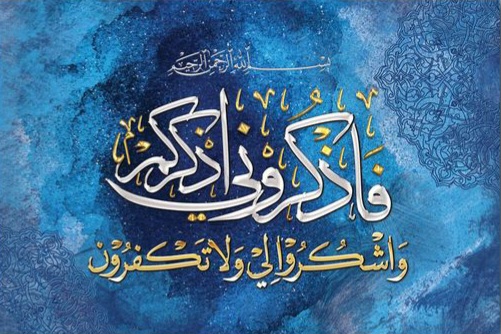

There are some ayahs we come across repeatedly in our daily lives–on our screens, in conversations, in reminders–but do we actually pause to understand what they truly mean?
One of those verses is:
“فَاذْكُرُونِي أَذْكُرْكُمْ وَاشْكُرُوا لِي وَلَا تَكْفُرُونِ”
“So remember Me; I will remember you. And be grateful to Me, and do not deny Me.” – Qur’an 2:152
More Than Words: A Personal Call
It doesn’t overwhelm you with complexity, nor does it come wrapped in long explanations.
Instead, it speaks in a way that feels direct–almost personal.
As if it’s not just a message to humanity, but a message to you.
And the more you reflect on it, the more it begins to unfold:
Not just as a command, but as an invitation into a relationship that is built on remembrance, response, and nearness.
Because what does it truly mean to remember Allah… and to be remembered by Him?
Redefining Remembrance (Dhikr)
We often think of remembrance (dhikr) as something we do in specific moments–after prayer, when we’re in distress, or when we consciously try to reconnect.
But this verse expands that idea.
It’s not about occasional remembrance; it’s about a state of being.
To remember Allah is to carry Him in your being and soul–in your thoughts, your decisions, your silences, even in the way your heart reacts to things.
“I Will Remember You” — A Promise Beyond Comprehension
And then comes the part that almost feels overwhelming:
“I will remember you.”
Not in the way humans remember each other–imperfectly, occasionally, sometimes only when reminded.
But a remembrance that is complete, intentional, and filled with mercy.
Scholars often reflect on this:
When a servant remembers Allah on earth, Allah mentions that servant in the heavens.
Imagine that for a moment–the Creator of everything, the One who knows every hidden thought and every unspoken fear, choosing to remember you.
Not because you are perfect, but because you turned to Him, even briefly.
It changes something inside you. It makes your عبادات feel less like obligations and more like conversations.
Less like rituals, and more like responses to an invitation that was always there.
Gratitude and the Subtle Forms of Forgetfulness
Then the verse continues:
“And be grateful to Me, and do not deny Me.”
Gratitude here is not just about saying Alhamdulillah when things go right.
It’s deeper than that.
It’s recognizing that even what you don’t understand carries a form of mercy.
It’s being grateful not only in ease, but in confusion, in delay, in the quiet ache of unanswered questions.
Because sometimes, denial (كفر in this context) isn’t outright rejection–it’s forgetfulness.
It’s when the heart becomes so consumed with what it lacks that it overlooks what it has.
It’s when pain makes you question the presence of Allah, even though He was always near.
A Gentle Return, Not a Harsh Reminder
This verse gently corrects that.
It brings you back–not with harshness, but with a promise.
Remember Me, and I will remember you.
There is something incredibly comforting about how the ayah begins with your action but anchors itself in Allah’s response.
It doesn’t say be perfect, and then I will remember you.
It doesn’t say earn it fully first.
It simply says:
Start.
Turn.
Remember.
Even if your remembrance is small.
Even if it’s just a whisper of “Ya Allah” in the middle of a heavy day.
Even if it’s imperfect, distracted, or incomplete.
The Ripple Effect of Reminding Others
And this is where the idea connects so beautifully–that sharing this verse with someone else carries a kind of barakah.
Because when you remind someone of Allah, you’re not just passing along words; you’re guiding a heart back to its source.
You become part of their remembrance.
And in a way, that remembrance echoes back to you.
It’s not a transactional guarantee–
“share this and your prayer will be answered.”
The Qur’an isn’t built on superstition or formulas.
But there is a deeper truth here:
when hearts are turned toward Allah, when remembrance spreads, when gratitude is revived–duas don’t remain the same.
They come from a different place.
A place of closeness.
And closeness changes everything.
When the Answer Is Transformation
Because sometimes the answer to a prayer isn’t just in what you receive–but in how your heart transforms while waiting.
This ayah teaches you that you are not unseen.
Not unheard.
Not forgotten.
In a world where people forget, where presence is inconsistent, and where even the closest relationships can feel distant–Allah offers you something constant:
You remember Me… and I will remember you.
And perhaps that is the greatest answer a heart could ever need.