
Turkman Gate Demolition Leaves Faiz e Ilahi Mosque Welfare Work in Ruins
Residents and mosque committee members say a demolition drive, arrests and violence severely disrupted healthcare and charitable services in the historic Shahjahanabad area.
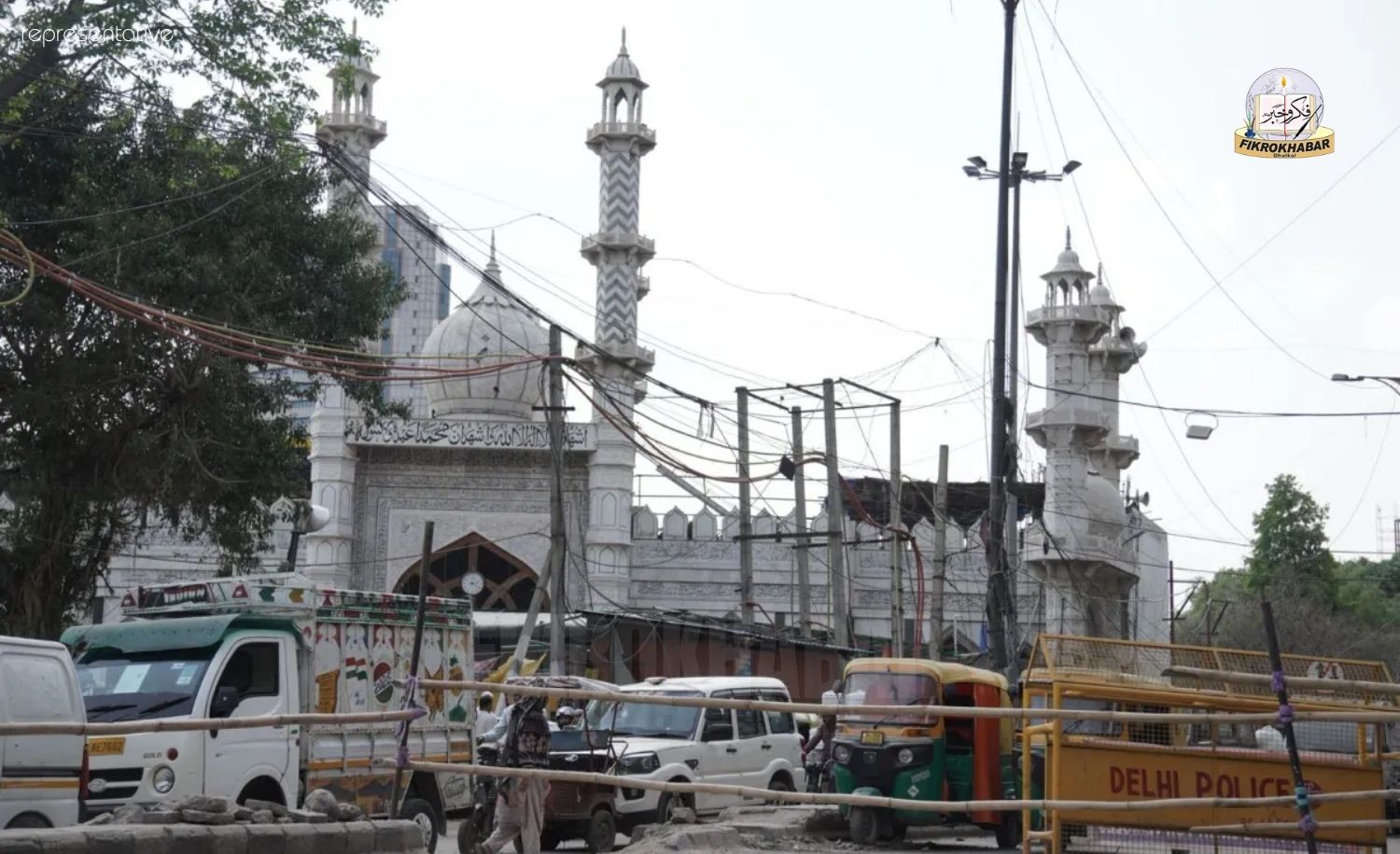

Delhi: For Matloob Karim, the events at Faiz e Ilahi Mosque in Delhi’s Shahjahanabad area remain difficult to forget.
He recalls standing by a window until around 3 am as bulldozers moved into the mosque complex. According to him, the boundary walls, healthcare centre, guest house, lawn and other parts of the premises were demolished one after another. The ablution area and washrooms were also destroyed.
“The damage cannot be compensated,” Karim told Muslim Mirror.
Hafiz Matloob Karim, general secretary of the Faiz e Ilahi committee at Turkman Gate, said the mosque had spent decades developing charitable and welfare services for local residents.
“We spent our lives establishing welfare schemes. They devastated our Islamic charity work,” he said.
According to eyewitness accounts cited in the report, tensions escalated during the early hours of January 7. Police entered the mosque premises at around 12:35 am, with tear gas and baton charges reported during the confrontation. Several local residents were detained.
By morning, part of the mosque complex had been demolished.
The demolition was carried out by the Municipal Corporation of Delhi following a Delhi High Court order in a case filed by Hindutva activist Preet Sirohi. Residents and members of the mosque committee disputed allegations that the property stood on encroached land.
They said the historic site was established in the 18th century by Saint Faiz e Ilahi and had served the local community for generations.
The welfare facilities left behind
The damage extended well beyond the mosque’s religious spaces.
Members of the Faiz e Ilahi committee said considerable funds had been spent on the complex, including its boundary walls, lawn, marble work and other facilities.
One of the most important services was a low cost healthcare centre that provided medicines and diagnostic services to people who could not afford private treatment.
A volunteer, speaking anonymously, said patients could obtain medicines for around Rs 30, while ultrasound examinations were offered for about Rs 500.
As tensions grew, some medical staff reportedly left because of safety concerns. The clinic was subsequently moved to another location near the main road.
According to those involved with the centre, staff were not given sufficient time to remove all of the equipment and other belongings before the demolition. Some equipment was reportedly seized, while other items were damaged.
Months later, doctors were still hesitant to return because of what they described as continuing security concerns and threats.
Idris, a member of the mosque management committee who also runs a nearby private hospital, said the premises had also included a guest facility and dining area. These were used partly to generate modest income to support the mosque’s charitable activities.
He said generators, chairs and other belongings were damaged during the violence.
The result, according to residents, was a major blow to a network of services that had supported low income families in the neighbourhood.
A community says it was targeted
Hafiz Matloob Karim said the committee had invested crores of rupees in construction and welfare activities over several decades.
He alleged that the welfare initiatives were deliberately disrupted following the election of a BJP MP from the area. These claims could not be independently verified from the material provided.
Mehboob Karim, his elder brother, said the Muslim majority locality had faced communal tensions for years.
He also recalled the mosque’s role during the Partition era, saying the site had provided shelter to refugees from both India and Pakistan.
According to Hafiz Matloob, the committee had worked on religious and welfare projects for more than 40 years. The premises had also provided temporary accommodation for guests and space for community gatherings.
“All of it turned into dust within the blink of an eye,” he said.
Residents said police vehicles and other security forces filled the area during the operation. Roads were barricaded and a curfew remained in place for four days.
“They could have waited until the next day. At least,” Matloob said.
Arrests and allegations of police violence
The consequences were not limited to the destruction of property.
Residents also alleged that Muslim men were disproportionately targeted during the violence and subsequent police action.
Ubaidullah, a 22 year old Arabic teacher, was among those arrested. He said he was detained after leaving home to buy groceries.
According to Ubaidullah, police first detained his father and contacted him through his father during questioning at the Turkman Gate police station. He said his father was released after he arrived at the station.
Ubaidullah alleged that he was beaten during questioning and pressured to make statements that could later be used against him. He remained in custody for around 45 days at Tihar Jail.
A court later granted him bail, with the report stating that the decision cited a lack of evidence.
Ubaidullah said his mobile phone was also taken and remained at the police station during his detention.
His experience, he said, was shared by several other Muslim residents.
The report says around 30 Muslim men, including Mohammad Faiz, Affan, Imran, Shahzad, Adil and Faheem, were arrested during the episode. Most were later granted bail, while around eight to ten were reportedly still in custody at the time of the report.
Families said they faced significant legal expenses and emotional pressure while dealing with the cases.
Matloob was also among those questioned by police.
“The policemen started banging on my door. Being a recognized and familiar face, I was on their list,” he said.
The cost beyond the rubble
For residents, the impact of the violence went far beyond demolished buildings.
Businesses were forced to close during the curfew, leaving families without income. Mohammad Swalehin, a local businessman, said he had to shut down his work and suffered substantial financial losses.
With roads blocked and movement restricted, residents said ordinary life came to a standstill.
Mohammad Ishraq, Ubaidullah’s father, said his family continued to struggle even after his son received bail.
He rejected allegations that his son or other residents were responsible for creating trouble.
“He was passing through the area at the wrong time,” Ishraq said.
Families of those arrested described the period as frightening and humiliating. Many said they had never previously experienced police cases, court proceedings or allegations of criminal activity.
Some residents said they were warned against leaving their homes because they could be arrested.
Khan, another resident who said he was injured during the clashes, recalled running from the area after police ordered people to leave the Faiz e Ilahi premises.
He said a baton struck him during the chaos before tear gas was fired.
His eyes began burning and itching because of the gas, forcing him to seek help at the dispensary.
The physical injuries have since healed for many residents, but the psychological and financial consequences remain.
At Faiz e Ilahi, the demolished walls and damaged equipment stand as reminders of what the community says it lost.
For residents, the rubble represents more than damaged buildings. It also marks the disruption of decades of charitable work, healthcare services and community support.
Yet amid the remains, they continue to hope that the community will eventually recover from the losses.
[ Mariyam Usmani is an independent reporter, writer, and documentary photographer. Currently she is pursuing Masters in Convergent Journalism from Jamia Millia Islamia. She is committed to cover the stories that should be heard with an investigative-creative angle.]