
Supreme Court Questions Earlier Verdict Denying Bail to Umar Khalid and Sharjeel Imam
Top court says the principle of “bail is the rule and jail is the exception” remains a constitutional guarantee even under UAPA cases.
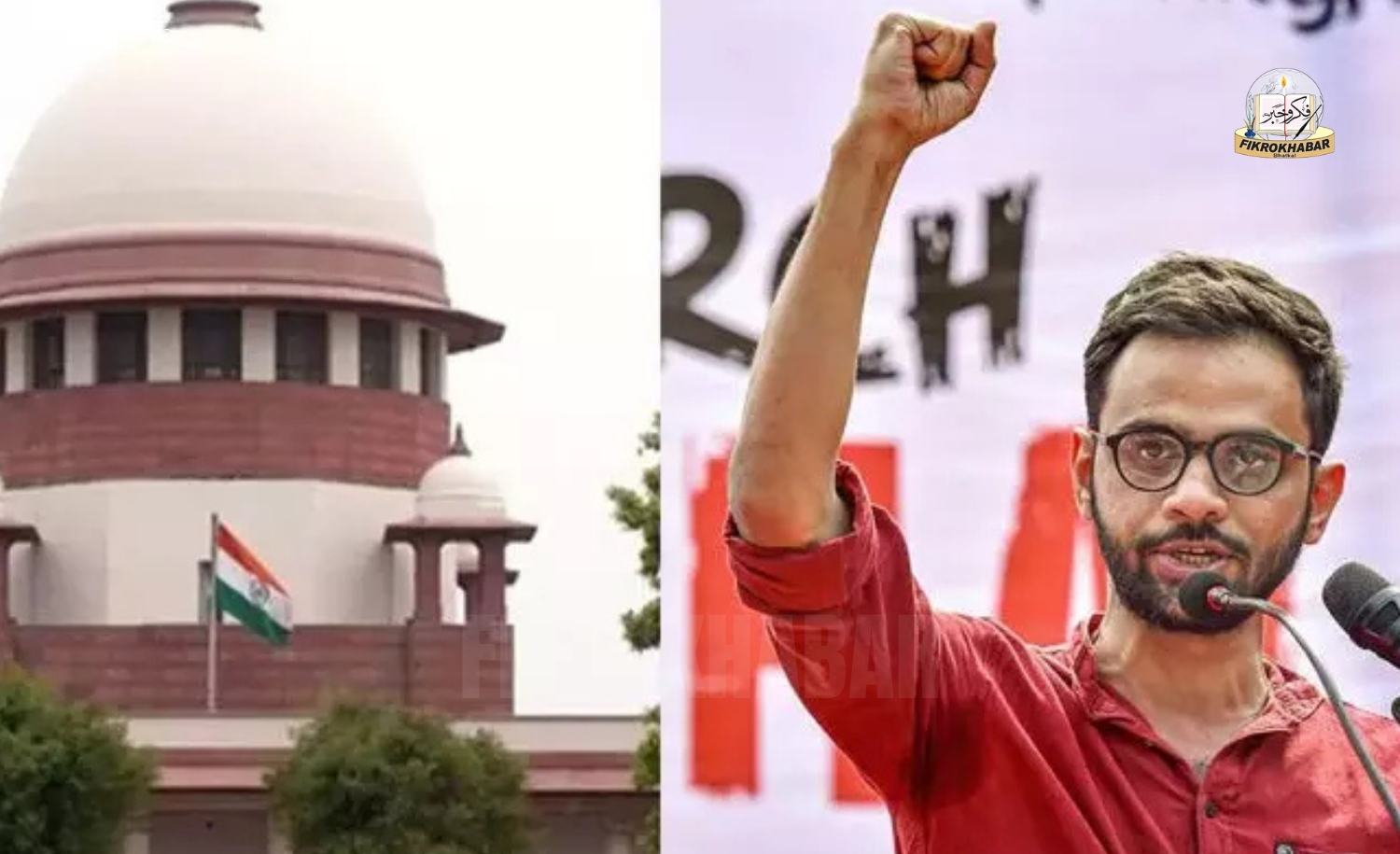

New Delhi: The Supreme Court on Monday raised serious concerns over its January 5 verdict that denied bail to activists Umar Khalid and Sharjeel Imam in the 2020 Delhi riots conspiracy case.
A bench comprising Justices B V Nagarathna and Ujjal Bhuyan made the observations while granting bail to Syed Iftikhar Andrabi, a Handwara resident accused in a narco terror case investigated by the National Investigation Agency.
During the hearing, the bench underlined that the principle stating “bail is the rule and jail is the exception” is not merely a slogan under criminal law but a constitutional safeguard rooted in Articles 21 and 22 of the Constitution, as well as the presumption of innocence.
The court expressed disagreement with the reasoning adopted in the January 5 judgment delivered by another Supreme Court bench, which had refused bail to Umar Khalid and Sharjeel Imam and directed them to seek fresh bail only after one year following the examination of protected witnesses.
Justice Ujjal Bhuyan, in the latest ruling, criticised several aspects of that judgment, especially the restriction placed on the activists from approaching the court again for bail during the one year period.
The bench referred to the landmark 2021 K A Najeeb judgment, which allowed courts to grant bail in UAPA cases if prolonged detention violated constitutional rights. The court stated that the significance of the Najeeb ruling cannot be weakened or ignored by lower courts or smaller benches.
The judges also observed that strict provisions under Section 43 D(5) of the Unlawful Activities Prevention Act cannot completely override constitutional protections related to personal liberty.
The court further disapproved of a 2024 judgment in the Gurwinder Singh case for not properly following the legal principles laid down in the Najeeb verdict. According to the bench, judicial discipline requires smaller benches to follow rulings delivered by larger benches unless the matter is referred to a bigger bench for reconsideration.
The observations came during the hearing of the bail plea of Syed Iftikhar Andrabi, who had challenged a decision of the Jammu and Kashmir and Ladakh High Court rejecting his bail request in a narco terror case linked to alleged cross border smuggling and terror funding activities.
According to the NIA, police had intercepted a vehicle in Handwara in June 2020 and seized Rs 20.01 lakh in cash along with two kilograms of heroin. Further investigation allegedly linked the accused to cross border narcotics operations and terror groups including Lashkar e Taiba and Hizbul Mujahideen.