
Sri Rama Sene Distributes Saffron Shawls in Hubballi Colleges After Hijab Ban Revoked
Hindutva outfit responds to Karnataka’s decision allowing hijabs in classrooms by handing out saffron shawls to students.
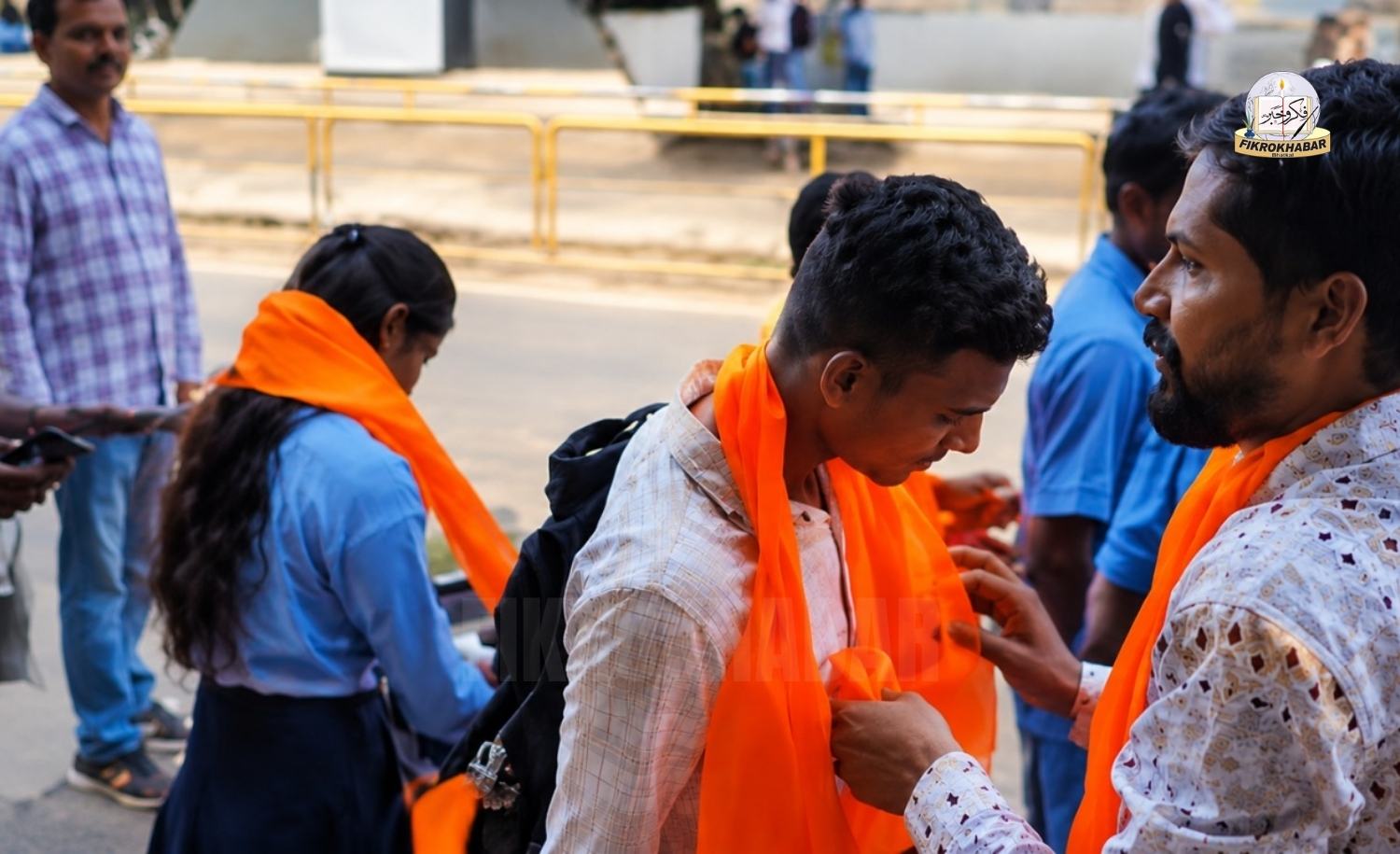

Members of the Hindutva group Sri Rama Sene distributed saffron shawls to students in several colleges across Hubballi on Monday, just days after the Karnataka government lifted the 2022 ban on hijabs in classrooms. The move was presented by activists as a counter to the Congress-led government’s decision to permit certain faith-based attire in educational institutions.
The shawls were handed out at colleges including Kanakadasa College. Sri Rama Sene founder Pramod Muthalik had earlier vowed to launch such a campaign if hijabs were allowed, arguing that saffron shawls should also be recognized as a symbol of identity. However, the state’s revised guidelines explicitly exclude saffron shawls from the list of permitted items, which includes the hijab, turban, janeu, rudraksha, kada, tilak, holy ash and kalawa.
Chief Minister Siddaramaiah clarified that saffron shawls would not be permitted under the new rules, stressing that they do not fall under traditional or religious attire. Deputy Chief Minister D.K. Shivakumar said the government would hold further discussions on the matter, noting that the issue had sparked fresh debate.
The distribution of shawls has reignited tensions around the hijab controversy, which first escalated in Udupi in late 2021 before spreading statewide. Critics of the earlier BJP government’s ban argue that the restrictions were politically motivated and disproportionately affected Muslim women’s access to education. They point out that hijabs had been worn by students for years without incident until the dispute was amplified by Hindutva groups and turned into a legal and political battle.
Videos of saffron shawl distribution have drawn mixed reactions. Senior advocate Sanjay Hegde remarked that students could wear them if they wished but should not discard them casually. Writer and activist Apoorvanand criticized the practice, saying saffron shawls were not part of Hindu tradition and represented an attempt to impose Hindutva identity.
The controversy highlights the continuing clash between religious freedom, uniform policy, and political symbolism in Karnataka’s classrooms.