
Only 17 Percent of Engineering Graduates in Karnataka Found Employable, Report Reveals
Expert panel flags skill gaps, declining quality, and urgent need for education reforms
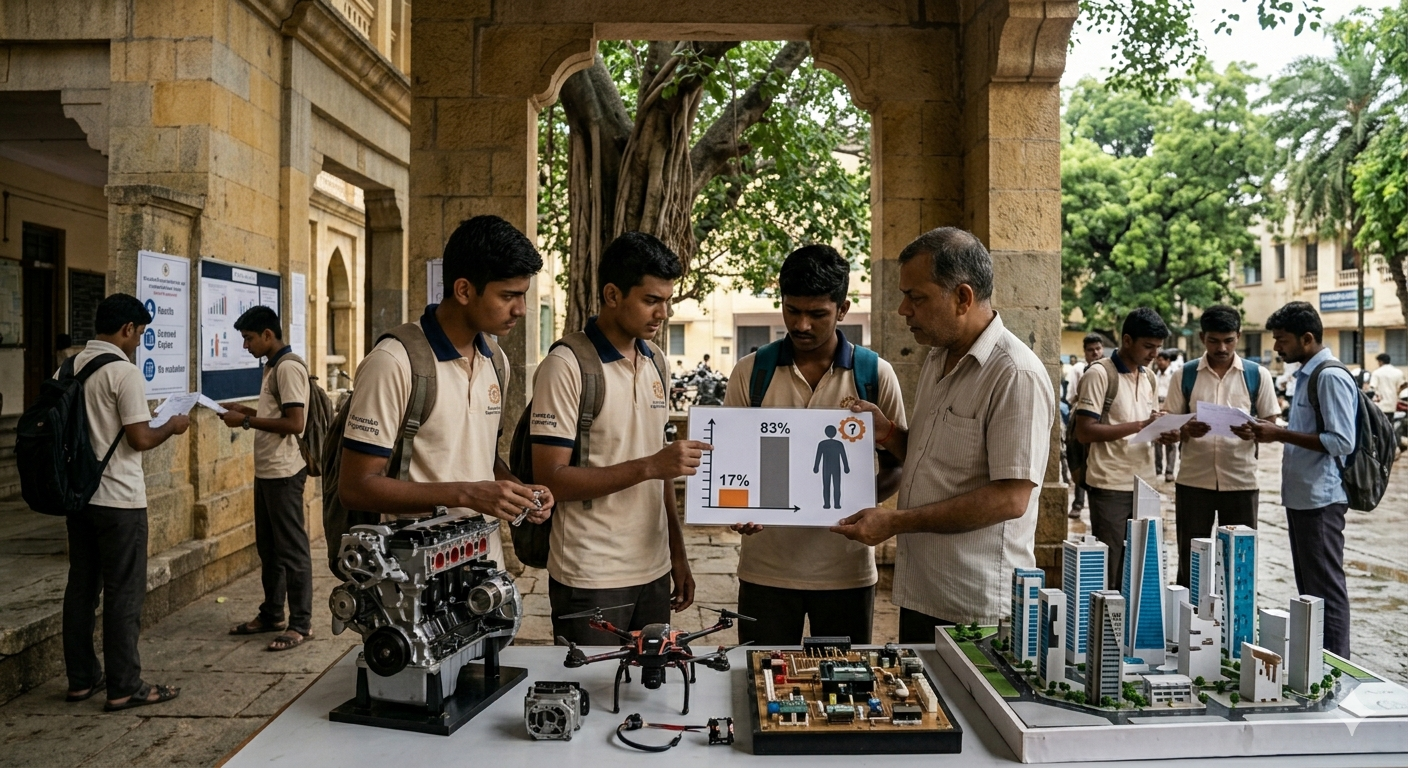

A major employability concern has emerged in Karnataka, with a high level committee finding that only 17 percent of engineering graduates in the state are currently job ready.
The findings come from the Committee for Transformation of Engineering Education in Karnataka, led by Professor Sadagopan, along with experts from leading institutions such as International Institute of Information Technology Bangalore and Indian Institute of Science. The report was recently submitted to the state’s Department of Higher Education.
The study highlights several reasons behind the crisis. These include rising unemployment among computer science graduates, declining interest in core engineering fields like mechanical, civil, and electrical engineering, and a noticeable drop in the overall quality of engineering education. It also points to a lack of adaptability in traditional branches and insufficient skill development among students.
The committee has also raised concerns about future workforce shortages in critical sectors. It warned that India’s semiconductor industry could face a shortfall of 2.5 to 3 lakh skilled professionals by 2027, with Karnataka alone expected to need between 10,000 and 15,000 workers.
In addition, there is a growing gap in skilled professionals in aerospace and defence sectors, which cannot be filled by graduates from computer science or IT backgrounds alone.
To tackle these challenges, the panel has recommended setting up a dedicated body called the Karnataka Engineering Education Reform Authority to oversee data and drive reforms in the sector.
Karnataka Higher Education Minister M. C. Sudhakar said the government plans to introduce a separate law to establish this authority. He added that curriculum changes across engineering disciplines will be implemented in phases.
The report also proposes stricter rules for student intake in engineering colleges to improve quality. New institutions may begin with 60 seats per course, gradually increasing to a maximum of 180 over four years, subject to accreditation by bodies like National Board of Accreditation and National Assessment and Accreditation Council.
It further suggests that no single course should have more than 300 students and that institutions should limit the number of computer related programmes they offer.
Existing colleges that exceed these limits will be required to secure proper accreditation within two years or face a reduction in seats.
The report underscores the urgent need for structural reforms to ensure that engineering graduates are better equipped to meet industry demands and contribute effectively to the economy.