
My Story: In the Voice of Islamia Anglo Urdu High School, Bhatkal

Author: Mohammed Nayeem Quazi
(Former Librarian, Islamia Anglo Urdu High School, Bhatkal)
“For thousands of years, the narcissus weeps over its lack of vision;
Only with great difficulty does a true visionary emerge in the garden.”
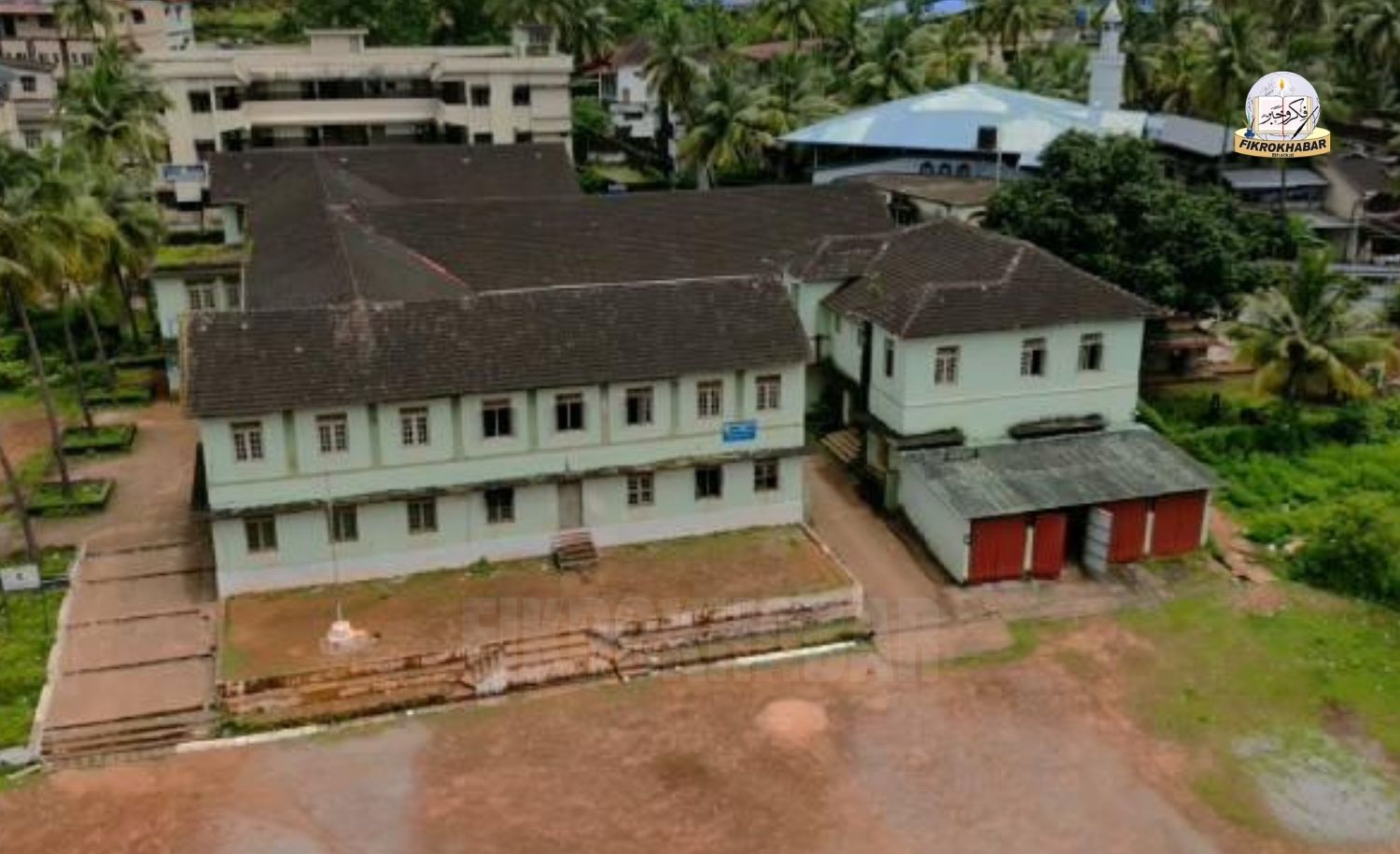
I am a historic educational institution of Bhatkal, known to the world as Islamia Anglo Urdu High School. For nearly a century, I have been devoted to the sacred mission of imparting knowledge, nurturing culture, building character, and serving the community. From my lap emerged the light of learning that illuminated the entire region of Bhatkal. It was this educational atmosphere that later paved the way for the establishment of great institutions such as Jamia Islamia Bhatkal, while many of my alumni went on to establish numerous madrasas, maktabs, and educational institutions, spreading this light even further.
My existence is not a mere coincidence. I am the result of the selfless efforts, sincerity, foresight, and sacrifices of the founders of Anjuman Hami-e-Muslimeen, Bhatkal, including Janab F.A. Hasan, Janab M.M. Siddiq, Janab I.H. Siddiq, and their dedicated associates. They firmly believed that the true path to the honor, progress, and survival of any community lies in education. With this conviction, they established an institution that would provide a balanced education in both religious and worldly sciences. Through their sincere efforts, I came into being and soon became an educational, cultural, and intellectual identity of Bhatkal.
My beginnings were humble, in the form of a small maktab. My founders made the teachings of the Qur’an and Sunnah the foundation of my existence. In my nurturing environment, children learned not only the Holy Qur’an but also morality, culture, honesty, sincerity, and Islamic values. This was my true identity and by the grace of Allah, it remains so even today.
In 1941, I was formally granted the status of a high school. This was a significant milestone in my journey. Thereafter, the scope of my services expanded considerably. Along with religious education, I embraced modern sciences. High-quality instruction in Arabic, Urdu, Islamic studies, English, science, mathematics, and other subjects transformed me into a distinguished educational center for the entire region.
There was once a time when my courtyard bustled with hundreds of students. Every morning, my doors were filled with eager seekers of knowledge. The voices of teachers, the scholarly discussions of students, and the echoes of lessons could be heard everywhere. What greater joy could there be for me than to witness the future of the community being shaped before my eyes?
And what a beautiful sight it was when school ended and seven to eight hundred students would leave together for their homes. The roads would be filled with children, traffic would momentarily halt, and onlookers would feel as if a grand procession were passing by. Today, those scenes remain only as cherished memories, yet they are still vivid in my eyes.
My embrace was never limited to Bhatkal alone. Students from surrounding villages and towns also came to me in pursuit of knowledge. Whether Muslim or non-Muslim, I never discriminated on the basis of religion, language, caste, or social class. To me, every student was a trust, and it was my duty to educate, nurture, and shape them into better human beings.
I take rightful pride in the fact that thousands of my students are today rendering remarkable services in various fields across the world. Among my alumni are doctors, engineers, professors, teachers, lawyers, government officers, industrialists, successful businessmen, social leaders, and religious scholars. Not only in India but also abroad, my sons and daughters continue to prove their abilities. Their achievements are my true wealth, my identity, and my greatest reward.
Behind this successful journey stood not merely my buildings or curriculum but the noble souls who dedicated their lives to my growth and to the education and upbringing of the younger generation. They imparted not only academic knowledge but also the values of character, honesty, sincerity, discipline, and service to humanity, whose fragrance can still be felt in the lives of my alumni.
Among my teachers were personalities such as Maulana Sharif Mohiuddin Akrami, Maulana Abdul Hamid Nadwi, Master Mahmood Khayal, and many other scholars who regarded teaching as an act of worship. Alongside education, they considered character-building their responsibility and played a significant role in shaping students into righteous, dignified, and responsible citizens.
The role of my headmasters has also always been illustrious. Janab Usman Hasan Jubapu, Janab Mohammed Yusuf Quazi, and others, through their hard work, dedication, excellent administration, and visionary leadership, led me to new heights of progress. Similarly, administrators such as Janab Shamsuddin Jukaku and Janab S.M. Yahya adorned my journey with their sincere and selfless services. Their contributions remain bright chapters in my history.
However, time never remains the same. Circumstances changed, new educational institutions emerged, and people’s priorities gradually shifted. Slowly, the old vibrancy of my campus began to fade. Today, I continue my journey with the support of a few sincere teachers, but the former liveliness and academic atmosphere have become beautiful memories of the past.
The Urdu section, once considered my identity, has also weakened and now appears to be struggling for survival. This is not merely the decline of an educational branch but also the tragedy of a language that has long been an intellectual, cultural, and religious identity of this region. My dedicated teachers tried their utmost to preserve it, but circumstances were not favorable.
Today, many of the teachers who devoted their lives to me have either retired or departed from this world. Although their voices are no longer heard within my classrooms, their memories, efforts, and prayers continue to live within me.
What pains me most is that some people today try to ignore my century-long services and portray me as obsolete. Perhaps they have forgotten that there was a time when the educational identity of the entire region was associated with me. The countless individuals educated by me who now serve in institutions, hospitals, courts, government offices, business centers, and social organizations are the greatest proof of my greatness.
It is also a fact that the very leadership of Anjuman Hami-e-Muslimeen, which today guides this great educational movement, is itself a continuation of the traditions nurtured within this mother institution. My contribution to Anjuman’s educational foundation, identity, and history is fundamental and unforgettable. Therefore, preserving me is, in reality, preserving Anjuman’s own history, identity, and the trust of its forefathers.
Today, my building is often dismissed as old and dilapidated, whereas the greatness of an institution lies not merely in its walls but in its history, traditions, and character. Had I been properly maintained in time, my former glory would still have remained intact. In my own city, there are several buildings over a century old that still stand proudly because they were preserved. Sadly, the very institution that educated thousands and showed them the path of progress has itself been neglected.
My companion, the Anjuman Ground, also mourns my decline. There was a time when this field was the center of the city’s social, educational, and national activities. Movements, elections, public meetings, processions, sports competitions, annual gatherings, dramatic performances, and national celebrations all found life there. Distinguished guests would visit, and the march-pasts of NCC and Scout students would captivate audiences, reflecting knowledge, discipline, and dignity. Janab S.M. Yahya played a prominent role in the successful organization of these events.
Similarly, Usman Hasan Hall stands silent today, reliving its golden memories. It was once Bhatkal’s central hall where educational, literary, social, and cultural programs were held. It was here that my students learned public speaking, developed confidence in expressing themselves, and gained the courage to move forward in different spheres of life.
I bear no complaint against the administrators of Anjuman, nor do I seek to blame anyone. I merely wish to express the silent pain that still resides within the heart of an educational institution that has served the community for a century.
I also take pride in the fact that two and even three generations of countless families of Bhatkal grew up within my embrace. Some studied here as students, some served as teachers, and others contributed to my progress through administration and management.
One of my sons, Master Mohammed Nayeem Quazi, studied under my care and later had the honor of serving me until his retirement. His late father, Janab Abdul Kareem Quazi, his father-in-law Master Mahmood Khayal, Janab Mohammed Yusuf Quazi, and many other family members also served me according to their abilities. Their brothers, relatives, and younger generations have similarly benefited from my guidance and achieved distinction in various fields. In truth, this is not merely the story of one family but the shared history of countless families of Bhatkal.
Even today, I look toward my community, my former students, philanthropists, parents, and the younger generation with hopeful eyes. I am confident that they will hear my call. If they support me, preserve my historical identity, and unite for my revival, then the day is not far when my courtyards will once again be filled with the laughter of children, my classrooms will echo with the sounds of learning, and I will once again serve the community with the same grandeur and purpose for which I was established.
I am not merely a collection of bricks, stones, and walls. I am the custodian of a century of academic history, cultural identity, educational heritage, and the bright future of the community. Preserving me is not merely about saving a school; it is about safeguarding our history, our culture, our language, the trust of our forefathers, and the future of generations to come.
Finally, I have only this humble appeal to my community:
“Maintain a strong and lasting bond with your community;
Remain attached to the tree, and keep hope alive for the spring.”
This article was written by Mr. Nayeem Quazi, Former Librarian of Islamia Anglo Urdu High School, Bhatkal. It was originally written in Urdu and translated into English by the Fikrokhabar English Department.