
Muslims Are Not Terrorists, Those Who Spread Hatred Are Sectarian Terrorists: Arshad Madani
Jamiat Ulama i Hind president highlights Muslim contributions to India's freedom struggle and warns against attempts to weaken secularism.
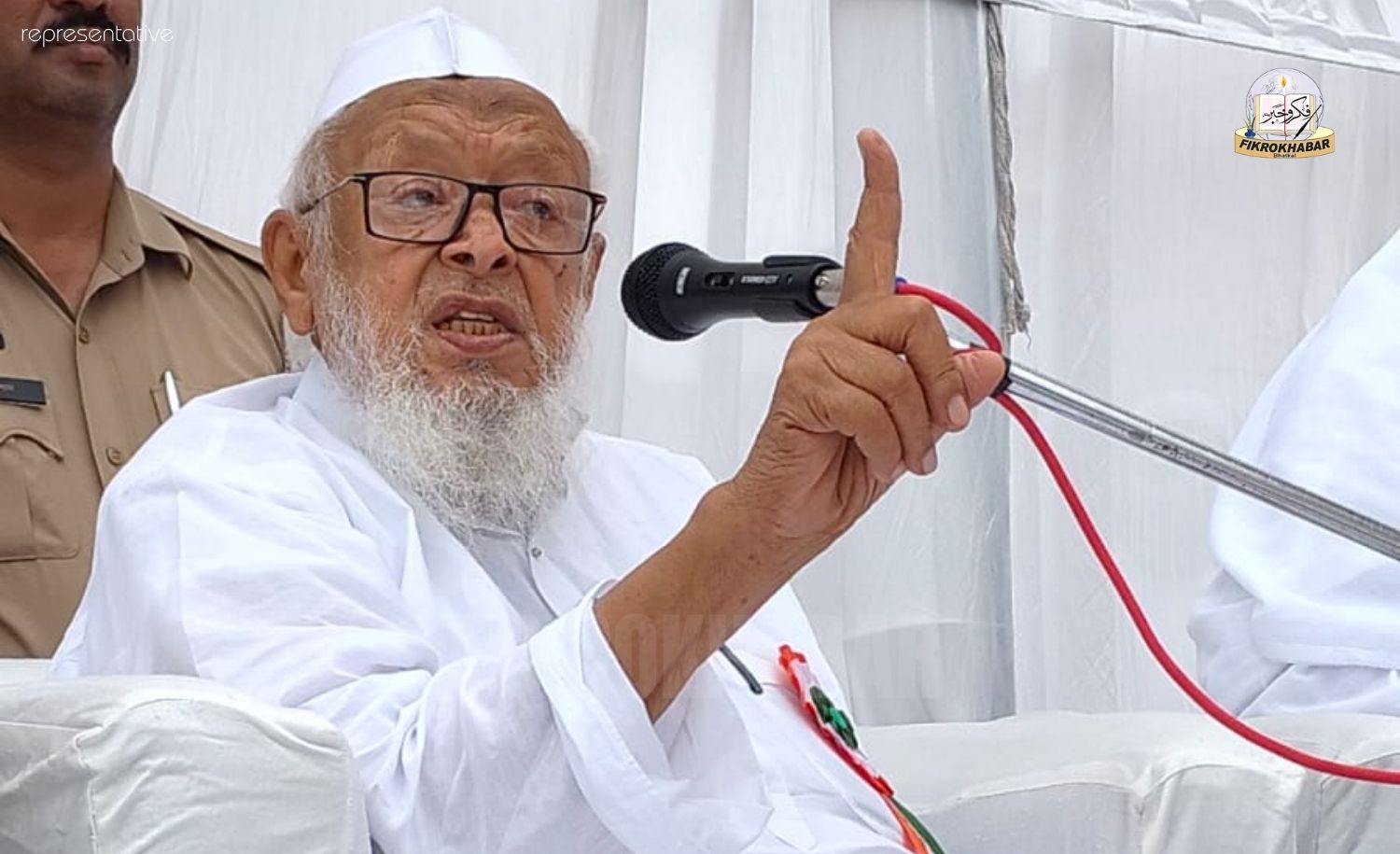

New Delhi: Jamiat Ulama i Hind president Maulana Arshad Madani has strongly criticised attempts to portray Muslims and madrasas as linked to terrorism, saying that those who spread hatred against Muslims are themselves promoting sectarianism.
Speaking at a special Independence Day gathering at Darul Uloom Deoband, Madani described India’s independence and democratic system as major achievements and stressed the need to protect the country’s secular character.
Madani said the history of India’s freedom struggle cannot be understood without recognising the sacrifices made by Muslims, religious scholars and institutions such as Darul Uloom Deoband.
He said the institution was established in 1866, following the events of 1857, with a strong focus on producing scholars and activists committed to the country’s freedom. He criticised what he described as efforts to rewrite history and associate madrasas with terrorism.
Referring to the Silk Letter Movement and the imprisonment of Indian scholars in Malta, Madani recalled the contributions of Shaikh al Hind Maulana Mahmood Hasan Deobandi and Shaikh al Islam Maulana Hussain Ahmad Madani.
He said these leaders and their associates were imprisoned far from India because of their efforts to end British rule.
Madani questioned those who currently demand proof of patriotism from Muslims and madrasas. He asked them to examine the historical record of their own ideological predecessors and their role during India’s struggle for independence.
He also said that Muslims had faced social, educational and political difficulties under earlier governments, along with periods of communal violence and anti Muslim attacks. However, he argued that the situation today is different because, in his view, Islam itself is increasingly being targeted alongside Muslims.
Madani also referred to the former Soviet Union, where he said restrictions were imposed on Islamic institutions and religious practices for decades. Despite those efforts, he noted that the Soviet Union eventually collapsed and several Muslim majority countries emerged.
He argued that attempts to suppress Islam have repeatedly failed and expressed confidence that Islam and Muslims would continue to survive despite persecution.
Madani also raised concerns over what he described as efforts by sectarian forces to remove the word secular from India’s Constitution.
He pointed to the example of Hindu leader Raja Mahendra Pratap being appointed president of the Provisional Government of India in Kabul before independence, saying that the country’s early freedom movement had already demonstrated a vision of an inclusive and secular India.
Madani urged people to remember the sacrifices made during the freedom struggle and to protect India’s democratic and secular values rather than allowing communal divisions to shape the country’s future.