
Jamia Millia Islamia Protest Escalates as Students Face Pressure to Vacate Hostels, Water and Electricity Supply Cut
Students demanding the restoration of university union elections face heavy police deployment, campus restrictions and an indefinite shift to online classes.
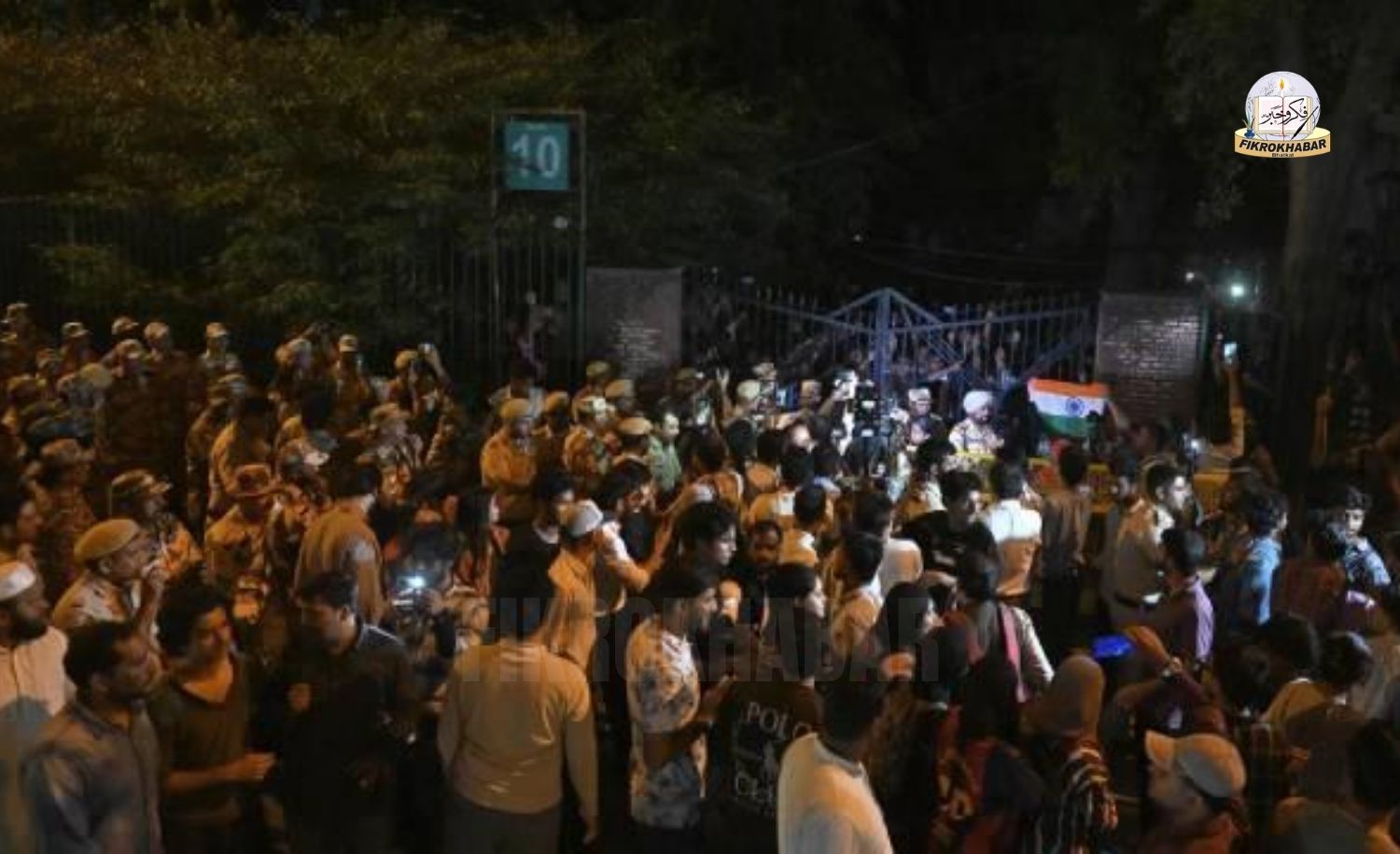

New Delhi: Tensions have escalated at Jamia Millia Islamia, a prominent minority educational institution in New Delhi, as students continue their protest demanding the restoration of student union elections. Following attempts by university authorities to remove the demonstrators, hundreds of students reportedly entered the campus by climbing over the gates after finding them closed.
The university administration has shifted all academic activities online for an indefinite period and closed the library and campus gates. Water and electricity supplies inside the campus have also reportedly been suspended. A heavy contingent of Delhi Police and Central Reserve Police Force personnel has been deployed around the university, with security forces attempting to disperse protesters and detaining several students.
Protest Over Student Union Elections
Students have been staging a sit in near Gate No. 7 since October 11, demanding the restoration of formal Jamia Millia Islamia Students’ Union elections, which have remained suspended since 2006.
Tensions reportedly intensified after security personnel and non teaching staff removed the protesters’ tent the previous day and attempted to end the demonstration.
In response, students continued their protest through the night, raising slogans and singing protest songs in the open. Demonstrations continued on Sunday as students reiterated their demand for the revival of the student union.
Protesters alleged that Gate No. 7 had been completely barricaded and that hostel residents were being prevented from accessing even the university health centre. Students confined inside the campus reportedly depended on their fellow protesters outside to obtain basic necessities, including drinking water.
Students Allege Pressure to Vacate Hostels
Around midday, the Vice Chancellor visited the campus with other senior officials to inspect the security arrangements. However, according to the protesting students, the officials left without holding formal discussions with them.
Women students participating in the protest alleged that the administration used force under the pretext of negotiations with the Vice Chancellor and Chief Proctor. They also claimed that hostel residents were being pressured to vacate their rooms and return home ahead of examinations and festivals.
The protesters maintain that the right to elect student representatives is an essential part of democratic life in higher educational institutions. They argue that the prolonged suspension of elections has deprived students of a recognised platform to represent their concerns.
University Administration Defends Its Decision
The university administration has offered a different explanation for the restrictions. Officials reportedly said that since academic activities had been moved online, there was no longer a reason for students to remain on campus.
An administrative official said buildings and libraries had been closed because of staff shortages and holidays. The official also claimed that the administration had made several attempts to negotiate with the protesters, but they had refused to end their sit in.
The administration denied allegations of forcibly removing students, arguing that the protesters would not still be present on campus if force had been used. It maintained that restoring discipline and order remained its primary concern.
Calls for Dialogue and a Peaceful Resolution
The confrontation at Jamia has renewed debate over student representation, democratic participation and the role of student unions in India’s higher education institutions.
The suspension of student union elections at the historic university for nearly two decades has remained a source of concern among students seeking greater participation in campus decision making.
The reported disruption of essential services and the deployment of security forces have also raised questions about how the dispute is being handled. A peaceful resolution will require meaningful dialogue between the university administration, faculty members and student representatives.
As the standoff continues, the immediate challenge is to address the students’ demands while ensuring access to essential services, maintaining campus safety and preventing further escalation.