
Justice Sanjay Kishan Kaul Alleges Former CJI DY Chandrachud Was Too Accommodating Towards Government in Judges’ Appointments
In his forthcoming memoir, former Supreme Court judge Sanjay Kishan Kaul raises concerns about alleged government influence over judicial appointments and the representation of religious minorities.
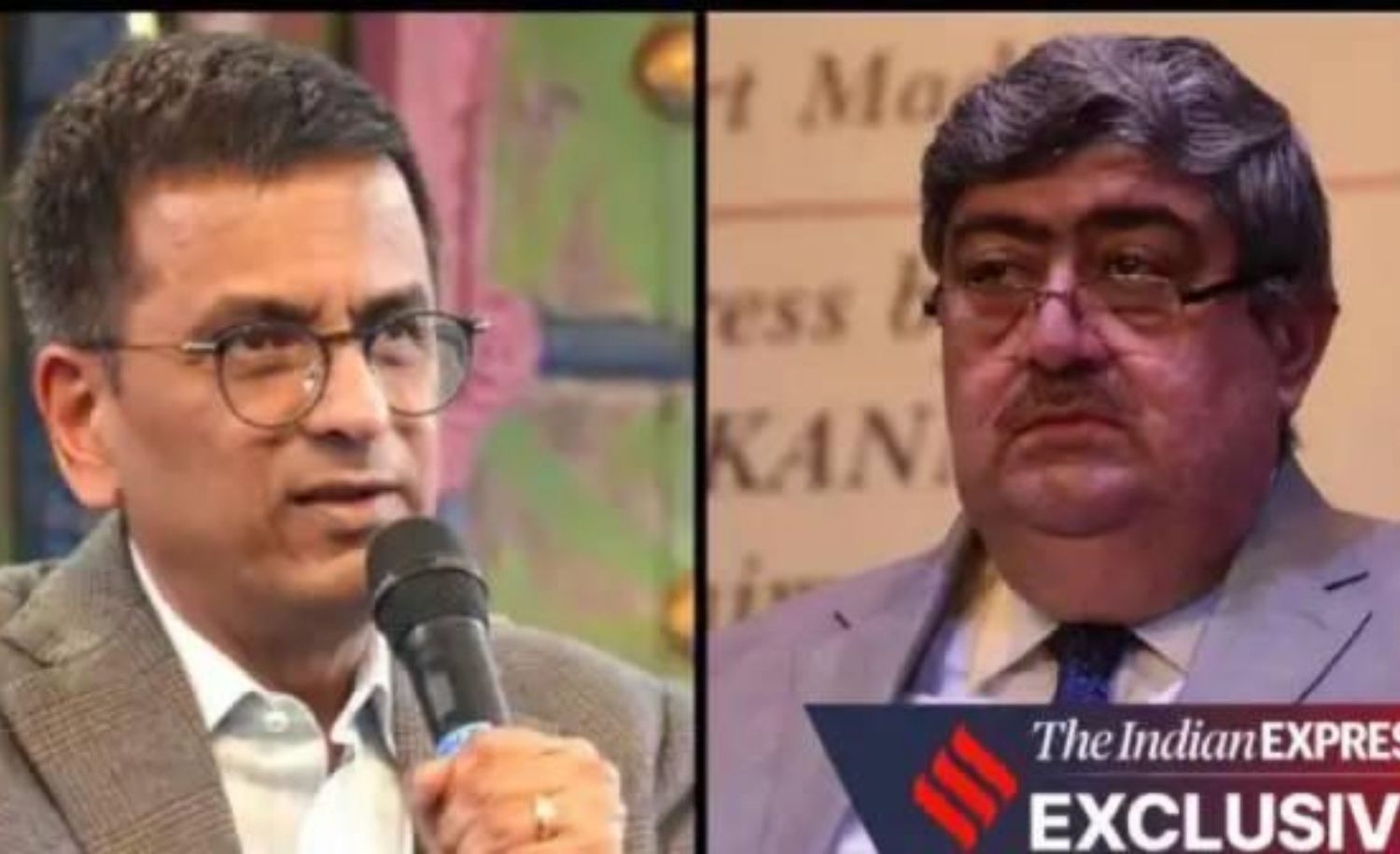

New Delhi: Former Supreme Court judge Justice Sanjay Kishan Kaul has made significant claims about former Chief Justice of India DY Chandrachud in his forthcoming memoir, Without Fear of Favour. According to excerpts from the unpublished book, Kaul alleges that Chandrachud was excessively accommodating towards the central government during discussions on appointments to the higher judiciary.
Kaul claims that, during Collegium meetings, there were instances in which the government’s position was sought even before certain candidates were formally considered. He also raises concerns about questions allegedly asked by the government regarding the caste and family background of a judicial candidate belonging to a religious minority.
Justice Kaul, who retired in December 2023, wrote that after joining the Supreme Court Collegium in June 2022, he suggested that its members should collectively stand firm against government pressure. He believed that, as he was not the Chief Justice, he could take a more direct position on such matters.
However, according to Kaul, Chandrachud generally preferred to handle relations with the government himself, apart from a few exceptional instances.
Disagreement Over Supreme Court Appointments
Recalling one incident involving six vacancies in the Supreme Court, Kaul said five candidates had already been agreed upon before the Collegium meeting. However, shortly before the meeting, Chandrachud proposed a sixth name that reportedly raised serious concerns among other members.
Kaul said he objected to the proposal but Chandrachud suggested contacting the government to gauge its position. Kaul strongly opposed the idea, arguing that the Collegium should not allow government signals to influence its internal decision making.
Questions Raised Over Minority Representation
Kaul also described what he considered a particularly troubling episode involving the appointment of a judicial candidate from a religious minority.
According to his account, the government questioned whether the judiciary needed greater representation from that minority community, pointing out that judges from other religious minority groups were already serving in the courts. Kaul further alleged that questions were raised about the candidate’s family background and caste.
He said the approach angered him and prompted him to question the purpose of the Collegium system if judicial appointments were to be influenced in this manner. Kaul reportedly told Chandrachud that, if such a process were acceptable, the Chief Justice might as well make appointments independently rather than relying on the Collegium.
Kaul Warns Against Political Influence
In his memoir, Kaul challenges the idea that the Collegium system is entirely protected from political pressure. He argues that governments will continue to seek influence over judicial appointments and that the judiciary must defend its constitutional independence and institutional dignity.
Kaul also observes that governments tend to show greater respect towards judges who remain firm in their principles.
Responding to the claims, former Chief Justice DY Chandrachud said he had not read the book and therefore could not comment on its contents in detail. However, he maintained that Collegium meetings had consistently taken place in a cordial atmosphere marked by mutual respect.
Concerns Over Judicial Independence
The appointment of judges to India’s higher judiciary remains a sensitive constitutional issue, particularly because of the need to preserve judicial independence while ensuring fair representation of religious minorities and historically disadvantaged communities.
Kaul’s account has brought renewed attention to questions about the relationship between the judiciary and the central government, the functioning of the Collegium system, and the safeguards needed to ensure that judicial appointments remain free from inappropriate political influence.
The allegations presented in the forthcoming memoir, along with Chandrachud’s response, are likely to contribute to wider discussions about transparency, representation and accountability in India’s judicial appointment process.