
AIMPLB Announces Legal and Public Campaigns Over Rising Concerns Affecting Muslims
The Board plans nationwide action and legal challenges over issues including mob violence, mosque demolitions, Vande Mataram directives, and Uniform Civil Code initiatives.
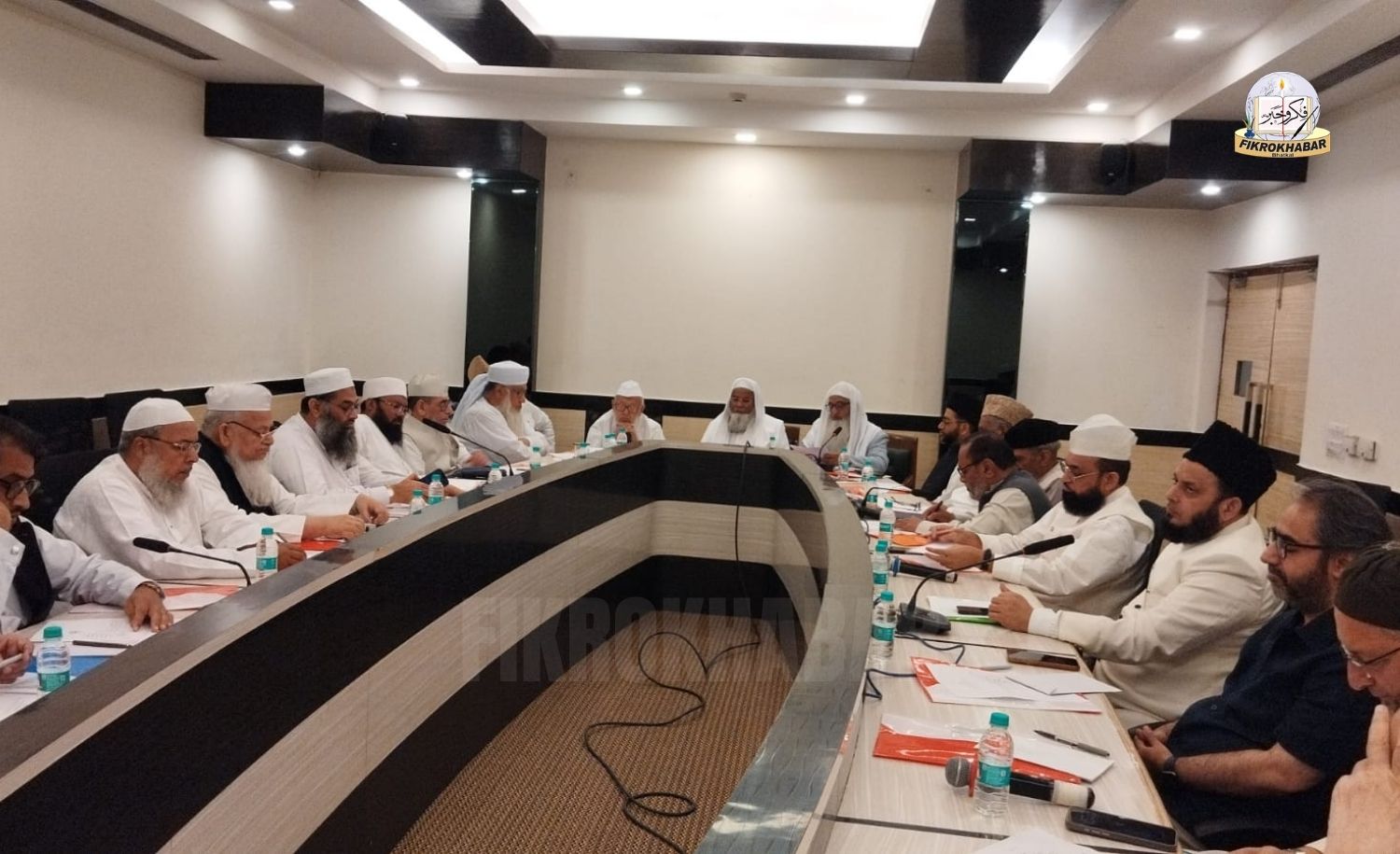

New Delhi: The Executive Committee of the All India Muslim Personal Law Board (AIMPLB) has concluded its meeting in New Delhi, adopting several key resolutions in response to what it described as growing challenges facing Muslims across the country.
During the meeting, committee members reviewed a range of issues, including incidents of mob violence against Muslims, demolition drives involving mosques and madrasas, bulldozer actions in Muslim localities, efforts to make Vande Mataram compulsory in educational institutions, developments related to the Uniform Civil Code (UCC), and the recent Madhya Pradesh High Court ruling in the Kamal Maula Mosque and Bhojshala dispute.
The Board expressed concern over what it called an increasingly difficult environment for Muslims, claiming that attacks on lives, property, places of worship, educational institutions, and constitutional rights have become more frequent in several states. Members also criticized the spread of communal tensions and alleged that hate speech often goes unchecked.
As part of its response, the Board decided to prepare and publish a detailed report highlighting the condition of the Muslim community, communal tensions, and alleged violations of constitutional rights. According to the committee, the protection of minority rights is essential for preserving democracy, social harmony, and national development.
On the Kamal Maula Mosque and Bhojshala matter, the Board voiced dissatisfaction with the recent Madhya Pradesh High Court judgment. It argued that the ruling does not align with historical records, official documents, or the long standing tradition of Muslim worship at the site. The committee welcomed the decision to challenge the verdict in the Supreme Court and pledged full legal support to the mosque committee.
The meeting also discussed attempts to make Vande Mataram compulsory in schools, government events, and government aided madrasas. The Board maintained that such measures conflict with religious freedom protections under Article 25 of the Constitution. It stated that if any nationwide law making the song compulsory is introduced, it will challenge the move in court.
The Executive Committee also objected to the West Bengal government’s directive requiring the singing of Vande Mataram in schools and recognised madrasas. Referring to the Supreme Court’s judgment in the Bijoe Emmanuel case, the Board argued that compelling students to participate would violate fundamental rights. It welcomed the interim relief granted by the Calcutta High Court, which stayed the directive and protected students and institutions from disciplinary action.
The Board reiterated its position that certain portions of Vande Mataram conflict with Islamic beliefs and urged Muslims not to compromise on matters of faith.
Another major issue discussed was the implementation of the Uniform Civil Code in various states. The committee noted that after Uttarakhand and Gujarat, other states including Assam, Madhya Pradesh, and Maharashtra are also considering similar measures. The Board argued that the UCC is not a binding constitutional requirement and maintained that enforcing it would undermine religious freedom and India’s diverse social structure. It confirmed that it will continue pursuing legal challenges against such laws wherever necessary.
The Executive Committee further resolved to launch a nationwide movement against what it described as the political and social marginalisation of Muslims, violations of constitutional principles, communal hostility, and the demolition of mosques and madrasas. To coordinate these efforts, the Board announced the formation of a dedicated Action Committee.
The meeting was chaired by AIMPLB President Maulana Khalid Saifullah Rahmani and conducted by General Secretary Maulana Fazlur Rahim Mujaddidi. Senior members and representatives from various organisations across the country participated in the discussions.
Speaking at the press conference after the meeting were General Secretary Maulana Fazlur Rahim Mujaddidi and National Spokesperson Dr. S. Q. R. Ilyas.