Women’s Rights in Islam and the Moral Dimensions of the Ahsan Form of Divorce

By Md Afzalul Haque
There has been report that the valid way of dissolution of the marriage under Muslim law viz. Talaq al Ahsan or Hasan ex facie, is not flawless, even an attorney can do the pronouncement of divorce on behalf of their client, it may have elements of disparity, supports the hegemony of the men in society, so it obviously, is required to be socially or judicially examined. The issue may likely to be probated by Court in due course, if someone feels aggrieved of it, pursue the jargon before the court and in this case bona fide, is also beheld in such grievance impugning the customary law pertains to dissolution of marriage of couple adheres to Islam as a faith in India. For several thousand years people have lived in the subcontinent as nomads hunter gathers, peasants, town planner and preux chevalier in the battle fields. Obviously thus there had been social set up under going changes which includes the requirement of family life. A symbiosis for the procreation and growth of the progeny to fill void created by the cruel hands of the death. So the struggle to exist has continued with natural pairing of opposite gender. The formation of the nuptial bonds and dissolution of it has been mundane and banal facts, and thus exist hitherto in tribal society in the simple forms, where elopement or abduction has resulted in relation of the spouse and desertion or abandonment may result in dissolution of the said bond. Many forms of marriage and divorce are being practiced in India, even today, in different part of our society and flourishing apparently without judicial and legislative intervention, and intended to be preserved as the cultural heritage of hugely pluralistic society. One may find polyandry, a unique marriage in Himachal and Uttrakhand for certain reasons, the practice is absolutely repugnant to the spirit of the section 5 of the Hindu Marriage Act which essentially requires that neither party to have spouse living at the time of marriage. And further it has not been alien to the criticism in connection with female health perspectives. One may also pained to see the women are deserted by male partner and forced to live ascetic life in ashram and sacred place, although they obviously, have the right to life, dignity and liberty as well as the right of ownership and share in the res like their men counterpart in the family. Laws were made to promote the remarriage amongst the widows, however, such laws heavily lacks social acceptance approximately before the 70 percent of Indian people who are not inhabitants in urban conglomerations and they follow their rites and customs, obviously even after 26th November 1949, the crucial date in our post independence legal history.
The status has hitherto not improved satisfactorily to feel that equality and women’s rights have been fully achieved sans Muslims community in India on the issues of marriage and divorce. So the judgmental approach may not be justified and fair if it would not be navigating away from the judicial overreach intermeddling with customary laws, which too enjoy protection under article 13 of the Constitution and intended to be preserved through the independent adjudicating system. The Muslim family laws although have soundness of reasonable degree, has been assailed misconstrued with conjectures based perception without touching it contextually, for its ineffably judicious objects and reasons.
The concept of divorce has been alien to the marriage in community where it has been sacrament or sacrosanct in nature as well as being treated as a divine bond to never collapse, even due to foreseen contingencies like death of the couple. Whereas the Muslim women have been possessing this right available to them under a law which now, a few of them are willing to renounce and desirous of being governed by different sets of norms of law. One may fairly notice that the society has realized the nature and gravity of complete break down and accepted the divorce, as the remedy to dissolve the marriage. The provisions of dissolution of marriage has been legislated in the different forms under sections 13, 11, 12, and 10 of the Hindu Marriage Act, 1955 and similarly also under the provisions sections of 23, 24, 25, 27 and 28 of the Special Marriage Act, 1954 like Judicial Separation, Void and Voidable marriage and Divorce etc. The process may have meaning and notion different but the end result is that the wife and husband will be no more having the status of wife and husband in future and the marriage shall be treated as dissolved. Bizarre, here seems to be that a fully competent adult sound mind woman still cannot divorce herself addressing her husband. Only third person or authority shall have to intervene and pronounce divorce, based on its own legal and just wisdom. There has not been a quest of parity also by sisters of other faith to adopt this form of dissolution i.e. Talaq al Tafweez to be followed universally. It is egregious not to recognize that the woman following Islam as faith, may divorce herself, adopting certain specified ways and has never been fully incompetent to do so, like sisters following other faith.
In the event the laws dealing with divorce are juxtaposed, the pulchritude illuminates. There are some ways available to husband and commensurately other ways are available to the wife also, if she has solemnly decided to part away and to break the nuptial bond. If the husband has the two ways Talaq al Ahsan and Talaq al Hasan forms of dissolution of marriage, usually former may convert in to later, the wife also possess right to divorce her in one form or seek it, having unchallenged free will at the time tying the knot itself and may have acquiesce subject to having right to divorce herself. Khula, Mubaraat, Talaq ul Tafweed are obviously available to her, if she is determined to dissolve her nuptial bond and liberate her from unbearable liabilities besides the provisions under The Dissolution of the Muslim Marriage Act, 1939 for dissolving marriage on various grounds, The Faskh, form of divorce has been available to the wife through third party or mediation and the Khula is at herself own volition and will to dissolve her marriage.
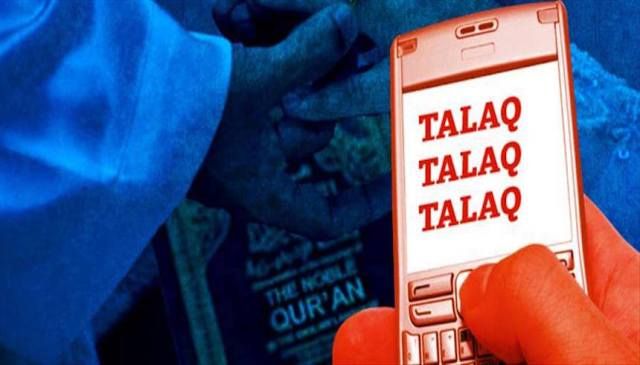
Recent shift may be seen that the status of all forms of dissolution of marriage, having propensities toward a particular faith, has almost changed from sacrosanct to a contractual in nature. In England the dissolution of marriage has been evolved as a dispute in civil law and recognises the “no fault” theory of divorce, since Christianity treats marriage as sacrosanct. Verily the principle happens to be at the pace with the movement of society from status to contract. Similarly in Shilpa Shailesh vs Varun Sreenivasan, Supreme Court of India (May 2023) has gone to exercise its extraordinary power under article 142 of the Constitution, to dissolve the marriage facing irretrievable breakdown to do complete justice. The move is ahead and near to the “no fault” doctrine for granting divorce. There are other cases like Savitri Pandey (2002) and Neelum Kumar (2010) where the verdicts of apex court have come to get into the right of the women to seek divorce merely on facts and circumstances, the modern look was otherwise conceptually available to Muslim women from beginning and terrifically without seeking any judicial help for this purposes. It is also a fact that the judicial precedence and stare decisis have their own limitation, it justly suits to the facts and circumstance of a pendent lit only. Arguably there is possibility that if the fact of the new case of aggrieved differs, it will constrain her to be litigating for a considerable time period from the subordinate court to so on, for assuaging her grievance. However following the other sources of the laws like custom and legislation if available to party of the said case, may be fairly expeditious, and of least cost and consequences. One paramount aspect in this context, may be seen in the counsel of the prophet pbuh as follows “ of all the lawful acts the most detestable to Allah is divorce”, narrated by Ibn Umar (book Abu Dawood 2178 Ibn Maja 2018). The Muslims are to comprehend how grave is the pronuncement of the painful and injurious word “Talaq”? It is permissible in Islam, however, has not been appreciated before the almighty.
Unfortunately the men have been asked to utter the word, to choose vice over virtue prima facie, while the marriage is being dissolved. It has not been expected from the privileged community in Islam i.e. women to do it. The privileges of Muslim women are esteemed rights, superior and the claim of equality here in this context may lead to descending to the relegated position of the men. In neighbourhood The Muslim Family Laws Ordinance, 1969 of Bangladesh and Pakistan, which may be said as contemporary laws, have got the provisions as vital check and balance that once the husband has made the pronouncement of Talaq under the Talaq al Hasan form, he shall communicate it to the Chairman and the Arbitration Council, which in turn, would endeavour to resolve the dispute and save the impugn marriage . The notion that the attorney or solicitor may pronounce Talaq on behalf of the client and entrustment of such right are yet repugnant to Muslim family Law.
There is no erudition striving to match with sounding the absurd words “Talaq” and to question the legitimacy of laws which is otherwise comparatively modern enough to be applied. It is as if that a husband impugns the special mode and method of divorce available to wife under Special Marriage Act or even under Hindu and Muslim Marriage Acts, on parity and without comprehending the wisdom and intelligible classification etc behind the legislative form of laws in force. The contrivance and redaction may be reasonably foreseen for Muslim Women to have restricted right to seek dissolution from third party.
Women prefer to part away from the husband. Right and ability to do herself is much stronger right then a right to seek her from other. Let hope the effervescent principles of law are not given an ethereal treatment.
The author is Law Officer Central Waqf Council.