
Why Are Our Homes Falling Apart, and How Can We Restore Them?

Mufti Ashfaq Qazi
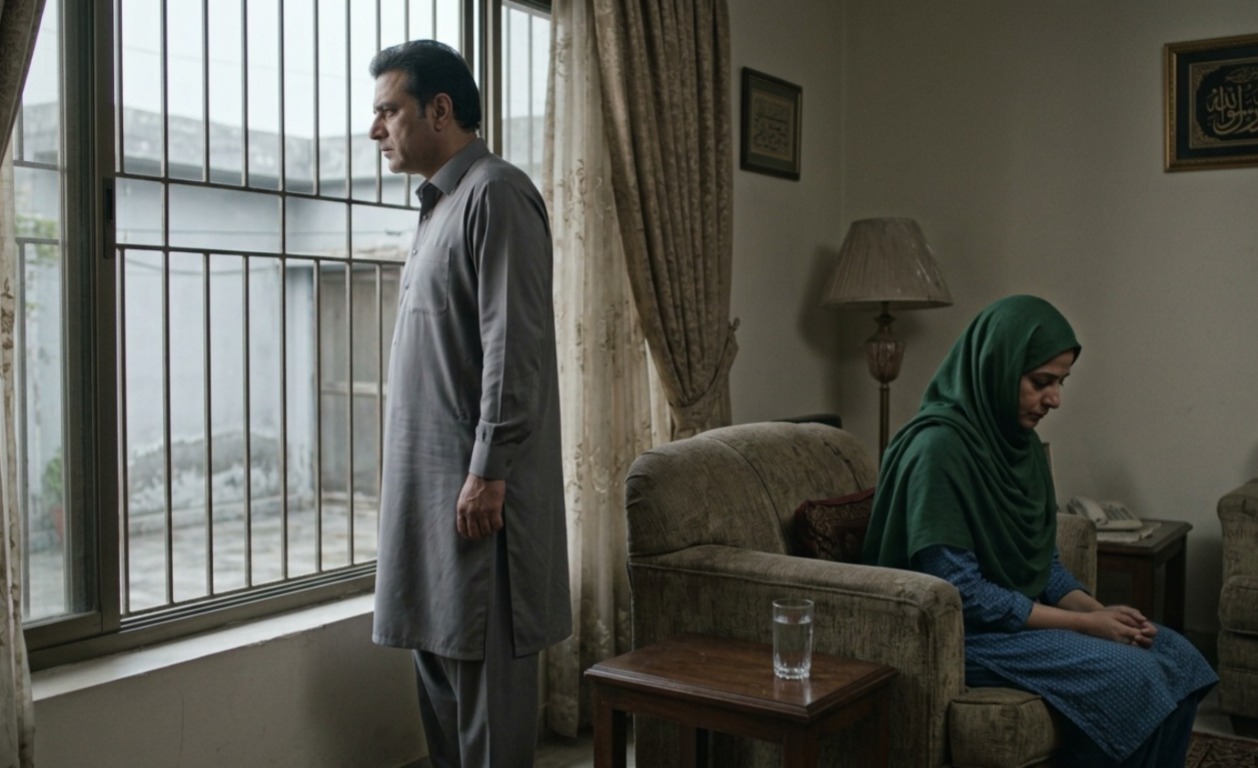
One of the most serious challenges facing our Muslim society today is the loss of peace within our homes and the transformation of relationships into burdens. On the surface, Muslims remain connected to acts of worship; mosques are active and religious gatherings continue to take place. Yet, sadly, in many of our homes, love, patience, respect and selflessness are gradually disappearing.
There are complaints between mothers and sons, growing distances between fathers and children, grievances between brothers, and sisters who no longer speak to one another. Minor disagreements between mothers-in-law and daughters-in-law turn into major conflicts. Sisters-in-law begin to view one another as rivals. Matters concerning property and inheritance turn family relationships into hostility, and sometimes a minor disagreement becomes the cause of years of estrangement.
The question is: Why has this situation arisen?
One major reason is that we have confined religion to a limited part of our lives. Prayer, fasting and other acts of worship are among the most important aspects of Islam, but Islam is not limited to worship alone. Islam provides guidance regarding our dealings, manners, conversations, relationships, neighbours, parents, children, spouses and every member of society.
The Qur’an describes believers as brothers to one another and instructs them to reconcile between their brothers. This is the foundation of Islamic social life. Yet, in our society, suspicion, jealousy, backbiting, tale-bearing, sarcasm, ego, arrogance and unnecessary interference in the lives of others have weakened this foundation.
We demand our rights from others, but often forget our own responsibilities. We complain that our children do not serve us, but do we ever ask ourselves how much love and proper upbringing we have given them?
A wife complains that her husband does not give her enough time, while the husband complains that his wife does not respect his family. A brother complains about another brother regarding property, yet no one is willing to fully uphold the requirements of justice.
Many domestic disputes do not arise from major problems. Rather, the real problem is turning a small matter into an issue of ego. One word, one sarcastic remark, one misunderstanding, or something said by a third person can create distances that take years to overcome.
Islam teaches us not to turn every disagreement into a battle, not to retaliate against every mistake, and not to respond to every harsh word with another harsh word. The Qur’an has prohibited suspicion, spying and backbiting because these things gradually destroy relationships from within. Likewise, the emphasis on maintaining family ties and the prohibition of severing them clearly demonstrate that Islam teaches us to connect and preserve relationships.
If we truly want to implement Islam in our lives, we must begin with our own homes. We must understand that defeating one another is not success. True success lies in understanding one another, forgiving one another and moving forward together.
Understanding the Rights and Boundaries of Family Relationships
For the well-being and prosperity of families, Islam has clearly defined the rights and boundaries of every relationship. Yet many of our problems begin when a person goes beyond his or her own rights and starts exercising authority over another person’s life.
After marriage, the most fundamental relationship is that between husband and wife. Allah has described married life as a source of tranquillity, love, affection and mercy. Therefore, a husband and wife should see each other not as opponents but as partners.
A husband should respect his wife, care for her needs and emotions, overlook her minor shortcomings, and treat her with kindness, forgiveness and understanding rather than constantly putting her on trial for every mistake.
Similarly, a wife should respect her husband, safeguard the home and remain conscious of his circumstances and difficulties. Sharing every disagreement between husband and wife with parents, siblings or friends often makes the situation more complicated rather than resolving it. Both spouses should avoid exposing each other’s weaknesses and private family matters before others.
After marriage, relationships with the mother-in-law, father-in-law, sister-in-law, brother-in-law and other members of the extended family also require respect and adherence to Islamic boundaries.
A mother-in-law should welcome her daughter-in-law as a new member of the family and treat her with love and compassion. Instead of imposing her will in every matter, she should give the new family member time to adjust to her new environment.
The daughter-in-law should likewise consider respecting her mother-in-law and father-in-law part of her responsibility. However, elders in the family must also understand that a daughter-in-law is not a domestic servant who has come into the house merely to serve them. She is a woman who has joined the family through marriage and has her own emotions, habits and needs.
A sister should understand that after her brother’s marriage, his wife is not her rival but a member of the family. Similarly, a sister-in-law should not interpret every word or action of her husband’s sister as interference or conspiracy, but should approach matters with a positive opinion and good faith.
At the same time, Islamic boundaries and proper observance of hijab must be maintained in interactions with brothers-in-law and other non-mahram male relatives. Respect does not mean unrestricted familiarity.
Every member of the household must understand that love does not mean constantly interfering in another person’s life. In some homes, peace is destroyed simply because everyone considers it their right to give opinions and pass judgments on the affairs of others.
Property, Inheritance and Family Disputes
Property, business and inheritance matters also create serious bitterness between brothers and other family members.
Islam has clearly established the rights of inheritance. Therefore, no one should expect blessing in wealth obtained by withholding the rightful share of a sister, brother, widow or orphan.
Parents should also avoid creating unnecessary differences between their children that may give rise to jealousy, deprivation or feelings of inferiority.
At the same time, children are required to regard serving and respecting their parents as an honour. It is not necessary to agree with everything one’s parents say, but disagreement must always be expressed with respect and good manners.
The Qur’an goes so far as to instruct believers not even to say “uff” to their parents and to speak to them with honour.
Likewise, brothers, sisters and relatives should guard their tongues when speaking to one another. One sentence can sometimes destroy a relationship that has lasted for years.
Thinking before speaking, pausing before responding, and listening to the other person’s perspective before making a judgment are extremely important for maintaining peace within the home.
The Real Beginning of Reform
Domestic and social conflicts cannot be resolved simply by advising others. Every individual must also look within himself or herself.
Reform should begin with a simple question:
Is the problem only in the other person, or is there something in my own behaviour that also needs to be corrected?
No family can truly remain happy without controlling anger, ego, stubbornness, jealousy and suspicion. The Qur’an praises those who restrain their anger and forgive people.
When someone in the family makes a mistake, that mistake should not become a lifelong case against them.
A mother should not consider every shortcoming of her son an act of disobedience, and a son should remain mindful of his mother’s age, temperament and emotions.
A father should incorporate love and wisdom into the upbringing of his children, while children should never abandon respect for their parents merely because they disagree with them.
When disagreements arise between husband and wife, both should focus not on defeating one another but on winning each other’s hearts. They should choose an appropriate time to speak calmly, avoid reopening a list of old mistakes, refrain from taunts, avoid raising their voices, and not bring every disagreement before the entire family.
If the matter becomes difficult to control, there is no harm in seeking help from wise and impartial individuals. The Qur’an guides us, in cases of serious marital conflict, to appoint one representative from each family to help bring about reconciliation.
Seeking reconciliation is not a sign of weakness or loss of dignity; it is a sign of wisdom.
In disputes between a mother-in-law and daughter-in-law, or between brothers, elders should not become advocates for one side. They should act with justice.
Making a decision without hearing someone’s side, carrying complaints from one person to another, exaggerating matters and turning every family member into a party to the dispute only increases conflict.
Creating a Religious and Loving Environment at Home
There is a need to create a religious environment within our homes, but such an environment should not focus solely on acts of worship. It should also teach good character and manners.
Alongside teaching children the Qur’an, they should also be taught:
How should they speak to their sisters?
What does it mean to respect parents?
What are the rights of neighbours?
How should a husband treat his wife with kindness?
And how can one control one’s tongue even during disagreement?
Making greetings of peace common in the home, praying for one another, giving gifts from time to time, visiting the sick, sharing in one another’s happiness and supporting one another during times of grief can revive love within families.
The brother with whom we are angry today may be the very person who stands beside us first when we need help tomorrow.
The mother whose words may irritate us today may be the very voice we desperately wish to hear tomorrow.
The father with whom we are currently disagreeing may not always be there to provide the shade of his presence over our heads.
Before taking family disputes to courts, police stations or public gatherings, we should first make every effort to resolve them through dialogue within the home.
Where dialogue is not sufficient, there is no shame in seeking the assistance of an honest, wise and impartial person.
Let Us Save Our Homes
We need attitudes within our homes that bring hearts closer rather than increase distances.
There should be correction when someone makes a mistake, not humiliation.
There should be dialogue during disagreement, not shouting.
And when a relationship begins to weaken, we should try to preserve it rather than simply walk away.
Allah has made relationships an important part of human life. They can be a test, but they can also become a means of earning immense reward.
Therefore, preserving peace in the home is not the responsibility of one individual alone.
The husband is responsible.
The wife is responsible.
The mother is responsible.
The father is responsible.
The children are responsible.
The brothers and sisters are responsible.
When every person accepts responsibility for his or her own part, many of the disputes that we have been tolerating for years—blaming them on fate, personality or circumstances—can be resolved.
May Allah bless our homes with peace and tranquillity, grant us the ability to understand one another, and guide us towards love, forgiveness, patience and reconciliation.
Ameen.
About the Author
The writer is a renowned Islamic scholar, religious speaker, teacher of Hajj pilgrims, Shariah advisor, author, columnist, President Mufti of Darul Ifta wal Irshad, Juma Masjid of Bombay, and Founder & Director of Family First Guidance Centre.