
Thousands Assemble for CJP’s ‘Sansad Chalo’ March as Delhi Police Seal Jantar Mantar and Parliament Routes
Heavy security arrangements and restrictions marked the planned protest demanding education reforms and the resignation of the Union Education Minister.
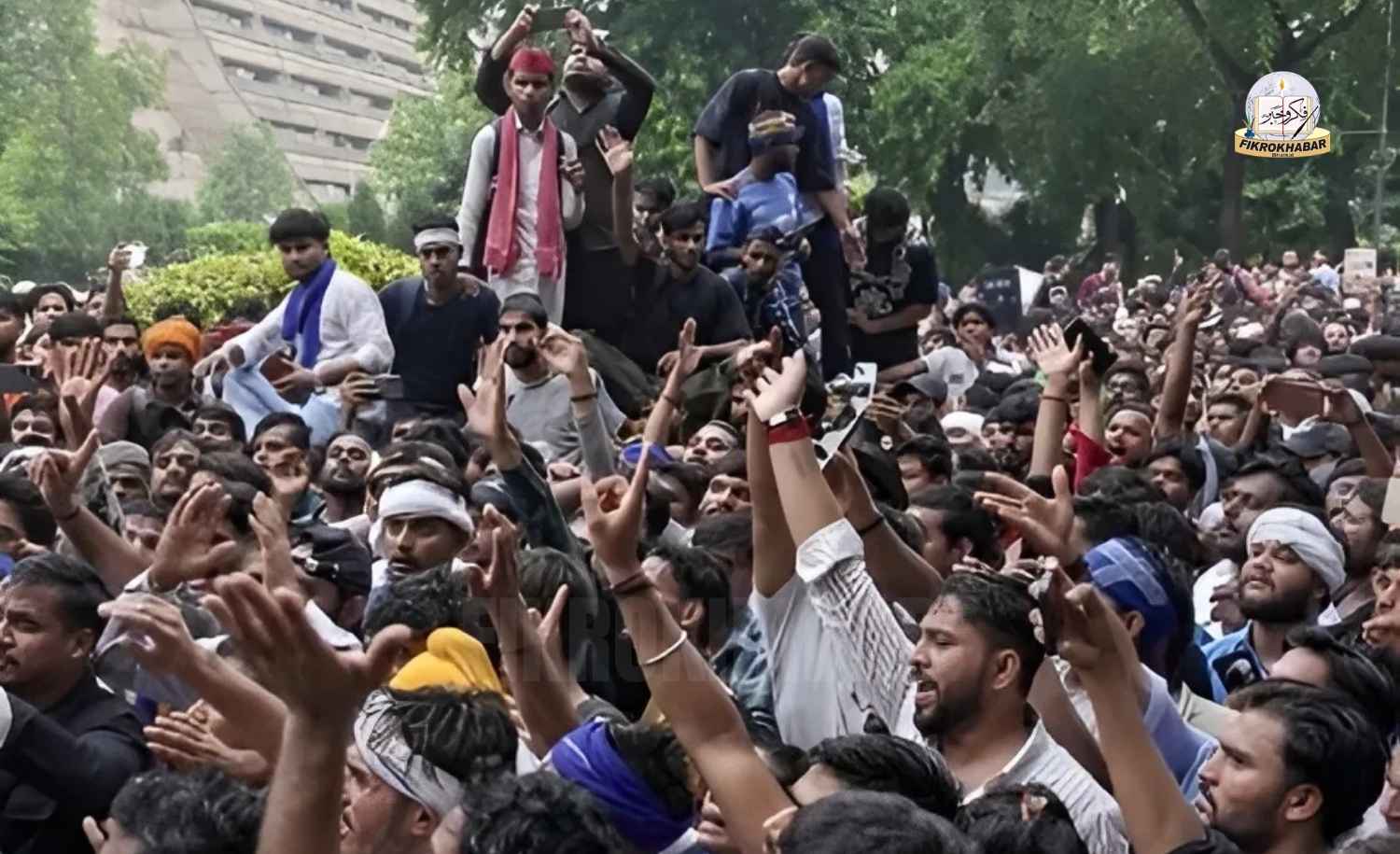

Thousands of protesters gathered at New Delhi’s Jantar Mantar on Monday in support of the Cockroach Janta Party’s proposed “Sansad Chalo” march to Parliament, despite extensive security measures imposed by the Delhi Police.
According to estimates, nearly 10,000 people assembled at the protest site to press for the resignation of Union Education Minister Dharmendra Pradhan over alleged examination paper leaks and rising concerns regarding student suicides and accountability in the education system.
Ahead of the march, Delhi Police sealed roads leading to Parliament and surrounded Jantar Mantar with multiple layers of barricades. Prohibitory orders under Section 163 of the Bharatiya Nagarik Suraksha Sanhita were also enforced, restricting public gatherings in the area.
Police officials stated that the organisers had neither sought nor received permission for the march and warned that any attempt to proceed towards Parliament would be considered an unlawful assembly and dealt with according to law.
Addressing the gathering, CJP spokesperson Ashutosh Ranka claimed that the movement had already succeeded in putting significant pressure on the government. He said the organisers would soon announce their next course of action and described the large turnout as a major victory for the movement.
Security across central Delhi was significantly strengthened overnight. Riot control vehicles, armoured units, Rapid Action Force personnel and Central Reserve Police Force teams were deployed around Parliament, India Gate, Rail Bhawan and other key locations. Additional police personnel from all 14 districts of Delhi were also called in to maintain law and order.
The security restrictions also affected public transport, with several Delhi Metro stations including Rajiv Chowk, Janpath, Patel Chowk, Central Secretariat and Seva Teerth temporarily closed. Traffic authorities issued advisories warning commuters about congestion in and around central Delhi.
Meanwhile, activist Sonam Wangchuk, who was shifted to Safdarjung Hospital after completing 20 days of an indefinite hunger strike, reiterated that he would end his fast only under specific conditions.
In a message posted on X, Wangchuk said he would consider ending his protest if the Union Government accepted responsibility for issues such as examination paper leaks or if he and CJP leaders were permitted to meet Members of Parliament and receive assurances that the issue would be raised during the parliamentary session.
He further alleged that he was being kept under “illegal detention” at the hospital, claiming that his movement, communication and freedom of expression had been restricted.
Separately, Wangchuk’s wife, Gitanjali Angmo, approached the Delhi High Court seeking his transfer from Safdarjung Hospital. In her petition, she argued that keeping him at the hospital without his consent amounted to unlawful confinement and violated the principle of informed consent.