Thinker of Islam: Maulana Syed Abul Hasan Ali Hasani Nadwi (RA)- A Towering Personality
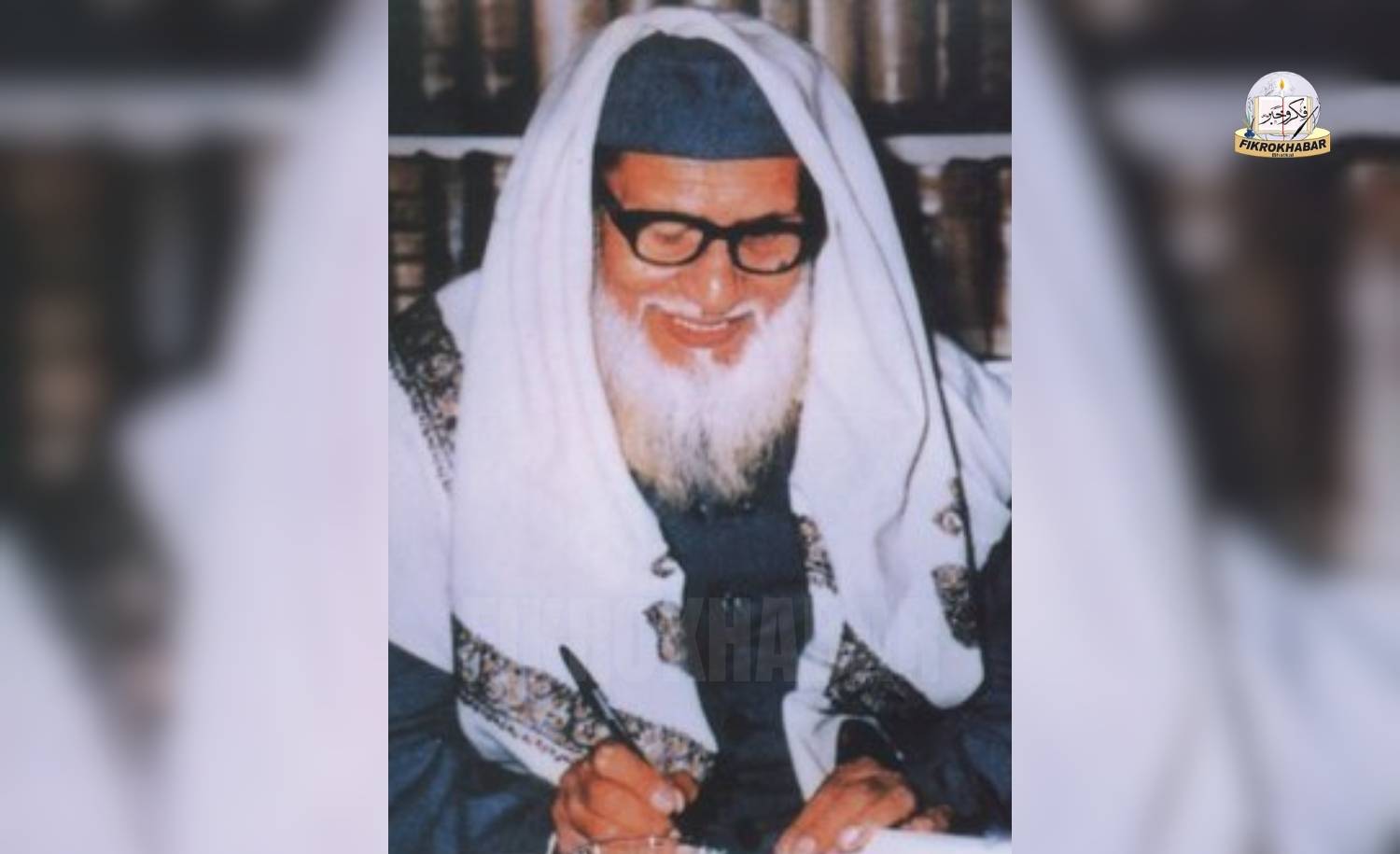

(The following article was written by Maulana Shah Qadri Mustafa Rifai (RA) and was published in “Tameer-e-Hayat” on January 25, 2000. It is being republished for public benefit with thanks to Tameer-e-Hayat. — Editor)
Hazrat Maulana Ali Mian Nadwi’s personality was not an ordinary one. Such personalities are born once in centuries and prove to be a mercy for all of humanity. Ali Mian was not merely the name of an individual; he represented a mission, a movement, a call, and a revolution. With his passing, a radiant sun of knowledge and wisdom set—one whose light and courage benefitted both the Arab and non-Arab worlds alike.
Ali Mian was a thinker, statesman, historian, Islamic scholar, expert in Arabic language and literature, an accomplished writer, and a biographer of the highest order. Alongside these qualities, he was an embodiment of piety and righteousness, simplicity and dignity, sincerity and love. He possessed a refined temperament, noble character, and exemplary generosity, reflecting the model of the pious predecessors. He spoke and wrote Arabic like a native speaker, had a deep and comprehensive understanding of Islamic movements, and was fully aware of the mischief and conspiracies of modern civilisation and movements. His fearless, effective and well-reasoned pen served both as a surgical instrument and a healing balm.
Maulana authored more than eighty books. Among his most well-known and widely read works are Tarikh-e-Dawat-o-Azimat, Islam and the World, The Rise and Decline of Muslims and Its Impact on Humanity, Purane Chiragh, Nabi-e-Rahmat, Arkan-e-Arba‘a, Jab Iman Ki Bahar Aayi, and Islamiyat aur Maghribiyat. These books occupy a distinguished place in Islamic literature.
Maulana Ali Mian served as the Rector of Nadwatul Ulama, President of the All India Muslim Personal Law Board, and Patron of the All India Milli Council. He was also the head of the Islamic Centre at Oxford University, a key member of Rabita Al-Alam Al-Islami, Chairman of the International Council of Islamic Literature, head of the Foundation for Studies and Research, and a member of the Consultative Council of the Islamic University of Madinah. In addition, he was associated with and patronised many other institutions and organisations.
He was among the fortunate few to whom the keys of the Holy Ka‘bah were entrusted as an honour. He was awarded the King Faisal Award, and shortly before his passing, he also received a prestigious international award from the Sultan of Brunei.
Maulana Ali Mian Nadwi (RA) was not a secluded scholar confined to writing and speeches; he was a man of action and a tireless worker in the field. His entire life was marked by continuous struggle. He reflected deeply on religious, national and educational issues, devised plans, and then stood up to bring them into reality. His passion for the community and dedication to religious causes can be judged from the fact that while he guided national and international institutions and participated in their meetings with his scholarly and wise counsel, he also personally established an organisation called Payam-e-Insaniyat (Message of Humanity).
Carrying the message of humanity, he travelled extensively across the country, fulfilling his duty of spreading universal human values. Payam-e-Insaniyat was meant for all of humanity—its message was addressed to Muslims as well as Hindus. He worked tirelessly to promote peace, harmony and brotherhood in the country. He was a balanced individual with an open heart and mind, which is why a large number of non-Muslims held him in high regard and respected him. From rulers and political leaders to religious heads and social workers, people from all walks of life visited him and sought his guidance.
Maulana was gentle, peace-loving and soft-natured—soft like silk—yet when it came to the protection and survival of religious and cultural identity, he believed in no compromise. He was ready to make every sacrifice for the preservation of religious and national identity. His strong reaction to the forced imposition of Vande Mataram and Saraswati Vandana in educational institutions of Uttar Pradesh created a political storm. He rose like a fearless warrior and challenged the government so firmly that it was forced to withdraw its decision.
Although he could not attend the 13th session of the Muslim Personal Law Board in Mumbai, his presidential address clearly stated that any change in Muslim Personal Law would amount to an invitation to apostasy, and if such an attempt was made, it would be resisted just as apostasy is resisted. For taking such courageous stands, he also had to pay a price. Miscreants raided his house without reason, attacked Nadwa, burned his effigies and hurled abuses at him. Yet, this mountain of determination and courage did not falter even slightly.
One of Maulana Ali Mian’s greatest qualities was the harmony between his inner and outer life. What he said or wrote, he practiced in his own life. There was no contradiction between his words and actions. Many prominent scholars are seen to suffer from a clear gap between their teachings and their personal conduct, which ultimately causes them to lose public trust. In contrast, when flowers fell from Maulana’s tongue, his inner and practical life was also filled with fragrance.
There was no trace of arrogance of knowledge in him. In fact, he always considered himself a student, which was proof of his greatness and high moral stature. He never sought fame or reward.
Alas, that towering lighthouse of knowledge and literature, that shining lamp on the mountaintop, that brave and noble man of faith and truth has departed from us. What tribute can we possibly offer him? We have nothing except our tears and our prayers. We sincerely pray to Allah Almighty to forgive all his human shortcomings, grant him Jannat-ul-Firdous, and bestow patience upon the Muslim Ummah. Ameen.
This Artical was Officially published in Urdu, Its a translated artical.