
Student Protest Near Parliament Turns Violent as Police Use Tear Gas and Baton Charges
Massive demonstration over examination issues and Sonam Wangchuk's hunger strike disrupts central Delhi and Parliament's Monsoon Session.
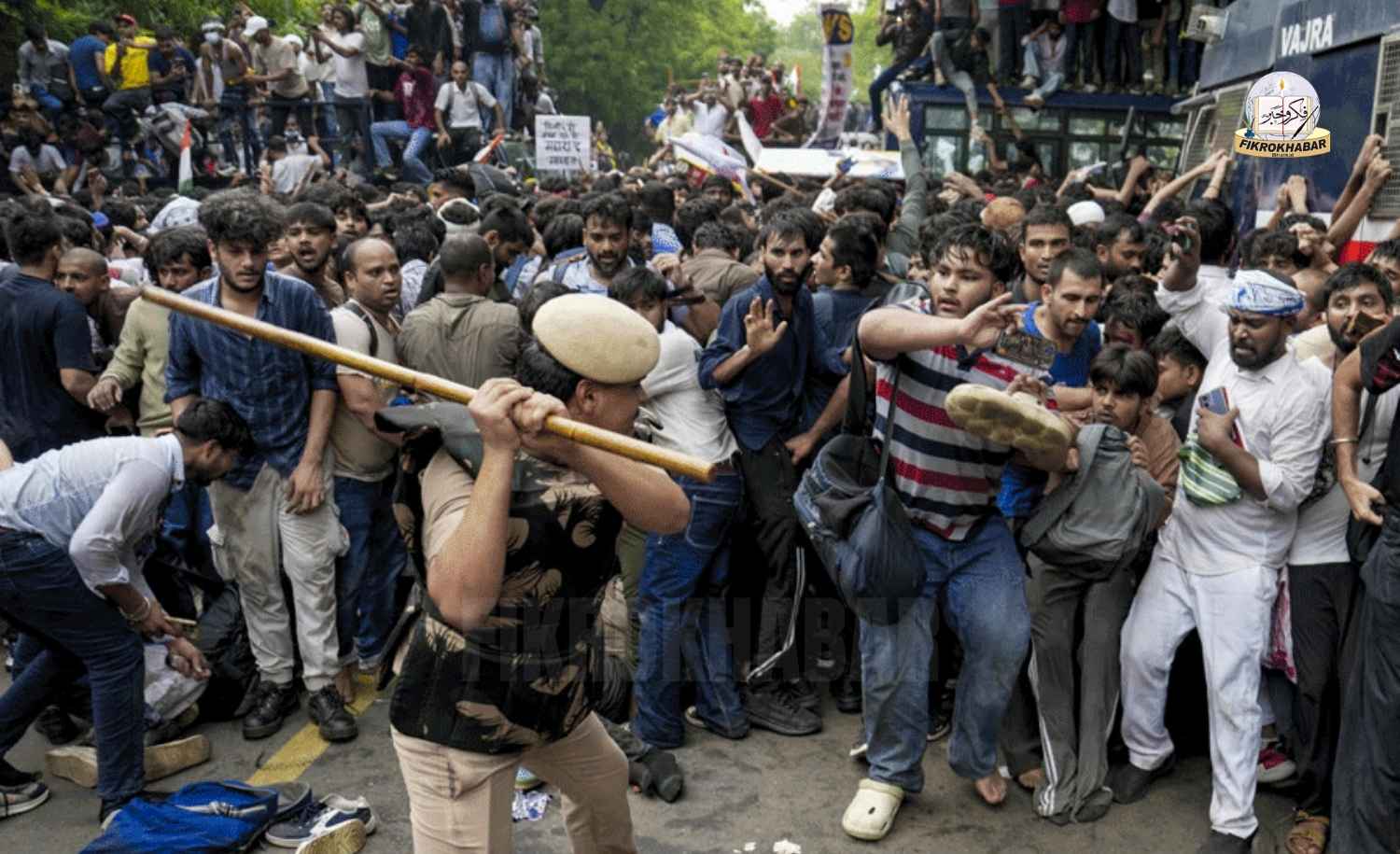

Thousands of students and young protesters gathered in central Delhi on Monday for a march towards Parliament, leading to tense clashes with police as security forces used tear gas and baton charges to stop the demonstration.
The protest, organised by the Cockroach Janta Party, began as a movement demanding accountability over alleged examination irregularities. It later gained wider support following activist Sonam Wangchuk’s hunger strike. Protesters also demanded the resignation of Union Education Minister Dharmendra Pradhan.
Large parts of central Delhi witnessed heavy traffic disruptions as thousands marched through the streets. Protesters attempted to reach Parliament by taking different routes after police sealed major roads with barricades. Many continued moving forward despite repeated attempts to stop them.
Police used tear gas and baton charges at several locations, including Parliament Street, Patel Chowk, Shastri Bhawan, Constitution Club, and the area near the Reserve Bank of India building. Internet services were also suspended in several parts of central Delhi as a security measure. Both protesters and police personnel sustained injuries during the clashes.
Rumours circulated on social media claiming that CJP founder Abhijeet Dipke had been detained by Delhi Police. However, the police denied the reports, stating that he had not been arrested and remained present at the protest venue.
CJP spokesperson Saurav Das accused the police of using excessive force against what he described as peaceful protesters and appealed to Members of Parliament to support the students.
Congress MP Renuka Chowdhary also criticised the police action, questioning the use of tear gas against young protesters and alleging that communication services, including WhatsApp, were disrupted during the parliamentary session.
The protest drew participants from across the country, including school students, job aspirants, and young graduates. Many travelled long distances to join the demonstration, saying they wanted greater transparency in the examination system and accountability from the government.
Meanwhile, Sonam Wangchuk, who is receiving treatment at Safdarjung Hospital, requested hospital authorities to allow him to briefly leave so he could participate in the march. According to the hospital, his condition remained stable, although doctors continued to monitor his health closely.
Inside Parliament, the first day of the Monsoon Session saw repeated disruptions as Opposition members raised the issue of the student protest. Proceedings in both the Lok Sabha and Rajya Sabha were adjourned several times amid noisy exchanges.
The CJP later said representatives had met Union Minister J. P. Nadda to present their demands. According to the organisation, the minister assured them that the concerns would be discussed internally, although there was no official confirmation from the government.
Several Opposition leaders also criticised the government’s handling of the protests. Congress MP Shashi Tharoor said Parliament should provide space for discussions on public concerns, while Aam Aadmi Party chief Arvind Kejriwal urged the Centre to engage with students instead of responding with force.
The demonstration continued throughout the day as protesters regrouped at different locations despite heavy police deployment, keeping central Delhi under tight security during the opening day of the Monsoon Session.