
Respecting the Sacred: A Reflection on Surah Al–Hajj (22:25–29)
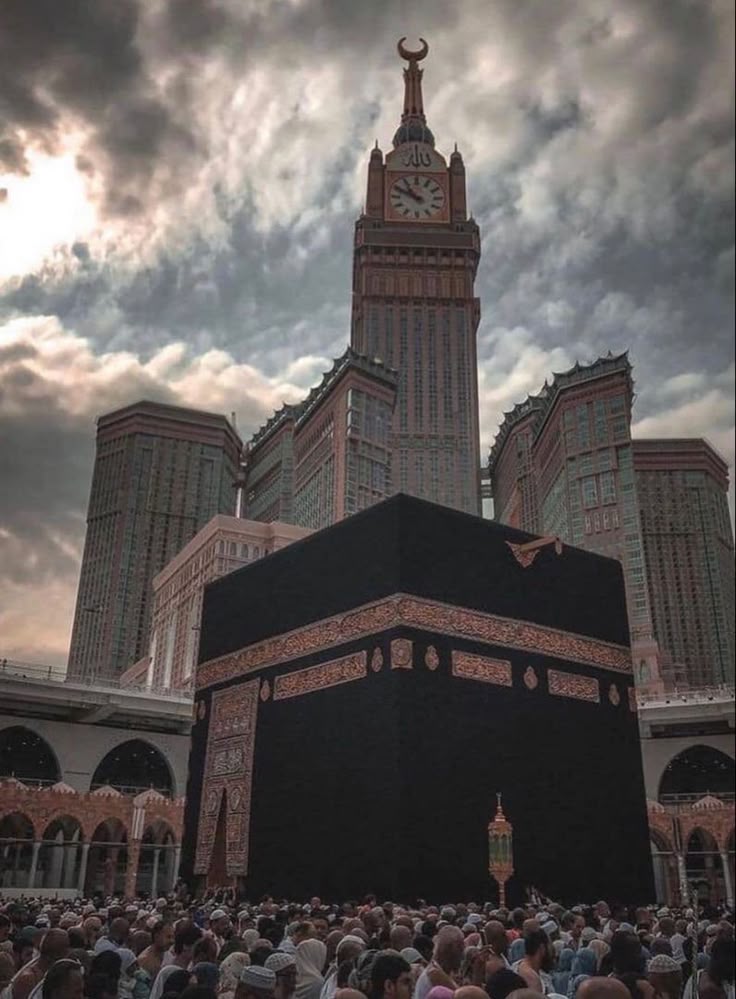

After showing the final destinations of mankind…
After revealing the terrifying contrast between Jahannam and Jannah…
Surah Al-Hajj now turns the heart toward something deeply connected to guidance itself:
The sacred symbols of Allah (شَعَائِرُ اللَّهِ).
Because faith is not only beliefs hidden inside the heart.
True faith eventually changes how a person treats what Allah has honored.
What Allah declares sacred…
The believer learns to approach with reverence.
And among the greatest sacred places on earth is the House of Allah itself:
Masjid al-Haram.
These ayahs pull the soul away from worldly distractions and remind mankind that there are places…
Moments…
and Acts of worship…
that were never meant to be treated casually.
They were meant to awaken the heart.
The Sanctity of Masjid al-Haram
إِنَّ الَّذِينَ كَفَرُوا وَيَصُدُّونَ عَن سَبِيلِ اللَّهِ وَالْمَسْجِدِ الْحَرَامِ الَّذِي جَعَلْنَاهُ لِلنَّاسِ سَوَاءً الْعَاكِفُ فِيهِ وَالْبَادِ ۚ وَمَن يُرِدْ فِيهِ بِإِلْحَادٍ بِظُلْمٍ نُّذِقْهُ مِنْ عَذَابٍ أَلِيمٍ
“Indeed, those who disbelieve and avert people from the way of Allah and from Al-Masjid Al-Haram – which We made for all people equally, whether resident or visitor – and whoever intends therein deviation or wrongdoing, We will make him taste a painful punishment.”– Qur’an 22:25
This ayah immediately establishes something powerful:
Masjid al-Haram does not belong to a tribe.
A nation.
A race.
Or a status.
It belongs to Allah.
And Allah made it for all believers equally.
The weak and the powerful stand side by side.
The rich and the poor wear the same garments.
The famous and the unknown become indistinguishable before Allah.
Because the purpose of sacred spaces is to strip away worldly illusions.
In dunya, people constantly compete for superiority.
But near the House of Allah…
Human pride is supposed to collapse.
And what makes this ayah especially heavy is that Allah warns not only against actions…
But even the intention of wrongdoing within the sacred sanctuary.
Because sacred places are not ordinary places.
There are spaces Allah honored specially.
And hearts are meant to soften there.
Not become harder.
The Legacy of Ibrahim عليه السلام
وَإِذْ بَوَّأْنَا لِإِبْرَاهِيمَ مَكَانَ الْبَيْتِ أَن لَّا تُشْرِكْ بِي شَيْئًا وَطَهِّرْ بَيْتِيَ لِلطَّائِفِينَ وَالْقَائِمِينَ وَالرُّكَّعِ السُّجُودِ
“And [mention] when We showed Ibrahim the site of the House, [saying], ‘Do not associate anything with Me and purify My House for those who perform tawaf and those who stand in prayer and those who bow and prostrate.’”– Qur’an 22:26
The Ka’bah was never merely a structure of stone.
It was built upon tawheed.
The first command given to Ibrahim عليه السلام regarding the House was:
Do not associate anything with Allah.
Because every act of worship surrounding the Ka’bah exists to direct the heart back toward Allah alone.
And notice how Allah calls it:
“My House.”
Not because Allah needs a house.
But because Allah honored it.
And throughout history…
Human beings constantly search for places to belong.
Places that make them feel connected.
Safe.
Grounded.
Yet perhaps no place on earth carries the spiritual weight of the House built for the worship of Allah alone.
A place where millions arrive carrying different languages…
different stories…
different sins…
different wounds…
Yet all saying:
“Labbayk Allahumma Labbayk.”
The Purpose of Hajj
وَأَذِّن فِي النَّاسِ بِالْحَجِّ يَأْتُوكَ رِجَالًا وَعَلَىٰ كُلِّ ضَامِرٍ يَأْتِينَ مِن كُلِّ فَجٍّ عَمِيقٍ
“And proclaim to the people the Hajj; they will come to you on foot and on every lean camel; they will come from every distant pass.”– Qur’an 22:27
This ayah is miraculous.
Ibrahim عليه السلام stood in an empty desert.
No cities.
No crowds.
No civilizations surrounding him.
Yet Allah commanded him to call humanity toward Hajj.
And centuries later…
Millions still answer that same call.
People cross oceans.
Spend their savings.
Leave their homes.
Endure exhaustion.
Crowds.
Heat.
Difficulty.
Just to stand before Allah.
Because deep inside every believing soul is a longing to return to its Creator.
Hajj is not tourism.
It is surrender.
Every ritual teaches the believer something.
The Ihram strips away status.
The Tawaf teaches that Allah becomes the center of life.
The sa’i (السَّعْي) reminds believers that relief comes through trusting Allah, just as Hajar trusted Him in the desert.
Arafah reminds humanity of the Day they will stand before Allah with nothing hidden.
And the sacrifice reminds the believer that love for Allah must come before attachment to dunya.
Hajj is a journey of the body…
But more importantly…
It is a journey of the heart.
Remembering Allah Through Worship
لِّيَشْهَدُوا مَنَافِعَ لَهُمْ وَيَذْكُرُوا اسْمَ اللَّهِ فِي أَيَّامٍ مَّعْلُومَاتٍ
“So they may witness benefits for themselves and mention the name of Allah during appointed days…”– Qur’an 22:28
The greatest benefit of worship was never worldly.
It was always nearness to Allah.
People often reduce worship to rituals without understanding what those rituals are meant to create inside the soul.
But every act of worship in Islam is designed to transform the heart.
Salah teaches discipline and humility.
Fasting teaches restraint.
Zakah teaches detachment from dunya.
And Hajj teaches complete surrender.
Not only physically…
But emotionally and spiritually.
The believer leaves behind Comfort…
Routine…
Appearance…
and Worldly distractions…
Just to answer Allah’s call.
And perhaps this is why sincere worship changes people.
Because when worship is done correctly…
It breaks the Arrogance of the Nafs.
Feeding Others & Reviving the Heart
فَكُلُوا مِنْهَا وَأَطْعِمُوا الْبَائِسَ الْفَقِيرَ
“So eat from them and feed the miserable and poor.”– Qur’an 22:28
Even sacrifice in Islam is tied to mercy.
A believer cannot claim closeness to Allah while becoming careless toward people.
The rituals of Hajj constantly reconnect the servant to Humility…
Gratitude…
and Compassion.
Because Allah never wanted worship to become empty movements.
He wanted transformed hearts.
Then the Ayah continues:
ثُمَّ لْيَقْضُوا تَفَثَهُمْ وَلْيُوفُوا نُذُورَهُمْ وَلْيَطَّوَّفُوا بِالْبَيْتِ الْعَتِيقِ
“Then let them end their untidiness, fulfill their vows, and perform tawaf around the Ancient House.”– Qur’an 22:29
The “Ancient House.”
A house honored across generations.
Visited by prophets.
Loved by believers for centuries.
And perhaps one of the deepest lessons here is this:
Everything in Hajj pulls the heart away from dunya…
And redirects it back toward Allah.
Because human beings constantly become distracted by temporary things.
Hajj interrupts that distraction.
It reminds the believer:
You were not created for dunya alone.
A World That Forgot the Sacred
These ayahs teach us that sacred things should never become ordinary in our hearts.
The Qur’an.
The masjid.
Salah.
Hajj.
The symbols of Islam.
The moments connected to Allah.
The modern world trains people to treat everything casually.
Nothing remains sacred anymore.
Everything becomes entertainment.
Everything becomes content.
Everything becomes temporary.
But the believer is different.
The believer honors what Allah honors.
And perhaps that is why hearts feel spiritually alive in places connected to sincere worship.
Because the soul was created to recognize the sacred.
Surah Al-Hajj reminds us that Hajj is not merely a physical journey to Makkah.
It is a journey away from ego.
Away from distraction.
Away from attachment to dunya.
And toward Allah.Because at its core…
Every act of worship in Islam is teaching the same lesson:
Nothing deserves the center of your heart except Allah.
May Allah make our hearts among those that honor what He has made sacred.
May He purify us from arrogance, heedlessness, and attachment to dunya.
May He allow us to witness His House with sincere hearts, accept our worship, and make every act of devotion a means of drawing nearer to Him.
And may He never allow the sacred signs of Allah to become ordinary in our hearts.
Ameen.
1 Comment
Aameen💗