
Powerful 7.8 Magnitude Earthquake Strikes Southern Philippines, Causing Widespread Damage and Tsunami Alerts
At least 15 people have been confirmed dead as rescue operations continue across affected areas in Mindanao following a major earthquake and strong aftershocks.
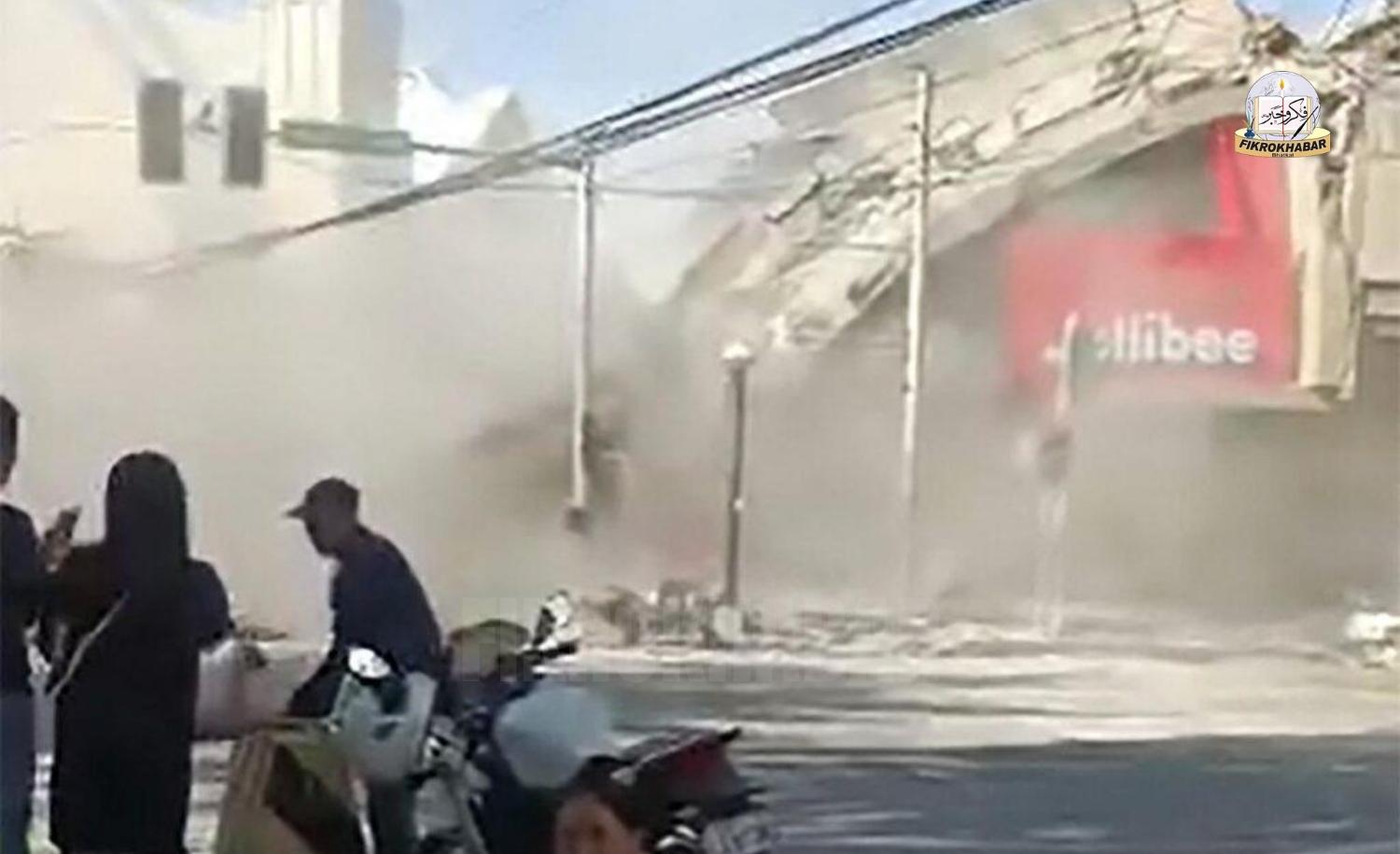

Manila: A powerful 7.8 magnitude earthquake struck the southern Philippine island of Mindanao on Monday morning, triggering extensive destruction and prompting tsunami warnings across parts of the region.
According to official Philippine authorities and disaster management agencies, at least 15 people have lost their lives, while more than 200 others have been injured. Several people are still reported missing as emergency teams continue search and rescue operations in the worst affected areas.
The earthquake caused severe structural damage across Mindanao. Residential and commercial buildings, schools, hospitals, and major roads suffered significant destruction, making it difficult for rescue workers to reach some communities.
The United States Geological Survey reported that the quake’s epicenter was located approximately 32 kilometers off the coast of Sarangani Province at a depth of about 33 kilometers beneath the seabed. The tremor was felt across a wide area and caused panic among residents.
In General Santos City, one of Mindanao’s largest urban centers, several shopping complexes and restaurants were heavily damaged. Videos circulating on social media showed people rushing out of buildings as the ground shook violently. Roads and elevated structures were also seen swaying during the earthquake.
Roughly two hours after the main quake, a strong 6.1 magnitude aftershock struck the same region, creating fresh fear among survivors and emergency responders already working in difficult conditions.
Following the disaster, the Philippine Institute of Volcanology and Seismology issued a high alert for coastal communities and confirmed unusual sea level activity in several areas. Authorities ordered the evacuation of more than 10,000 families from coastal districts in nine provinces as a precaution against possible tsunami waves.
Philippine President Ferdinand Marcos Jr. described the situation as deeply concerning and directed all government agencies to launch emergency relief efforts. Temporary shelters have been established for displaced residents, while officials continue urging people in vulnerable coastal areas to follow evacuation orders and safety instructions.
The impact of the earthquake has also raised concerns in neighboring countries. Indonesian authorities issued tsunami advisories for parts of Borneo and Sulawesi, warning of potentially dangerous waves along coastal regions. Japan also placed several Pacific coastal areas on alert and temporarily restricted some maritime activities as a safety measure.
The Indian Embassy and the United States Consulate in the Philippines issued advisories for their citizens, encouraging them to avoid travel to the affected regions and stay updated through official channels.
Experts note that the Philippines lies along the Pacific Ring of Fire, one of the world’s most active seismic zones, where earthquakes and volcanic activity occur frequently. However, officials have described this event as one of the strongest earthquakes to hit the country in recent years.
Monitoring agencies have recorded more than 200 aftershocks since the initial quake. As a result, local authorities have closed schools, colleges, and business establishments in several affected districts until further notice.
Operations at General Santos International Airport have also been partially suspended while inspections of the runway and airport facilities are carried out. With some hospital buildings damaged, medical teams have established temporary treatment centers in open areas to care for the injured. Heavy machinery continues to be used to search for survivors trapped beneath collapsed structures.