
Owaisi Alleges ‘Divide and Rule’ in Ladakh District Expansion
AIMIM chief criticises creation of five new districts, claims move weakens joint statehood demand of Buddhists and Muslims
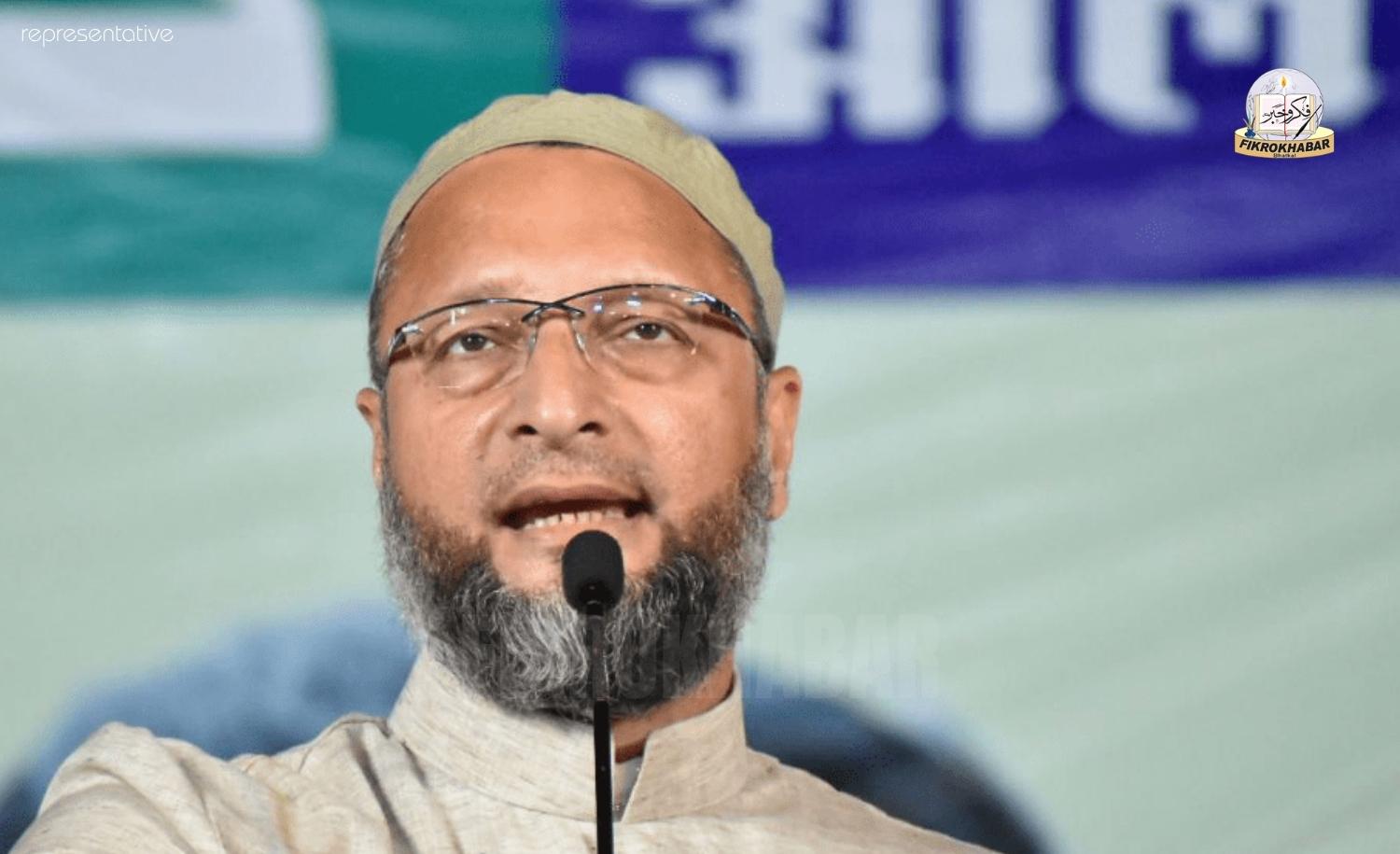

Asaduddin Owaisi on Tuesday criticised the Centre’s decision to create five new districts in Ladakh, alleging that the move is aimed at dividing the united statehood demand of Buddhist and Muslim communities in the region.
The All India Majlis-e-Ittehadul Muslimeen leader described the development as a form of gerrymandering, arguing that it could alter the balance between communities. In a post on social media, Owaisi pointed to population figures from the 2011 Census, stating that while Muslims make up a larger share of the population, the new administrative division results in more districts with a Buddhist majority.
According to him, the restructuring increases the number of districts in Ladakh from two to seven, with five expected to have Buddhist majorities and only two with Muslim majorities. He claimed this could weaken the collective political voice that has been calling for statehood in the region.
The decision to create the new districts was approved by Lieutenant Governor Vinai Kumar Saxena, who termed it a significant step toward meeting long-standing demands of the people. In a public statement, Saxena said the move would help improve governance and bring administrative services closer to residents, especially those living in remote areas.
The five new districts announced are Nubra, Sham, Changthang, Zanskar, and Drass. With their addition, Ladakh will now have seven districts, expanding from the earlier two districts of Leh and Kargil.
Officials said that deputy commissioners and superintendents of police will be appointed immediately to ensure smooth functioning of the new administrative units. The administration also plans to quickly address staffing and logistical needs so that offices in key locations such as Diskit, Khaltse, Nyoma, Padum, and Drass-Ranbirpura become operational without delay.
Authorities maintain that the reorganisation is intended to improve access to public services in a region where people often travel long distances, sometimes over 300 kilometres, to reach district headquarters.
Ladakh, which spans over 86,000 square kilometres and borders China and Pakistan, remains one of India’s least populated Union Territories. It came under direct central administration after the bifurcation of Jammu and Kashmir in 2019, following the Abrogation of Article 370.
While the administration has presented the move as a step toward decentralisation and better governance, Owaisi’s remarks have added a political dimension to the development, highlighting concerns over representation and regional balance.