
Maulana Dr. Saeedur Rahman Azmi Nadwi (RA): A Blessed Personality and a Life of Scholarship and Mentorship
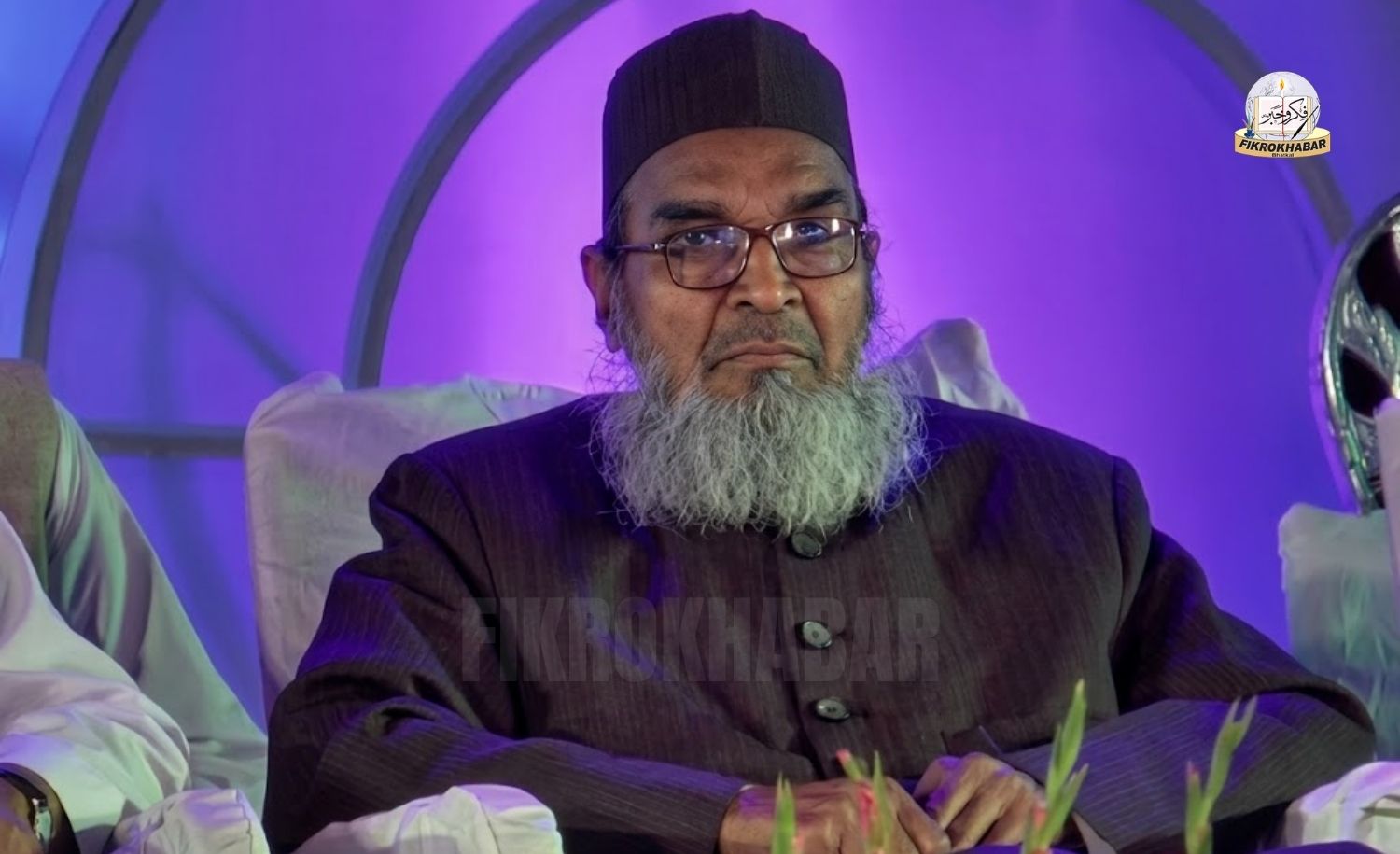

By Muhammad Thalith Akrami Nadwi, one of his students
Maulana Dr. Saeedur Rahman Azmi Nadwi (RA) was born in 1935. His father was Hazrat Maulana Muhammad Ayyub Azmi (RA). After completing his early education, he graduated from Jamia Miftahul Uloom, Mau. He subsequently came to Darul Uloom Nadwatul Ulama, Lucknow, around 1952 to pursue further studies and deepen his knowledge of Arabic and Islamic sciences.
At Nadwatul Ulama, Maulana Azmi benefited from several distinguished scholars and teachers of his time. Among them were Hazrat Maulana Shah Muhammad Haleem Ata Saloni (RA), Sheikh-ul-Hadith at Darul Uloom Nadwatul Ulama; Maulana Abul Fazl Abdul Hafeez Balyawi (RA), author of Misbahul Lughat; Maulana Dr. Abdullah Abbas Nadwi (RA); and Maulana Syed Muhammad Rabey Hasani Nadwi (RA), among others. Under their guidance, he acquired a profound understanding of Islamic sciences and developed a strong command of Arabic language and literature, establishing himself as a distinguished scholar.
Among his classmates were Maulana Syed Muhammad al-Hasani (RA), founder and editor of the Arabic magazine Al-Ba’th al-Islami and father of Maulana Syed Ammar Hasani Nadwi and Maulana Syed Bilal Hasani Nadwi; Maulana Dr. Taqiuddin Nadwi Mazahiri; Maulana Syed Ehtisham Ahmad Nadwi (RA); and Maulana Syed Ahmad Ali Hasani Nadwi (RA).
In 1954, Maulana Azmi graduated from Darul Uloom Nadwatul Ulama and joined the same institution as a teacher. In 1955, when Maulana Syed Muhammad al-Hasani (RA) launched the Arabic magazine Al-Ba’th al-Islami from Lucknow, Maulana Azmi became associated with it as a member of the editorial team. Through his Arabic writings and scholarly articles, he played an important role in enhancing the magazine’s academic standing and expanding its reach.
Following the death of Maulana Syed Muhammad al-Hasani in 1979, Maulana Azmi was appointed editor-in-chief of Al-Ba’th al-Islami. In this capacity, he continued to employ his scholarly knowledge and writing skills in the service of Arabic journalism and Islamic outreach.
Alongside his teaching responsibilities at Darul Uloom Nadwatul Ulama, Maulana Azmi made significant contributions to the development of its Department of Arabic Language and Literature. Working with Maulana Syed Muhammad Rabey Hasani Nadwi, he helped advance the department’s academic and literary activities. He initially served as Adib Thani (Second Grade Arabic Teacher), later became Adib Awwal (First Grade Arabic Teacher), and eventually assumed the responsibility of heading the Arabic department. The teaching and promotion of Arabic language and literature thus became an integral part of his scholarly life.
In 2000, following the election of Maulana Syed Muhammad Rabey Hasani Nadwi as the Rector (Nazim) of Nadwatul Ulama, Maulana Azmi was entrusted with the responsibility of ihtimam, or the administration of Darul Uloom Nadwatul Ulama. He had already served the institution in various academic and administrative capacities before assuming this important position.
From his student days, Maulana Azmi enjoyed the special guidance and mentorship of the renowned Islamic thinker Hazrat Maulana Syed Abul Hasan Ali Hasani Nadwi (RA). With his encouragement and advice, Maulana Azmi further pursued his studies in Arabic grammar and rhetoric under the distinguished scholar Allama Taqiuddin Hilali al-Marrakushi (RA). During this academic journey, he spent some time in Iraq and also visited Syria. Later, he undertook journeys for Islamic outreach to South Africa, Australia, Turkey, and other countries.
Maulana Azmi left behind a valuable scholarly and literary legacy in Arabic language and literature, Islamic thought, religious outreach, and journalism. His Arabic writings, eloquent speeches, and contributions to Islamic journalism earned him respect and recognition among scholarly circles in the Arab world as well.
Among his writings, 48 Saal Shafqaton Ke Saaye Mein (48 Years Under the Shade of Affection) holds a special place. In this book, he provides a detailed account of the personality and scholarly life of Hazrat Maulana Syed Abul Hasan Ali Hasani Nadwi (RA), reflecting on his own long association with him and the knowledge and guidance he received from the eminent scholar.
Maulana Azmi was counted among the distinguished scholars of Nadwatul Ulama who devoted their lives to education, teaching, Islamic outreach, and the service of Arabic language and literature. His personality was marked by scholarly dignity, religious commitment, composure, determination, and deep affection for his students. He never maintained an unnecessary distance from them but remained attentive to their academic and personal development.
His life reflected a strong commitment to religious practice and adherence to the Sunnah. He strongly opposed religious innovations and lived with the sincerity and dedication expected of a committed scholar. His dignified appearance, measured speech, and commanding presence inspired respect and awe in those around him. Yet behind this outward gravity was a heart filled with affection and concern for his students.
One of Maulana Azmi’s most remarkable qualities was his punctuality and discipline. He was extremely particular about the use of time, never taking his scheduled commitments lightly, and attached great importance to maintaining order and discipline. He made every effort to offer his prayers on time and was equally meticulous in fulfilling his teaching responsibilities. Whether in the heat of summer or the cold of winter, and regardless of favourable or harsh weather conditions, he remained committed to his teaching schedule. This consistency brought a special sense of seriousness and dignity to his classes.
Another outstanding quality was his exceptional command of Arabic and his fluency in both writing and speech. He was a fine Arabic litterateur whose writing was elegant, clear, and eloquent, free from grammatical errors and awkward expressions. He was also an effective speaker. His mastery of Arabic and his distinctive style of expression contributed significantly to the promotion of eloquence and literary excellence in the academic environment of Nadwatul Ulama.
Teaching Arabic language and literature was a major part of his scholarly life. During my studies at Nadwatul Ulama, I had the privilege of studying several important works under his guidance. These included Shu’ara al-Rasul ﷺ, Al-Mu’allaqat, Mukhtar al-Shi’r al-Arabi, selected portions of the Diwan of Hassan ibn Thabit (RA), and Madha Khasira al-Alam bi Inhitat al-Muslimin (What the World Lost Through the Decline of Muslims) by the renowned Islamic thinker Hazrat Maulana Syed Abul Hasan Ali Nadwi (RA). I also received general hadith authorisation (ijazah) from him. These experiences reflect the importance he attached to Arabic literature, classical poetry, and Islamic thought in his teaching.
Maulana Azmi’s teaching was not confined to explaining books in the classroom. He also provided practical training in Arabic composition and writing. Many of his students developed their skills and appreciation for Arabic expression through his personal guidance.
One of the most significant aspects of his personality was his commitment to the personal development of his students. It was well known that even after his formal teaching hours had ended, he would open his home to students. There, he would teach them, correct their Arabic, refine their pronunciation and manner of speaking, and instil in them a love for eloquent Arabic and pride in the language.
His mentorship therefore extended far beyond the classroom. He devoted attention to the intellectual, linguistic, and practical development of his students. His approach combined correction with encouragement, discipline with kindness, and instruction with personal guidance. He consistently encouraged students to use proper, eloquent Arabic and helped cultivate a genuine love for the language.
Maulana Azmi’s personality was distinguished by his religious commitment, deep attachment to Arabic, punctuality in teaching, affection for students, and dedication to their development. He was not merely a teacher and author but also a mentor who took a keen interest in the intellectual and linguistic growth of those who studied under him. For him, teaching Arabic was never limited to textbooks and classroom lessons. He sought to develop in his students an appreciation for eloquent Arabic, accurate pronunciation, and the art of scholarly writing.
In his life, knowledge, practice, teaching, Arabic language, literature, and Islamic outreach were closely interconnected. Alongside his extensive scholarly responsibilities, he considered the training and development of students an essential duty. He regarded Arabic not merely as an academic subject but as an important language of the Islamic intellectual and religious heritage, and he devoted himself to its preservation and advancement.
Another notable feature of his life was his quiet perseverance. He continued his scholarly and religious work with dedication, consistency, and sustained effort, without seeking publicity or recognition.
The services he rendered throughout his long scholarly life, together with the effort he invested in the academic and linguistic development of his students, will remain a lasting source of benefit. His contributions and the knowledge he passed on to generations of students will, God willing, continue to benefit others and stand as a form of Sadaqah Jariyah (ongoing charity) on his behalf.
Maulana Dr. Saeedur Rahman Azmi Nadwi (RA) passed away on Wednesday, October 7, 2026. His demise is a profound loss for the scholarly and religious community.
May Allah Almighty forgive him, elevate his ranks, accept his scholarly and religious services, fill his grave with light, and grant him an honoured place in Jannatul Firdous through His infinite mercy and grace. Ameen.
This Article was written in Urdu by Author which was posted in our Urdu website, Now its Translated and Publish in English Website