
Madrasas, Modern Education and Constitutional Pluralism: Reconciling Faith, Knowledge and the Right to Education
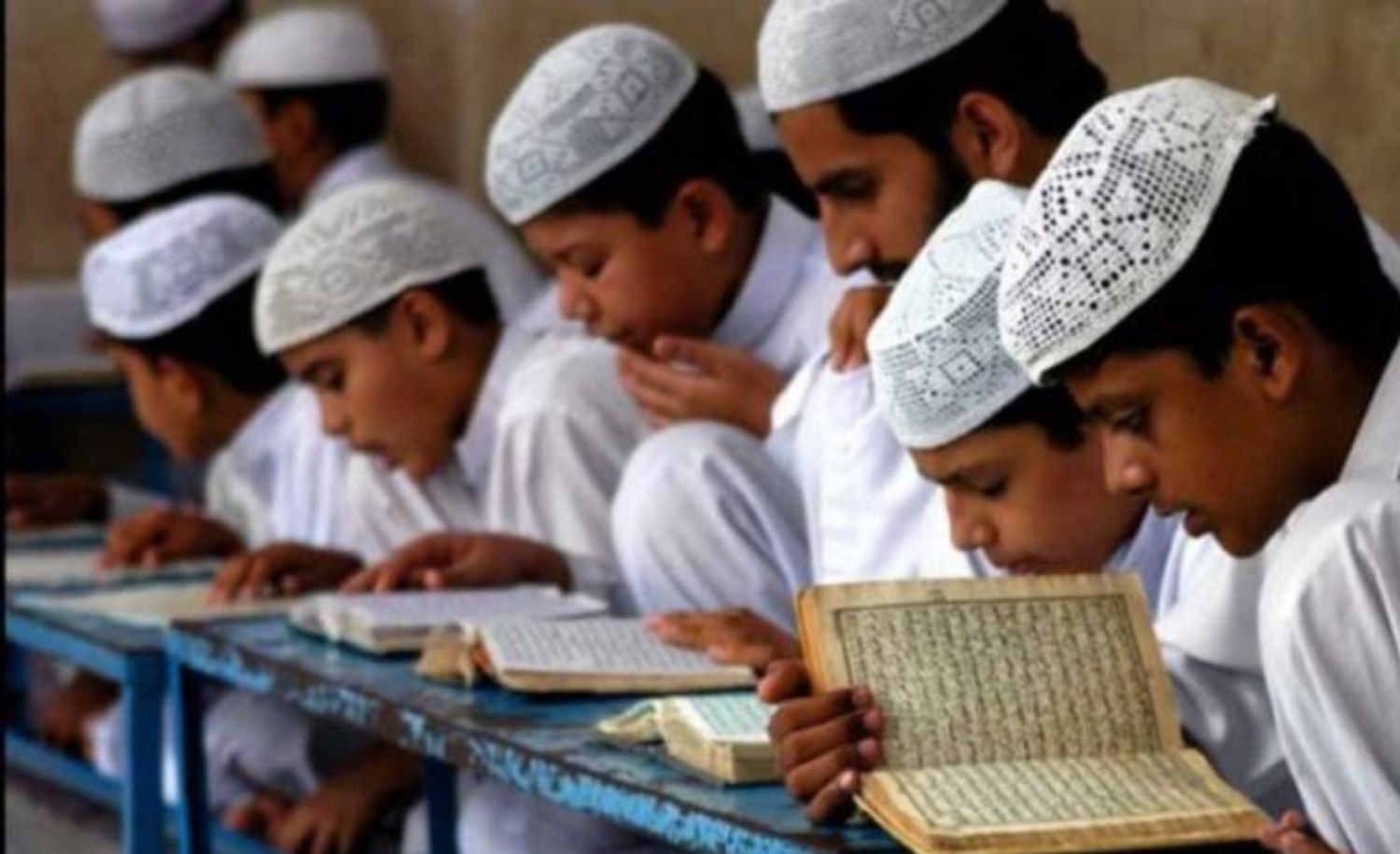

Education has always occupied a central place in Islamic civilisation. The first revealed command of the Qur’an was Iqraʾ—”Read”—and the pursuit of knowledge became one of the defining characteristics of Muslim intellectual life. From the early mosque schools to the great centres of learning in Baghdad, Cairo, Córdoba and elsewhere, religious scholarship developed alongside mathematics, medicine, astronomy, philosophy, language and law. The classical Islamic educational ideal did not necessarily divide revealed and worldly knowledge into mutually exclusive spheres; rather, it sought to cultivate both moral character and intellectual ability.
The contemporary debate over madrasas in India should be viewed against this broader intellectual background. The question is not simply whether madrasas should remain religious institutions or be brought within the framework of modern education. The deeper constitutional question is how India can reconcile the child’s right to meaningful education, the autonomy of religious and linguistic minorities, and the freedom of communities to preserve their cultural and religious traditions.
The issue has acquired renewed significance with the Supreme Court’s consideration of a challenge to provisions of the Right of Children to Free and Compulsory Education Act, 2009 (RTE Act), which exclude madrasas, Vedic pathshalas and educational institutions primarily imparting religious instruction from its operation. LiveLaw report on the Supreme Court proceedings: The controversy provides an opportunity to examine not only the legal status of madrasas but also the larger philosophy of education in a plural constitutional democracy.
The Islamic Tradition of Learning
Islamic history makes it difficult to regard religious education and intellectual advancement as inherently incompatible. The Qur’an repeatedly invites human beings to observe creation, reflect upon its signs and use reason. The Prophet Muhammad ﷺ placed great emphasis upon learning, while Muslim societies developed institutions in which religious and intellectual disciplines interacted.
The great centres of Islamic learning were rarely confined to devotional instruction. Baghdad became a centre of theology, jurisprudence, mathematics, astronomy, medicine and philosophy. Cairo developed Al-Azhar into one of the world’s enduring centres of Islamic scholarship. Córdoba, Damascus, Nishapur, Bukhara and other cities sustained traditions of learning that extended well beyond religious studies.
The classical Muslim scholar was therefore not necessarily a specialist in religion in the modern sense. Jurists studied language and logic; theologians engaged philosophy; physicians discussed ethics; mathematicians worked on inheritance calculations and astronomy; and astronomers addressed practical questions concerning calendars, prayer times and the qiblah. The boundaries between religious and secular knowledge were consequently much less rigid than they often appear today.
This history offers an important lesson for the present: religious identity need not entail intellectual isolation. A madrasa can preserve its theological and cultural character while preparing its students to participate confidently in the wider intellectual, economic and civic life of India.
The Madrasa as a Historical Institution
The madrasa emerged as an institution for the systematic transmission of Islamic learning. Its curriculum traditionally included Qur’anic studies, Hadith, jurisprudence, Arabic grammar, theology and related disciplines. Different regions developed distinctive curricula reflecting their intellectual traditions and social circumstances.
In South Asia, madrasas acquired particular importance during the colonial period. As Muslim political power declined and British rule expanded, religious scholars increasingly regarded the preservation of Islamic learning as essential to maintaining religious and cultural identity. Institutions such as Darul Uloom Deoband subsequently became important centres of traditional scholarship.
This historical role deserves recognition. For many families, a madrasa is more than a school: it is a means of transmitting religious knowledge, language, ethical values and cultural memory between generations.Reform must therefore be approached with sensitivity to the identity and legitimate aspirations of the communities concerned.
At the same time, historical importance does not mean that an educational tradition must remain unchanged. Every living educational system has to respond to changing circumstances. Today’s students encounter digital technology, modern science, global commerce, higher education, and rapidly changing employment patterns. The challenge is to ensure that religious education prepares them for this world rather than leaving them inadequately equipped to navigate it.
The Constitutional Promise of Education
The Indian Constitution approaches education through several complementary principles. Article 21A establishes the right to free and compulsory education for children within the constitutionally prescribed age group. Articles 14 and 15 embody wider commitments to equality and non-discrimination, while Articles 29 and 30 protect cultural interests and the rights of religious and linguistic minorities.
The RTE Act was enacted to give practical effect to the constitutional commitment to elementary education. It establishes requirements concerning access, school responsibilities, teacher qualifications and educational standards.
At the same time, the legislation contains significant constitutional accommodation. Section 1(4) makes its application subject to Articles 29 and 30, while Section 1(5) specifically excludes “Madrasas, Vedic Pathsalas and educational institutions primarily imparting religious instruction.”
This produces a genuine constitutional tension. On one side is the universal right of the child to education; on the other is the constitutional protection of minority educational autonomy. The challenge is not simply to choose one principle over the other, but to determine how both can operate together.
The Supreme Court and the Evolving Constitutional Question
The contemporary controversy has acquired greater significance because the Supreme Court’s earlier jurisprudence concerning minority educational institutions has itself come under renewed scrutiny.
In Pramati Educational and Cultural Trust v. Union of India (2014), the Supreme Court held that the RTE Act, so far as it applied to minority educational institutions protected under Article 30(1), was constitutionally invalid. The Court considered the statutory requirements potentially inconsistent with the constitutionally protected right of minorities to establish and administer educational institutions of their choice.
The constitutional position subsequently entered a new phase in Anjuman Ishaat-E-Taleem Trust v. State of Maharashtra & Ors. In its order of 1 September 2025, the Supreme Court raised questions concerning the earlier position and referred the relevant constitutional issues for further consideration. The Court also addressed questions regarding teacher qualifications and the Teacher Eligibility Test (TET).
The latest development concerns a petition filed by Pyare Zia Khan, Chairman of the Maharashtra State Minority Commission, challenging Sections 1(4) and 1(5) of the RTE Act. The petition seeks, among other things, the application of TET requirements to schools including minority institutions, madrasas, Vedic pathshalas, and institutions primarily imparting religious instruction. On 13 August 2026, the Supreme Court directed that the matter be tagged with Anjuman Ishaat-E-Taleem Trust and placed before the Chief Justice’s Bench for appropriate orders.
LiveLaw report on the present proceedings
It is important, however, to distinguish a constitutional challenge from a constitutional determination. The Court’s decision to consider the petition does not mean that it has declared madrasas presently subject to the RTE Act. The constitutional questions remain to be determined.
The Child at the Centre
The most important consideration in this debate is the child.
Constitutional arguments concerning institutional autonomy can become abstract unless they remain connected to the educational future of individual students. A child attending a madrasa deserves not only religious instruction but also the opportunity to acquire the knowledge and skills necessary to live with dignity and independence.
Literacy, numeracy, science, languages, digital competence, social studies and critical reasoning are increasingly essential to participation in contemporary society. A student who leaves an educational institution without adequate grounding in these areas may encounter serious barriers in higher education and employment.
This does not mean that religious education must be displaced. A more constructive model is one of educational complementarity. Qur’anic studies, Hadith, Arabic, Islamic jurisprudence and ethics can coexist with mathematics, science, languages, information technology, history and civics.
Indeed, such integration may be closer to the intellectual spirit of classical Islamic civilisation than a sharply compartmentalised educational model.
From Madrasa Reform to Educational Renewal
The debate should therefore move beyond the simplistic opposition between “traditional” and “modern”. The more constructive objective is the development of a modern madrasa that remains recognisably Islamic while becoming educationally comprehensive.
Religious studies should remain intellectually serious, providing students with a sound grounding in the Qur’an, Hadith, jurisprudence, theology, Islamic history, and ethics. At the same time, mathematics and science should receive proper attention, while English and relevant Indian languages can be taught alongside Arabic. Digital literacy, civic knowledge and critical reasoning should likewise become integral elements of the curriculum.
Teacher preparation is equally important. The contemporary discussion surrounding TET reflects a broader principle: good intentions cannot substitute for pedagogical competence. Religious scholarship and professional teaching are related but distinct forms of expertise. Madrasa teachers should therefore have access to appropriate professional development while the distinctive religious character of their institutions is respected.
Reform must also be accompanied by resources. It is unreasonable to expect institutions to meet higher educational standards without access to trained teachers, libraries, laboratories, computers, teaching materials and adequate infrastructure.
Minority Rights and Educational Responsibility
A crucial distinction must be maintained between institutional autonomy and educational responsibility.
Article 30 protects the right of religious and linguistic minorities to establish and administer educational institutions of their choice. This protection is an essential component of India’s constitutional pluralism. It prevents cultural and religious minorities from being compelled to surrender their identity to participate in public education.
But minority rights need not be understood as a licence for educational isolation. The right to administer an institution does not necessarily imply a right to deny children access to the knowledge and capabilities required for contemporary citizenship.
The better principle is therefore autonomy with accountability. Minority institutions should retain meaningful control over their religious character, internal culture, and administration, while ensuring that their students receive a sufficiently broad education to pursue higher studies, employment, and participation in public life.
This approach protects both dimensions of the constitutional equation: the community’s right to preserve its identity and the child’s right to meaningful educational opportunity.
The Lesson of Islamic Jurisprudence
The history of Islamic jurisprudence offers an illuminating parallel. The Hanafi, Maliki, Shafi’i, Hanbali, and Ja’fari schools demonstrate that Islamic civilisation has historically accommodated diversity within a shared framework.
The existence of different madhāhib did not mean that Muslims possessed different Qur’ans or different Prophets. They shared fundamental sources while developing distinct methodologies of interpretation. Their diversity demonstrated that fidelity to revelation could coexist with intellectual plurality.
The same principle can inform contemporary educational policy. There need not be a choice between preserving Islamic identity and embracing modern knowledge. The more fruitful question is how the two can reinforce one another.
Islamic intellectual history provides abundant examples. Al-Khwarizmi transformed mathematics; Ibn al-Haytham advanced optics; Al-Razi and Ibn Sina made major contributions to medicine; Al-Biruni combined astronomy, geography and comparative scholarship; and Ibn Khaldun developed a sophisticated approach to history and social analysis.
These scholars belonged to a civilisation in which intellectual curiosity was not regarded as a betrayal of faith. Their achievements demonstrate that religious commitment and intellectual exploration can exist within the same cultural framework.
Integration Without Assimilation
The contemporary debate should avoid two opposite extremes.
One extreme treats every attempt to reform madrasa education as an attack upon Islam or minority identity. This can make legitimate educational reform unnecessarily defensive and deprive students of opportunities that communities themselves may value.
The other extreme treats religious education as inherently backward and assumes that modernisation requires the disappearance of distinctive religious institutions. Such a position misunderstands both India’s constitutional pluralism and the historical contribution of Islamic education.
A democratic constitutional order should be capable of accommodating institutions that possess distinctive religious identities while ensuring that children receive an education adequate to the demands of contemporary life.
The guiding principle should therefore be integration without assimilation.
A madrasa should not have to cease being a madrasa to become a good school. Nor should a modern school be prevented from preserving a distinctive religious ethos. What matters is whether the student receives an education sufficiently broad to exercise meaningful choices later in life.
Towards a New Educational Compact
The present controversy could become an opportunity for constructive reform. Rather than approaching madrasa education exclusively through litigation and regulation, governments, religious scholars, educationists and minority communities could work towards a new educational compact.
Such a framework could establish a common minimum foundation in literacy, numeracy, science, languages, digital competence and civic knowledge while allowing substantial freedom in religious and cultural instruction.
Accreditation could focus on transparent educational outcomes rather than unnecessary interference with religious content.
Teacher-development programmes could strengthen pedagogical standards. Scholarships could facilitate the transition of madrasa graduates into universities and professional education. Where academic standards are met, pathways for recognition of equivalent qualifications could also be developed.
Most importantly, reform should involve the communities themselves. Educational change imposed without consultation is likely to generate resistance; reform developed through partnership is more likely to create ownership.
The objective should not be to secularise madrasas but to empower their students educationally.
Faith, Knowledge and Indian Pluralism
India’s constitutional vision rests partly upon the recognition that unity does not require uniformity. Its citizens belong to different religions, languages, cultures and intellectual traditions, yet share a common constitutional framework of rights and responsibilities.
The madrasa question is therefore larger than the fate of one category of educational institution. It tests whether India can simultaneously uphold two commitments that are sometimes wrongly presented as incompatible: the universal right of every child to meaningful education and the right of communities to preserve their religious and cultural identity.
The answer need not be either absolute exemption or complete standardisation. A mature constitutional settlement can distinguish between legitimate institutional autonomy and the child’s legitimate educational interests.
The current Supreme Court proceedings are significant because they bring these competing considerations into constitutional focus. The Court is examining the relationship between the RTE framework, minority educational autonomy and the statutory exclusion of madrasas, Vedic pathshalas and institutions primarily imparting religious instruction. The outcome will have to be assessed in light of the constitutional guarantees of equality, education and minority rights. LiveLaw report
For Islamic education, however, the larger challenge extends beyond the courtroom. It is to recover an older and richer conception of learning—one in which faith does not fear knowledge, religious scholarship does not turn its back upon science, and modern education does not require the abandonment of moral and spiritual identity.
The Qur’anic command Iqraʾ remains an eloquent reminder that the pursuit of knowledge lies close to the heart of the Islamic message. The future of the madrasa should therefore not be imagined as a choice between tradition and modernity, but as an opportunity to bring the strengths of both into creative conversation.
The ideal is neither a madrasa isolated from the modern world nor a modern school emptied of its spiritual inheritance. It is an institution in which faith provides moral direction, knowledge opens intellectual horizons, science develops practical capability, and education prepares young people to participate with confidence, dignity and responsibility in a plural democratic society.
That would not represent a departure from the great tradition of Islamic learning. In many respects, it would represent its renewal.
This Article is Published by Muslim Mirror