
Jamiat e Ulema Holds Kolkata Protest Over SIR and Mosque Loudspeakers
The organisation marched through Kolkata after the Calcutta High Court allowed the protest, while raising concerns over voter list deletions and the removal of mosque loudspeakers.
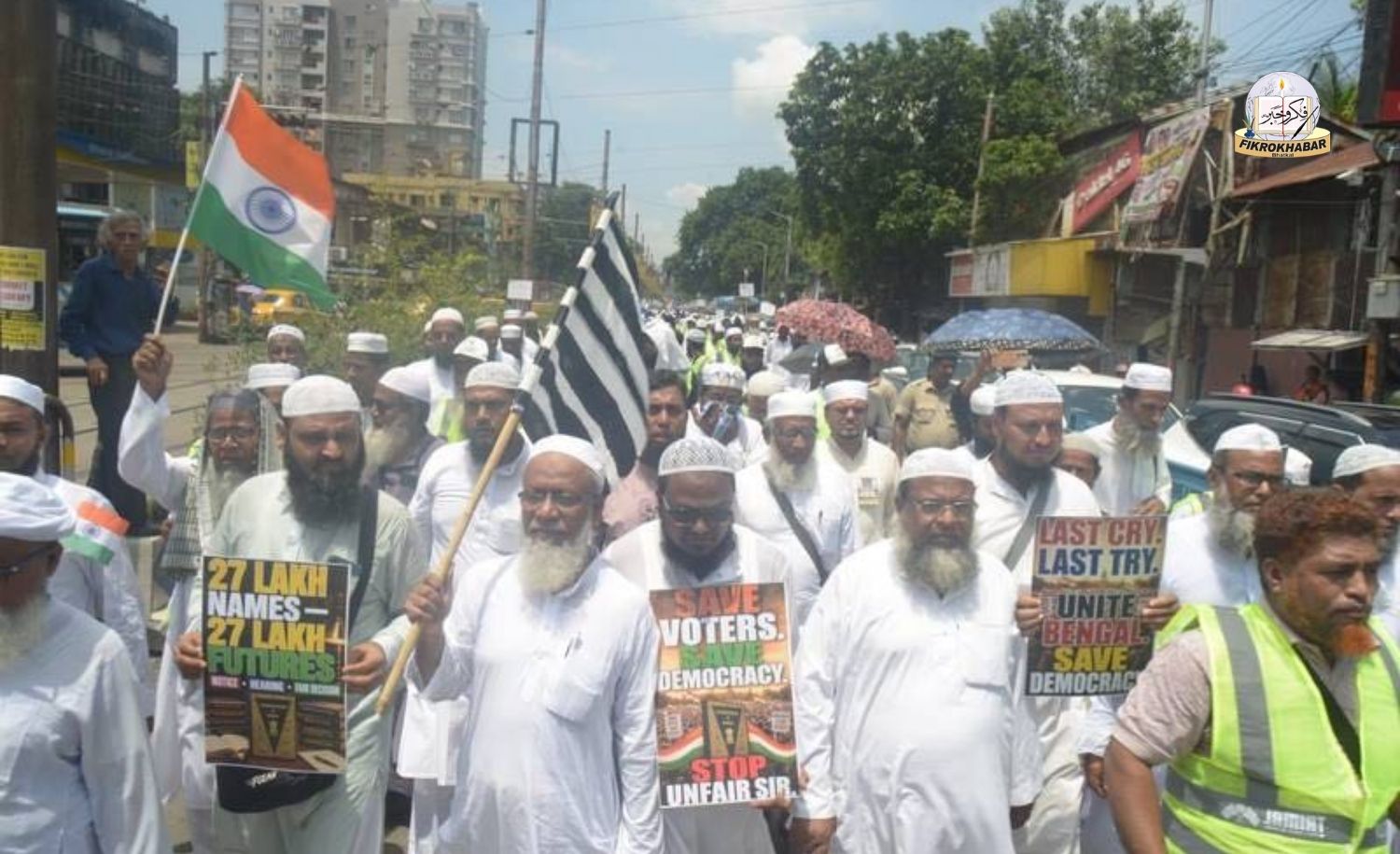

The West Bengal unit of Jamiat e Ulema organised a protest march in Kolkata on Tuesday over the reported deletion of 27 lakh names from voter lists during the Special Intensive Revision, or SIR, and the removal of loudspeakers from mosques.
The Calcutta High Court allowed the procession a day before it was held after Kolkata Police had initially denied permission for the march.
The protest was led by Jamiat e Ulema West Bengal president Maulana Siddiqullah Chowdhury. Participants marched from Rajabazar to Moulali between 11:30 am and 1 pm.
Addressing the gathering, Chowdhury criticised the removal of loudspeakers from mosques and accused the RSS of using the issue for political purposes. He also challenged the state government over the action, questioning why larger speakers could not be removed if the authorities were serious about enforcing the rules.
The organisation had originally sought permission on August 3 for around 2,000 people to march from Rajabazar to Esplanade on August 11. Kolkata Police rejected the request late on August 7, citing concerns over congestion along busy commercial and traffic routes.
The court took note of the delay in informing the organisers about the rejection. The issue had resulted in a weekend hearing, with the court expressing concern over the timing of the police communication.
Justice Saugata Bhattacharyya subsequently permitted the procession with a limit of 750 participants. The court recognised the constitutional right to peaceful protest under Article 19 and observed that the authorities could not introduce new grounds for refusing permission, including references to earlier alleged incidents of violence, when those reasons were not part of the original rejection.
The court also questioned the objection to holding the procession on a weekday.
The organisers were required to follow several conditions. They had to provide the contact details of 10 volunteers, use only hand held microphones instead of loudspeakers and ensure that one side of the road remained open for traffic.
Meanwhile, several mosques in different parts of West Bengal removed loudspeakers used for the azan on Wednesday following verbal instructions from local police officials.
Official records put the number of mosques in West Bengal at around 62,000, although the actual figure is believed to be higher.