
Every Soul Shall Taste Death: Holding Grief Between Loss and Promise
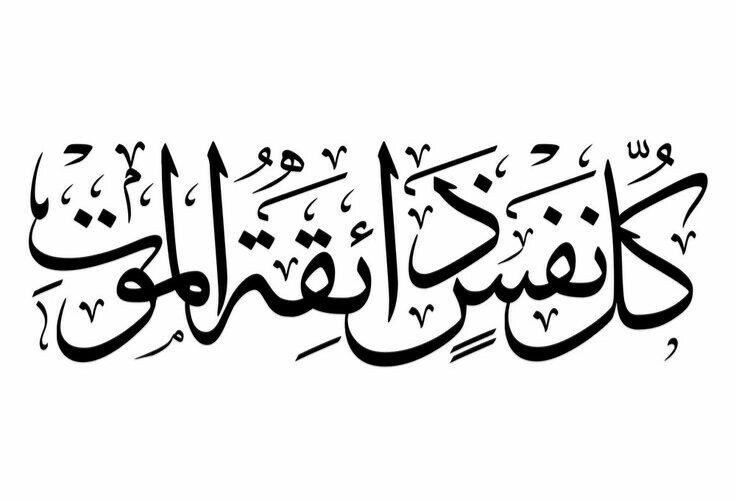

There is an āyah that people often turn to when grief feels too heavy to carry, when loss no longer feels like a moment but a presence that stays:
“كُلُّ نَفْسٍ ذَائِقَةُ الْمَوْتِ”
“Every soul shall taste death.” – Qur’an 3:185
At first glance, it feels almost simple. Brief. Certain.
But grief has a way of making simple words feel impossibly deep.
The certainty we resist
This āyah doesn’t present death as a possibility.
It doesn’t say might.
It says shall.
Every soul, without exception, will taste death, not just encounter it, but taste it.
And there is something profoundly human in that choice of words.
Because taste is personal.
It’s intimate.
It’s not just an event that happens outside of us – it is something that reaches into us.
And maybe that’s why grief feels the way it does.
When someone you love passes away, it doesn’t feel like something that happened around you.
It feels like something that happened to you.
As if a part of your own soul has brushed against that same reality – not fully, but enough to change you forever.
Why grief doesn’t “fade”
People often quote this āyah as a reminder of acceptance: this is the nature of life.
And it is.
But what often goes unspoken is this – knowing that death is inevitable doesn’t make it easier to live without someone.
If anything, it deepens the ache.
Because when Allah says every soul will taste death, it also quietly acknowledges something else:
every soul will also taste loss.
And loss is not something the heart processes once and moves on from.
It revisits.
It lingers.
It reshapes you.
You don’t forget people you loved deeply.
You learn to live in a world where they are no longer physically present – and that is not the same thing.
The unseen continuation
The āyah doesn’t end there.
It continues:
“وَإِنَّمَا تُوَفَّوْنَ أُجُورَكُمْ يَوْمَ الْقِيَامَةِ”
“And you will only be given your full reward on the Day of Resurrection.”
Here, the perspective shifts.
This world – with all its love, all its attachments, all its painful separations – is not the place where things are completed.
It is a place of partial moments.
Of meetings that end.
Of conversations that don’t get to finish.
Grief, in that sense, is not just about absence.
It is about incompletion.
The stories you didn’t hear fully.
The words you didn’t say enough.
The presence that felt like it should have lasted longer.
But this āyah gently redirects that pain.
It reminds you:
this was never meant to be the final chapter.
There is a place where things are made whole again.
Where what felt abruptly taken is returned in a way beyond what we can imagine.
Holding on without breaking
There is a quiet mercy in this understanding.
It doesn’t ask you to stop missing them.
It doesn’t tell you to “move on.”
It doesn’t invalidate the heaviness that certain days, certain months, bring back without warning.
Instead, it gives your grief a place to exist without making it meaningless.
Your longing becomes a sign of love, not weakness.
Your tears become a reflection of connection, not lack of faith.
And your patience – even the kind that doesn’t look strong, the kind that just looks like surviving the day – is seen.
When memory feels like presence
Sometimes, when you remember them – their voice, their stories, their little sayings – it doesn’t feel like remembering.
It feels like they’re still there.
And maybe, in a way, that’s also part of what this āyah allows you to understand:
death separates bodies, but it doesn’t erase impact.
The people we love leave behind more than memories.
They leave behind ways of thinking, phrases we repeat, habits we unknowingly carry forward.
In that sense, their presence doesn’t disappear.
It changes form.
A different kind of closeness
Grief often feels like distance.
Like someone has been placed far away, unreachable.
But within the Islamic perspective, death is not disappearance – it is transition.
A movement from one realm to another.
A separation that is real, but not permanent.
And so the ache you feel is not because they are gone into nothingness.
It is because they are somewhere you cannot yet reach.
There is a difference.
A painful one, yes – but also a hopeful one.
Living with the āyah
To live with this āyah is not to become unaffected by loss.
It is to carry awareness alongside your grief.
To know that this world was never designed to hold everything you love forever.
To understand that endings here are not absolute – only paused.
And maybe that is why certain dates never lose their weight.
Because love doesn’t operate on calendars.
And neither does grief.
In the end, this āyah does not take your pain away.
But it changes what your pain means.
It tells you that what you’re feeling is not a sign that you haven’t healed – it’s a sign that what you had was real.
And it gently reminds you, in the quietest way:
This goodbye is not the final one.
1 Comment
👍❤