
Dr. A. P. J. Abdul Kalam: The People’s President and Missile Man of India
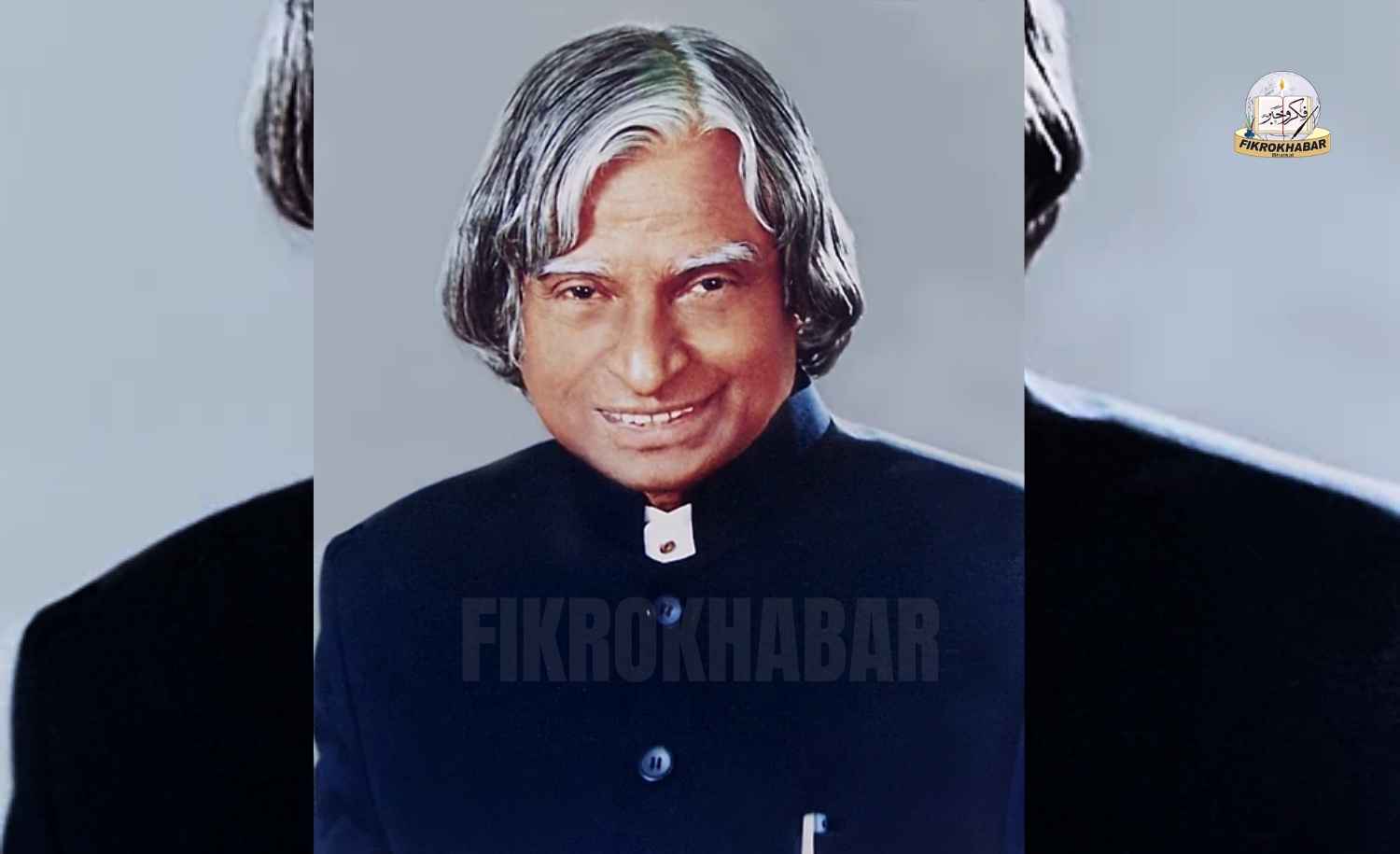

Dr. Avul Pakir Jainulabdeen Abdul Kalam (15 October 1931 – 27 July 2015) was one of India’s most respected scientists, visionary leaders, and the 11th President of India. Renowned as the “Missile Man of India,” he played a pivotal role in advancing the country’s missile and space programmes while inspiring millions through his humility, wisdom, and unwavering dedication to education and national development.
Early Life and Education
Born into a modest Tamil Muslim family in Rameswaram, Tamil Nadu, Abdul Kalam grew up in humble circumstances. His father, Jainulabdeen Marakayar, was a boat owner and imam, while his mother, Ashiamma, managed the household. To support his family, Kalam sold newspapers during his childhood, developing a strong work ethic and determination from an early age.
He completed his schooling at Schwartz Higher Secondary School in Ramanathapuram before earning a degree in Physics from St. Joseph’s College, Tiruchirappalli, in 1954. Driven by a passion for aviation, he later studied Aerospace Engineering at the Madras Institute of Technology, where his perseverance and commitment laid the foundation for an extraordinary scientific career.
A Distinguished Scientific Career
After graduating in 1960, Abdul Kalam joined the Defence Research and Development Organisation (DRDO) as a scientist. Soon after, he moved to the Indian Space Research Organisation (ISRO), where he became the Project Director for India’s first indigenous Satellite Launch Vehicle (SLV-3). Under his leadership, India successfully launched the Rohini satellite into orbit in 1980, marking a historic milestone in the nation’s space programme.
Returning to DRDO, Kalam led the Integrated Guided Missile Development Programme (IGMDP), overseeing the development of strategic missile systems such as Agni and Prithvi. His contributions earned him the title “Missile Man of India” and established him as one of the country’s foremost aerospace scientists.
He also played a significant organisational and technical role in the Pokhran-II nuclear tests conducted in 1998, further strengthening India’s defence capabilities.
The People’s President
In 2002, Abdul Kalam was elected as the 11th President of India, receiving support from leaders across the political spectrum. Serving until 2007, he became widely known as the “People’s President” because of his approachable nature and deep connection with students and young people.
Throughout his presidency, Kalam championed innovation, education, scientific research, and youth empowerment. He regularly interacted with students across India, encouraging them to dream big, embrace knowledge, and contribute to nation-building.
Teacher, Author and Visionary
After completing his presidential term, Kalam returned to his greatest passion—teaching. He delivered lectures at prestigious institutions across India and continued mentoring young minds.
He authored several bestselling books, including:
- Wings of Fire (Autobiography)
- Ignited Minds
- India 2020
- Mission India
- The Life Tree
His writings inspired generations to pursue excellence, integrity, and innovation.
Awards and Honours
Dr. Kalam received numerous national and international honours for his remarkable contributions to science and public service, including:
- Bharat Ratna (1997) – India’s highest civilian award.
- Padma Vibhushan (1990)
- Padma Bhushan (1981)
- Hoover Medal (2008)
- Von Braun Award (2013)
He was also awarded honorary doctorates by universities around the world.
Passing Away
On 27 July 2015, while delivering a lecture to students at the Indian Institute of Management (IIM) Shillong, Dr. Abdul Kalam collapsed due to a cardiac arrest. He passed away at the age of 83, leaving behind an extraordinary legacy of service, knowledge, and inspiration.
He was laid to rest with full state honours in his hometown of Rameswaram, where a national memorial now stands in his memory.
Legacy
Dr. A. P. J. Abdul Kalam remains one of India’s most beloved national figures. His birthday, 15 October, is celebrated as World Students’ Day in India, recognising his lifelong dedication to education and youth development.
Numerous roads, institutions, awards, scientific discoveries, and research centres have been named in his honour. More importantly, his vision of a developed, self-reliant, and knowledge-driven India continues to inspire millions of people across the world.
Inspirational Quote
“Dream, dream, dream. Dreams transform into thoughts and thoughts result in action.” — Dr. A. P. J. Abdul Kalam
Dr. A. P. J. Abdul Kalam’s life is a powerful reminder that determination, hard work, humility, and a commitment to serving others can overcome any obstacle. His journey from a small coastal town to becoming India’s President and one of its greatest scientists continues to inspire generations to dream big and work tirelessly for a better future.