
APCR Approaches Supreme Court Over Delhi Police Appeal from Mosque Ahead of Protest
Police officer reportedly used loudspeaker at Shahi Masjid in Chandni Chowk to urge worshippers to keep their families away from demonstrations
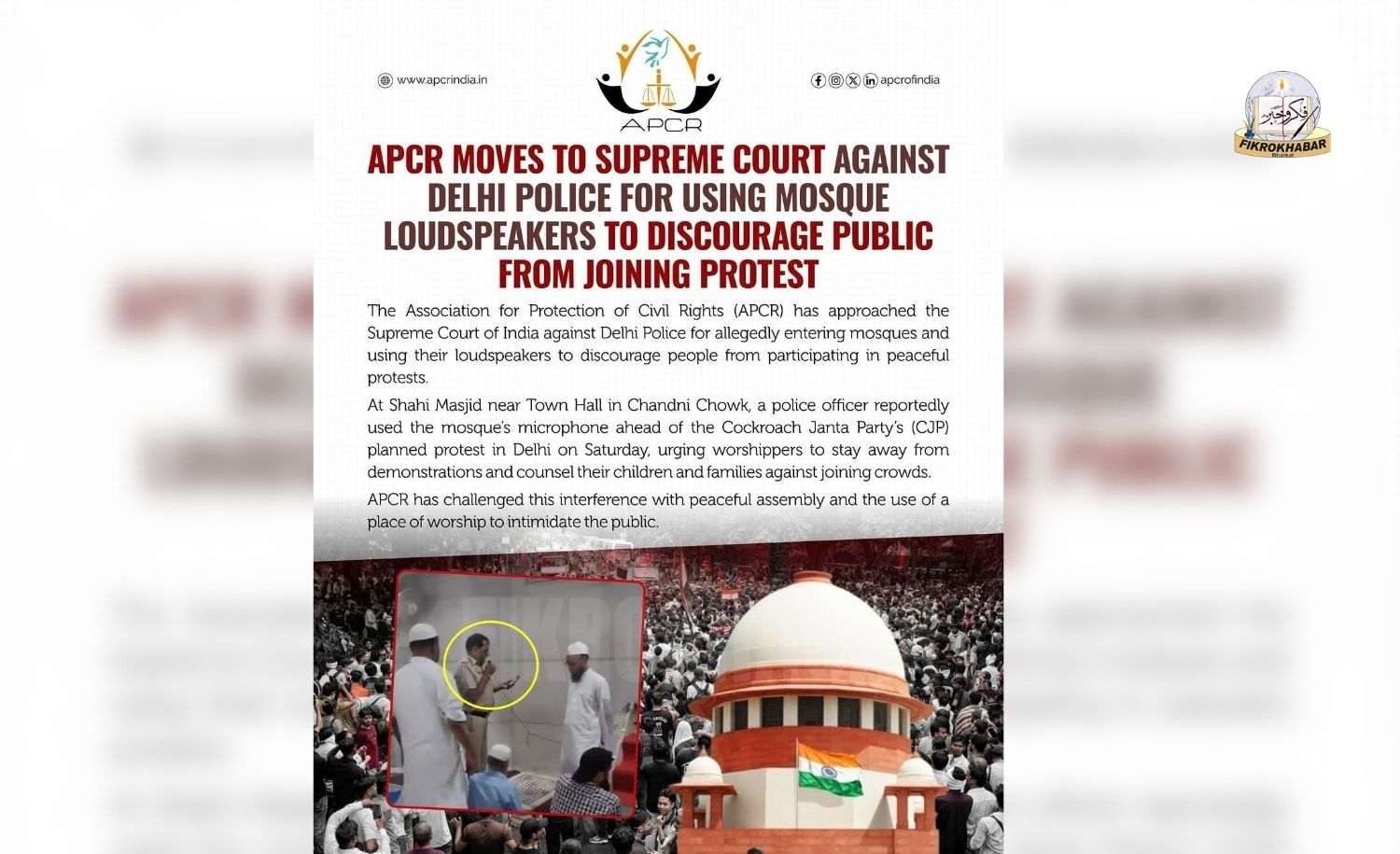

New Delhi: The Association for Protection of Civil Rights (APCR) has approached the Supreme Court of India over the reported use of a mosque loudspeaker by Delhi Police to discourage people from participating in a planned protest against the Special Intensive Revision (SIR) of electoral rolls and Chief Election Commissioner Gyanesh Kumar.
The incident reportedly took place at Shahi Masjid near Town Hall in the Chandni Chowk area of Old Delhi, ahead of a protest called by the Cockroach Janta Party (CJP) at Jantar Mantar on October 10.
According to media reports, a police officer used the mosque’s microphone to appeal to worshippers to maintain peace, avoid rumours and provocative messages, and advise their children and family members not to join demonstrations or large gatherings.
An imam was also reportedly seen appealing to local residents to stay away from the planned protest.
APCR has challenged the reported police action, raising concerns over the use of a place of worship to discourage participation in a peaceful demonstration. The organisation argues that such intervention raises questions about the right to peaceful assembly and the limits of police authority.
The incident comes amid heightened security measures in Delhi ahead of the CJP protest. Police have cited law and order concerns and the absence of permission for the proposed gathering. The restrictions and their impact on public movement have also come under scrutiny.
The Supreme Court has separately examined restrictions on public transport and the proposed protest arrangements, stressing the need to balance public safety with citizens’ rights. Media reports said the issue of police appeals at mosques was also raised during the hearing.
The legal challenge by APCR places the reported use of a mosque loudspeaker at the centre of wider concerns over the handling of protests and the protection of constitutional rights.