
A Return Written for Every Soul: إِنَّا لِلَّهِ وَإِنَّا إِلَيْهِ رَاجِعُونَ (Surah Al‐Baqarah 2:156)
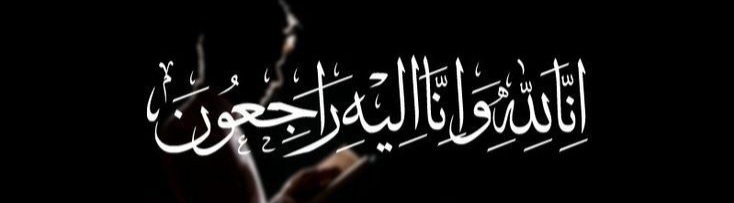

We often say
إِنَّا لِلَّهِ وَإِنَّا إِلَيْهِ رَاجِعُونَ
Indeed, we belong to Allah, and indeed, to Him we will return. – (Surah Al-Baqarah, 2:156)
when someone passes away.
But have we ever paused to ask why we say it?
Is it simply a phrase we’ve learned to repeat in moments of loss, or is there something deeper it is teaching us about grief, about life, and about who we truly belong to?
What Holds the Heart Together in Loss?
When loss arrives, not as an idea but as a reality, it unsettles everything.
Familiar spaces feel unfamiliar, routines lose their meaning, and the absence of someone begins to echo louder than their presence ever did.
In those moments, words often feel insufficient.
Yet this ayah is not just something we say; it is something we hold onto. It gives language to grief, but more importantly, it gives it direction.
Belonging: Rethinking What We Call “Ours”
إِنَّا لِلَّهِ
Indeed, we belong to Allah.
Grief often feels unbearable because it carries a sense of loss tied to ownership.
We say my family, my people, my world, and when someone is taken, it feels as though something has been taken from us.
But this ayah gently reframes that understanding.
It reminds us that nothing we love was ever truly ours to keep.
Everything in our lives, people, relationships, even our own selves, is a trust placed with us for a time known only to Allah.
What we experience is not ownership, but amanah.
And when something returns to Him, it is not being taken unjustly; it is being returned to its rightful Owner.
This does not take away the pain.But it gives the pain meaning.
Return: Where Every Soul Is Headed
وَإِنَّا إِلَيْهِ رَاجِعُونَ
And indeed, to Him we will return.
This part shifts our focus from what has been lost to where everything is going.
Death is not an end; it is a transition.
The one who has passed has not disappeared; they have simply gone ahead on a journey every soul is destined to take.
And for the one who remains, there is a quiet reassurance:
This separation is not forever.
It is only a pause within the same return.
Why Do We Say It?
We say this ayah not to suppress grief, but to steady it.
In moments when the heart feels like it might break under the weight of loss, these words remind us of something constant:
Nothing leaves without His knowledge.
Nothing is lost without purpose.
Nothing escapes His mercy.
It gently shifts the heart from questioning “why” to trusting “He knows.”
Beyond Death: A Response to Every Loss
This ayah is not limited to death.
Every loss, whether of people, peace, or expectations, falls under this same truth.
What comes into our lives does so by His decree, and what leaves does so by His wisdom.
And in every case, the return remains the same.
Between Grief and Meaning
This ayah does not ask you to stop feeling.
It allows grief to exist, but protects it from becoming despair.
It holds your pain within something greater, reminding you that love was real, loss is real, and both are part of a divine plan beyond what we can fully understand.
A Dua for the Departed and the Unremembered
O Allah, we turn to You knowing that You are Ar-Rahman, Ar-Rahim.
Have mercy on those we have lost, the ones we remember, the ones we miss, the ones whose absence still lives within us.
Forgive them, lighten their burdens, expand their resting place, and fill it with peace and noor.
O Allah, accept every small good they did, even the ones no one noticed, and overlook their shortcomings with Your gentleness.
And O Allah, we also remember those whose names we do not know, those who have left this world with no one to mention them, no one to raise their hands for them.
You know each of them better than anyone ever could.
So we ask You, out of Your endless mercy, to forgive them, grant them ease, and surround them with Your rahmah.
Aameen.
2 Comments
Ameen ❤very well written!
Aameen ya Rabbal aalameen. Beautiful n meaningful . Written wisely n thoughtfully. May Allah bless u .