
A Beacon of Faith and Service: The Life and Legacy of Maulana Qazi Muhammad Shabbir (Qasmi) of Manki
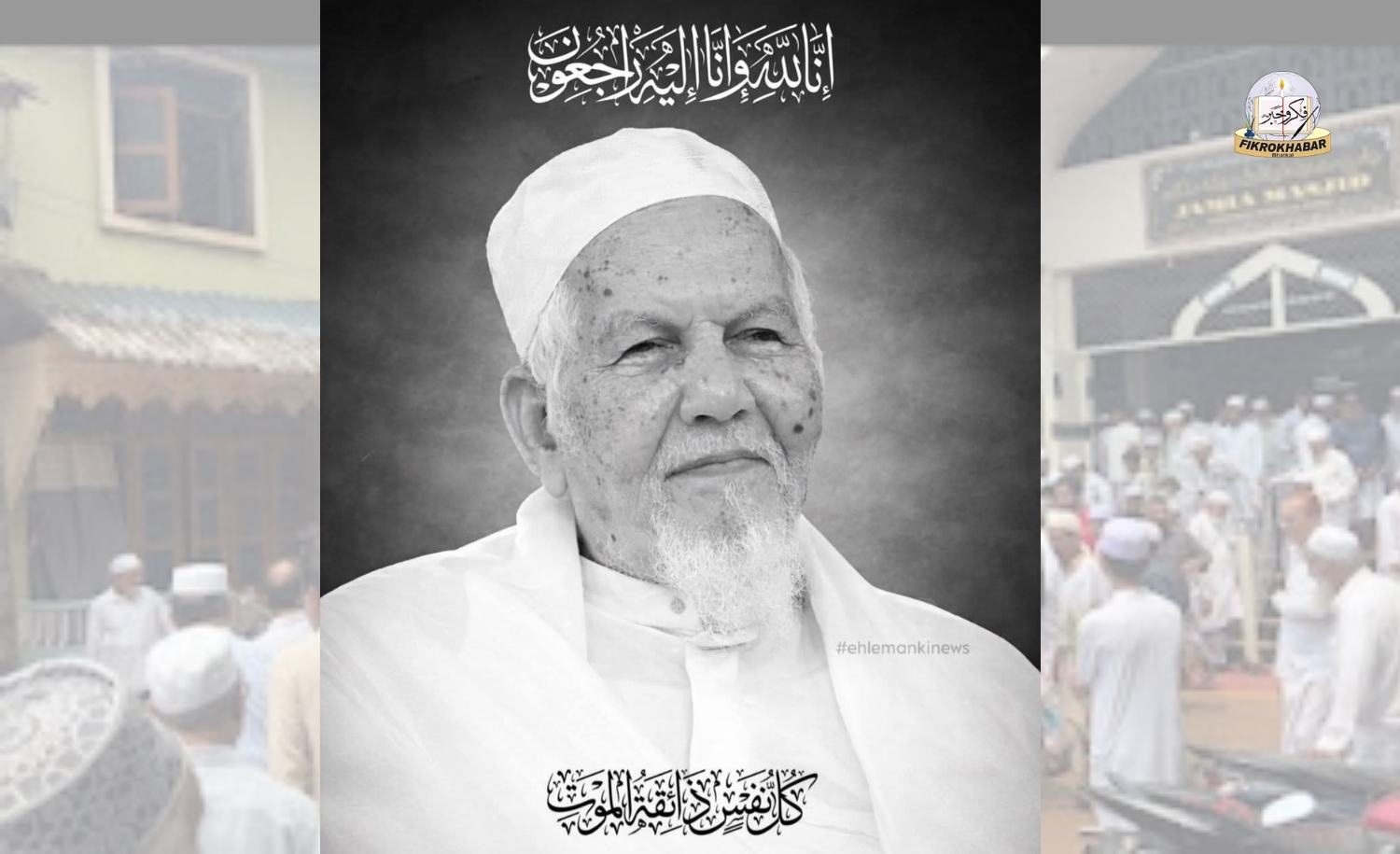

Maulana Qazi Muhammad Shabbir (Qasmi) of Manki was one of the most respected and influential Islamic scholars of his time in the coastal region of Karnataka. His passing on 21 April 2026 in Manki marked the end of an era of religious guidance, social leadership, and lifelong service to the community. His death was met with deep sorrow throughout the region, with educational and religious institutions in Manki closing temporarily as a mark of respect.
Early Life and Education
Maulana Qazi Muhammad Shabbir was born into the respected Qazi family of Manki, a lineage known for holding judicial and religious responsibilities in various nearby towns such as Murdeshwar and Valki. From an early age, he was immersed in a religious environment.
He received his initial education at the traditional maktab of Anjuman Nasratul Muslimeen, Manki, where he studied under early local scholars, including Mulla Abdul Qadir Khalfu. After the early loss of his father, his maternal uncle Ali Bapu Ismail took responsibility for his upbringing and later sent him to Mumbai for advanced Islamic studies.
In Mumbai, he studied at Madrasa Imdadiyah (Dongri). After completing his studies there in 1961, he was sent to the prestigious Darul Uloom Deoband, where he graduated in 1963, completing his formal Islamic education.
Early Career and Return to Manki
After graduation, he served as an imam in Mumbai for two years. In 1965, he returned to his hometown Manki, where he began teaching at his alma mater. Soon after, the local Jamaat-ul-Muslimeen appointed him as the Qazi (Islamic judge) of Manki.
Later, the institution was renamed Madrasa Rahmaniya, where Maulana Shabbir served as a teacher and administrator for nearly nine years. During this time, he played a vital role in shaping an entire generation, providing Qur’anic education to children daily after school hours. His teaching left a lasting spiritual and educational impact on the community.
Service in India and Abroad
After 1975, Maulana returned to Mumbai and continued serving as an imam. His exceptional Qur’anic recitation and leadership in prayer gained widespread admiration.
In 1980, a prominent businessman from Al Ain, UAE, Abdul Rahman Zarouni, impressed by his spiritual presence and leadership, invited him to serve as the imam of a grand mosque in the heart of Al Ain. Maulana accepted the responsibility and served there with dedication until 1995, when he stepped down due to declining eyesight.
During his time in the UAE, he was known for his humility, hospitality, and noble character. He also ensured that his children received education in Arabic government schools an uncommon practice among expatriates at the time.
Return and Final Years
After 1995, Maulana returned to Manki and devoted himself fully to local religious and educational services. He remained closely associated with Madrasa Rahmaniya as its chief administrator and continued guiding the community with wisdom and experience.
Under his leadership and spiritual guidance, Manki developed into a model town in religious and social service. He was widely regarded as one of the most authentic and respected scholars of his generation in the region.
Character and Legacy
Maulana Qazi Muhammad Shabbir was known for his humility, generosity, calm nature, and deep knowledge of Islamic teachings. Those who met him described him as a man who never caused harm to anyone and always treated people with kindness and respect.
His life was a blend of scholarship, service, and spiritual leadership. He not only taught religion but lived it in his conduct and interactions. His influence extended far beyond classrooms and mosques, reaching into the daily lives of people in Manki and abroad.
Passing and Public Grief
Maulana Qazi Muhammad Shabbir passed away at the age of 84, after a natural lifespan devoted to faith and service. His funeral prayer was held at Jamia Masjid Manki, attended by a large gathering of scholars, students, and local residents. The entire town mourned his departure, and his burial was carried out amidst deep emotional sorrow.
His passing created a profound void in the religious and educational life of Manki. Institutions associated with him expressed deep grief, and a condolence gathering was organized to honor his services.
Conclusion
Maulana Qazi Muhammad Shabbir’s life remains a shining example of dedication to knowledge, faith, and community service. His legacy continues through the countless students he taught, the institutions he strengthened, and the generations he inspired.
He will always be remembered as a guiding light of Manki, a scholar whose life illuminated hearts and whose memory will continue to inspire future generations.
May Allah grant him the highest ranks in Jannah and accept all his noble deeds. Ameen.