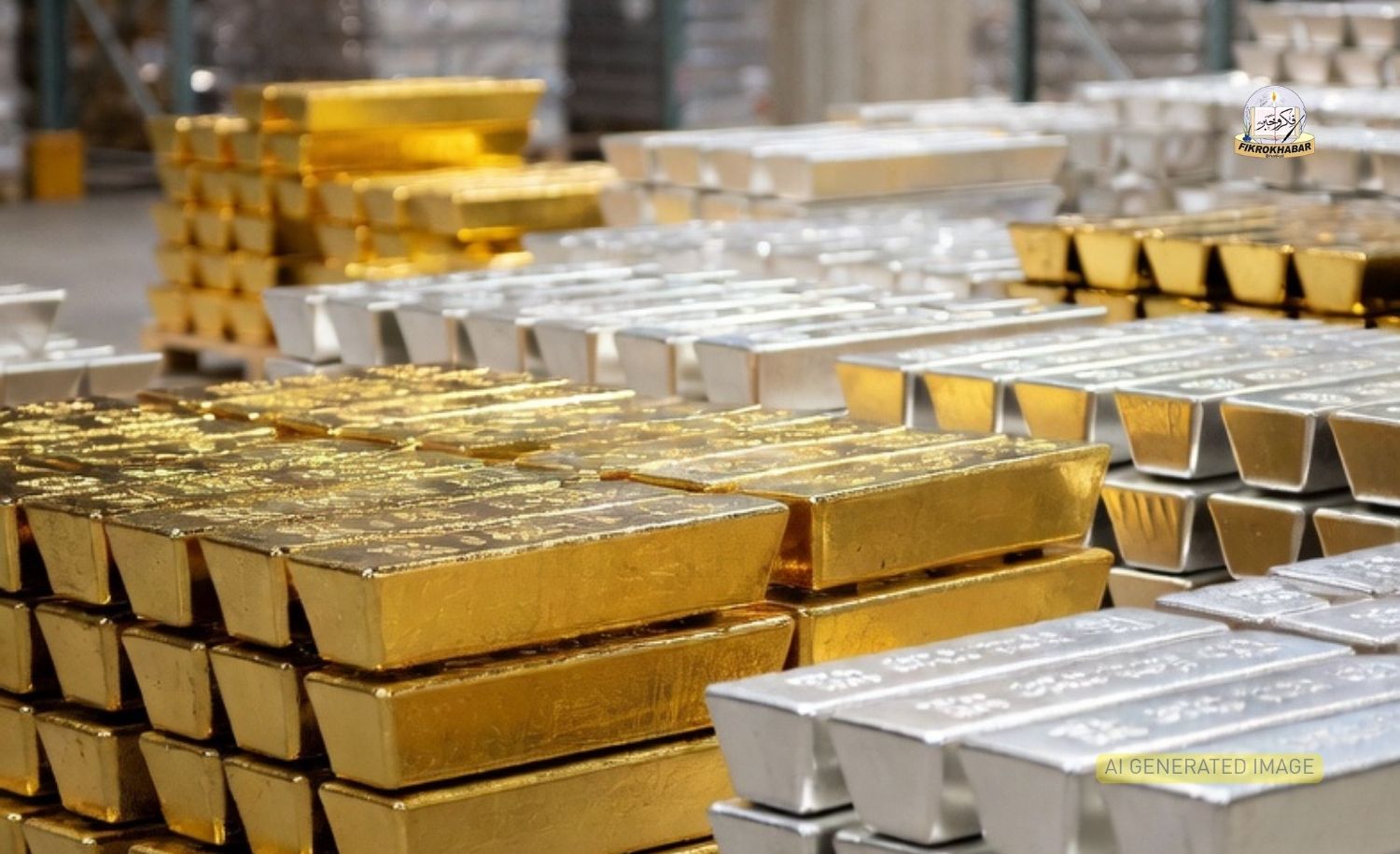
Will Gold Continue Its Historic Rally? Expert Forecasts Point to $5,000+ as Monday Markets Prepare to Open
After gold breached ₹16,000 barrier with GST, global experts from Goldman Sachs, JP Morgan predict further surge toward $5,000-$5,400 per ounce in 2026, Indian markets brace for potential continuation or correction.


New Delhi, January 25, 2026 – As gold markets prepare to open on Monday after a weekend pause, investors, jewelers, and buyers across India are anxiously watching whether the yellow metal will extend its unprecedented rally or finally witness the long-awaited correction that many experts have been predicting.
After gold prices in India crossed the psychological ₹16,000 per gram barrier (including 3% GST) last week, with 24-karat pure gold reaching ₹15,812 per gram before taxes, the precious metals market stands at a critical juncture. The question on everyone’s mind: Will Monday bring another surge or a much-needed breather?
What Global Experts Are Saying
Major financial institutions have released bullish forecasts for gold in 2026, suggesting the rally may have significant room to run:
Goldman Sachs Raises Target
Goldman Sachs recently revised its year-end gold price target upward to $5,400 per ounce, a 10% increase from their earlier forecast of $4,900. The investment banking giant argues that gold is no longer just a short-term fear trade but has become long-term insurance against heightened debt levels, policy uncertainty, and concerns over central bank independence.
Goldman’s Daan Struyven, co-head of global commodities research, noted that while central bank purchases drove gains in 2023 and 2024, the rally accelerated in 2025 as private-sector demand increased significantly.
JP Morgan Sees $5,000+ by Year-End
JP Morgan Global Research is forecasting gold prices to average $5,055 per ounce by the final quarter of 2026, potentially rising toward $5,400 per ounce by the end of 2027.
The bank’s analysis is based on continued strong investor and central bank demand, projected to average around 585 tonnes per quarter. Their research suggests approximately 190 tonnes per quarter from central banks and 330 tonnes per quarter in bar and coin demand.
The Bull Case Strengthens
MKS PAMP’s head of metals strategy, Nicky Shiels, expects gold to reach $5,400 this year, calling it “a solid 30% year-on-year gain” and emphasizing that “this is a secular trade, not a commodity blowoff top.”
Wall Street consensus from multiple firms projects an average target of around $5,180 for 2026, representing a potential 19.3% increase from 2025 year-end levels.
Some See Even Higher
The most aggressive forecasts are truly eye-popping. Yardeni Research sees gold potentially hitting $10,000 by 2030, citing massive government deficits around the globe, continued international stress, and an inflationary Federal Reserve.
What’s Driving This Extraordinary Rally?
Multiple factors are converging to create what analysts are calling a “perfect storm” for precious metals:
1. Central Bank Buying Continues
Central banks were on track to purchase between 750-900 tonnes of gold in 2025, with expectations for continued strong buying in 2026 based on macroeconomic factors and policy choices. Asian central banks, in particular, are buying gold as a hedge against currency volatility.
2. Investor Diversification
As of late 2025, investor holdings of gold via ETFs, bars and coins, and COMEX futures reached approximately 2.8% of total assets under management, driven by sharp price rallies and robust investor inflows.
3. Geopolitical Uncertainty
Ongoing geopolitical risks, including tensions related to Greenland and European tariff concerns, combined with a weaker dollar, have pushed gold to fresh record highs above $4,950 per ounce.
4. Inflation Hedge Demand
With persistent inflation concerns globally, investors are increasingly viewing gold as a reliable store of value and protection against currency debasement.
5. Lower Real Yields
Traditionally, a weaker dollar and lower U.S. interest rates increase the appeal of non-yielding bullion, and markets are currently pricing in two interest rate cuts by the Federal Reserve later this year.
India’s Gold Market: Current Reality
The Indian gold market has been experiencing its own dramatic movements:
Record Price Levels Stabilize
Gold prices in India stabilized on January 25, 2026, with 22-karat gold holding at Rs.1,46,900 per 10 grams and 24-karat at Rs.1,60,260 per 10 grams after a record-breaking rally.
Unprecedented Volatility
The gold market witnessed extraordinary volatility in recent days, with 22-karat gold prices surging by Rs.5,450 per 10 grams over just two days, representing an 11% climb over a 10-day period.
ETF Demand Surges
Indian gold ETFs ended 2025 on a strong note, with net inflows reaching an all-time high of INR 116 billion (US$1.29 billion) in December, marking the eighth consecutive month of net additions and lifting total holdings to a historic high of 95 tonnes.
Digital Gold Gains Traction
Digital gold purchases via UPI increased steadily through 2025, with transaction values rising from INR 8 billion in January to INR 21 billion in December, a near three-fold increase, with an estimated 13.5 tonnes purchased over the year.
The Bear Case: Why Some Experts Urge Caution
Not everyone is convinced the rally will continue smoothly:
Historical Parallels Raise Concerns
Some market veterans point to historical precedents, noting that gold’s current rally mirrors patterns from 1980, when speculative excess led to a subsequent 40% crash after commodity exchanges raised margin rates and the Federal Reserve boosted interest rates.
Overbought Indicators
Technical analysts note that gold, silver, platinum, and palladium are all showing extremely overbought signals on various indicators, with RSI levels typical of late-cycle rallies that have historically led to brief peaks rather than sustained advances.
Demand Destruction
Gold imports in India declined in volume terms in December to an estimated 35-40 tonnes, down from 48 tonnes in November, partly reflecting the impact of higher prices on demand, particularly for jewelry.
High prices are causing real damage to jewelry demand in price-sensitive markets, though bar and coin investment has risen to compensate.
What Monday’s Opening Could Bring
As markets prepare to open on Monday, several scenarios are possible:
Scenario 1: Continuation Rally
If geopolitical tensions remain elevated and the U.S. dollar continues weakening, gold could push even higher. Global prices approaching $5,000 per ounce would translate to further gains in India, potentially pushing 24K gold toward ₹16,500-₹17,000 per gram with GST.
Scenario 2: Consolidation
After Friday’s record-setting session where gold reached a high of $4,966.93 before settling around $4,900, the market may enter a consolidation phase, trading sideways as it digests recent gains.
Scenario 3: Correction
Profit-taking by investors and traders could trigger a meaningful pullback, potentially bringing prices back to the ₹15,000-₹15,500 range for 24K gold in India (before GST).
Expert Recommendations for Different Buyers
Financial analysts offer tailored advice based on buyer categories:
For Wedding Purchases:
Buy only essential jewelry items immediately needed. Consider lightweight, intricate designs that use less gold. Explore family gold exchange programs offered by jewelers. Postpone non-urgent purchases if possible. Watch for any dips as buying opportunities.
For Investors:
Avoid large lump-sum investments at current elevated levels. Consider systematic investment plans (SIPs) in gold. Book partial profits if you purchased at significantly lower prices. Diversify across gold, silver, and other asset classes. Consider gold ETFs for easier entry and exit.
For Long-Term Holders:
Don’t panic sell unless facing urgent financial needs. Review overall portfolio allocation. Consider rebalancing if gold now represents too large a portion of your wealth. Remember that gold’s long-term trajectory remains positive despite short-term volatility.
Key Factors to Watch This Week
Market participants should monitor several critical developments:
1. Federal Reserve Meeting: The Federal Reserve is expected to keep interest rates unchanged at its meeting next week, as PCE inflation came largely in line with expectations.
2. U.S. Dollar Movement: Any significant strengthening of the dollar could put downward pressure on gold prices.
3. Geopolitical Developments: Ongoing tensions, particularly related to trade policies and international disputes, will continue affecting safe-haven demand.
4. Chinese and Indian Demand: Physical buying patterns in the world’s two largest gold-consuming nations will influence price direction.
5. ETF Flows: Continued inflows or reversals in gold ETFs will signal investor sentiment.
The Bigger Picture: A Secular Trend?
Many analysts argue that what we’re witnessing isn’t a short-term speculative bubble but a fundamental shift in how investors view gold:
“The long-term trend of official reserve and investor diversification into gold has further to run,” according to Natasha Kaneva, head of Global Commodities Strategy at JP Morgan, who noted that “while this rally in gold has not, and will not, be linear, the trends driving this rebasing higher in gold prices are not exhausted.”
The structural factors supporting gold include massive government debt levels globally, concerns about currency debasement, geopolitical realignment and de-dollarization trends, central bank diversification away from traditional reserve currencies, and rising awareness of gold as a portfolio hedge among retail investors.
Silver’s Spectacular Parallel Rally
While gold captures headlines, silver deserves equal attention. The white metal has dramatically outperformed gold on a percentage basis, with gains exceeding 140% in 2025 alone.
Silver’s industrial applications, combined with its investment appeal, create unique demand dynamics. The metal benefits from both safe-haven flows and expectations of increased industrial usage in renewable energy and technology applications.
Conclusion: Navigating Uncharted Territory
As Monday’s markets prepare to open, one thing is certain: the precious metals landscape has fundamentally changed. Whether gold continues toward the $5,000-$5,400 targets set by major banks or experiences a sharp correction, the volatility is likely to persist.
For Indian buyers and investors, the coming week will be crucial. With gold having already surged over ₹1,500 in recent days and breaching the ₹16,000 barrier with GST, every rupee of movement matters.
The smartest approach remains: Stay informed with daily price updates. Avoid emotional decision-making based on fear or greed. Make purchases aligned with actual needs rather than speculation. Consult financial advisors for significant investment decisions. Remember that timing the market perfectly is nearly impossible.
Whether you’re a bride-to-be planning wedding purchases, an investor building wealth, or a trader seeking opportunities, the gold market of 2026 demands respect, caution, and careful planning.
As global experts point toward $5,000+ gold and Indian prices potentially approaching ₹17,000-₹18,000 per gram with GST, Monday’s opening bell will offer the first clues about whether this historic rally still has legs or whether gravity will finally assert itself.
Stay connected with Fikrokhabar for real-time gold and silver price updates throughout Monday’s trading session and expert market analysis.
Disclaimer: This article is for informational purposes only and should not be considered investment advice. Gold prices are highly volatile and can move significantly in either direction. Always verify current rates with authorized dealers before making purchases and consult certified financial advisors for investment decisions.
Market Opens Monday: Key Levels to Watch
Support: ₹15,200-₹15,400 (24K before GST)
Resistance: ₹16,000-₹16,200 (24K before GST)
Critical Psychological Level: ₹16,500 with GST (equals approximately ₹16,019 before GST)