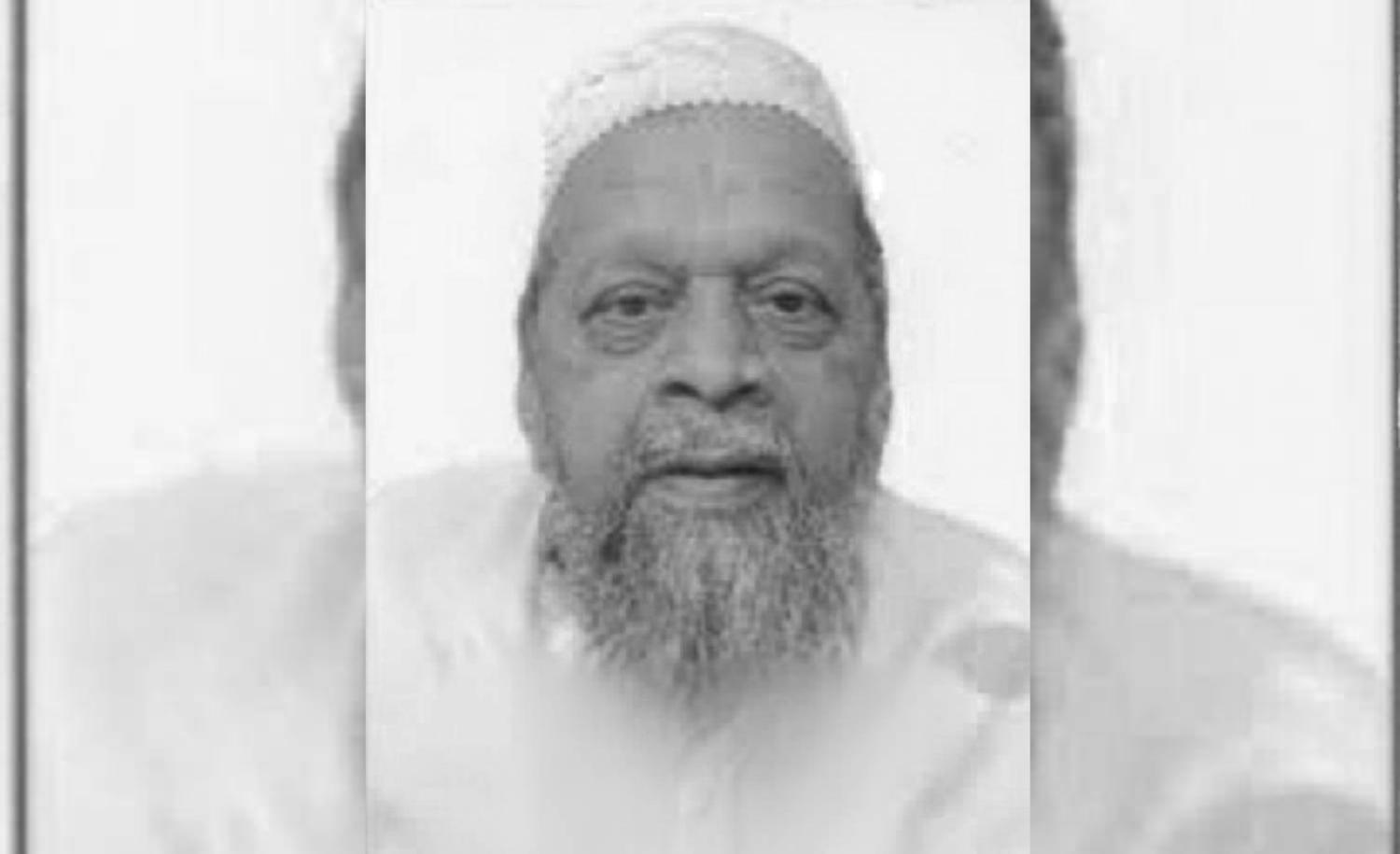
Syed Hasan Barmavar: A Compassionate Soul Remembered (Part 1)

By: Moulana Abdul Mateen Muniri
The funeral نماز (prayer) of Syed Hasan Barmavar was held on the night of March 25 after Isha prayers at Tanzeem Milya Masjid, followed by his burial at a nearby قبرستان (graveyard). The mosque, one of the largest in Karwar district, was filled to capacity, reflecting the deep respect and affection he commanded among الناس (people). His widespread acceptance among people, many believe, is a sign of even greater acceptance in the hereafter.
Syed Hasan Barmavar lived a life of 73 years, having been born in 1953. Those who knew him describe his life as one filled with good deeds, kindness, and service qualities that, in Islamic belief, elevate a person’s status before God. His life stood as an example of how sincere actions become a lasting provision for the journey beyond this world.
He was born in the historic “Syed Kako House” in the Sultani Mohalla area. In earlier times, it was common for several families to live under one roof, and although none were materially wealthy, they lived with dignity through hard work. His own family, however, faced severe financial hardship.
His father, Syed Ismail Barmavar, worked as a laborer in Mumbai to support the family but passed away when Hasan was still very young. He left behind two daughters, a son, and his wife, Shehar Bano Akrami. Raised in difficult circumstances and experiencing the pain of losing his father early, Hasan developed a deep sense of empathy for relatives and the wider community. This early hardship shaped his lifelong commitment to helping others and maintaining strong family ties.
Family Background:
The Barmavar family belongs to the Syed Kako lineage, a branch of respected Sayyid families in Bhatkal. It is believed that their ancestry traces back to Syed Ibrahim Baghdadi, a revered figure said to have migrated from Baghdad. Over time, different family branches emerged, including Barmavar, Syed Kako, Syed Muhiyuddin, and Syed Kazmi.
Researcher Dr. Victor D’Souza, in his work The Navayats of Kanara, documented genealogical records preserved by members of the community. According to these records, the Barmavar family traces its lineage through Syed Kako, a descendant of Syed Ibrahim Baghdadi, with connections extending back to the Prophet Muhammad (peace be upon him).
The “Syed Kako” homes are still located near Sultani Mosque in Bhatkal. It is also widely believed that the mosque itself was built during the rule of Tipu Sultan, who is said to have constructed it in memory of his mother and endowed it with land for its upkeep. Historical records of this endowment, written in Persian, are still preserved within the family.
Early Life and Struggles:
During his childhood, Syed Hasan briefly studied at a local maktab (primary religious school) in Bhatkal. However, due to financial difficulties, he had to discontinue his education at an early stage.
At the age of around 10 to 12, he left home in search of work and moved to Bengaluru, where he worked for a short time at a shop owned by people from Bhatkal. Unsatisfied, he left the job and went through a period of unemployment before moving to Chennai under the care of his maternal uncle.
In Chennai, he worked for some time in a business dealing in traditional garments. It was during this period that he came into contact with religious scholars and weekly Qur’an study circles organized by members associated with Jamaat-e-Islami Hind. These gatherings had a deep impact on him, nurturing in him a strong inclination toward faith and community service.
The influence of these teachings stayed with him throughout his life, shaping his character and strengthening his commitment to دین (faith) and خدمت (service) until his final days.
(To be continued)
This Article is Translated to English