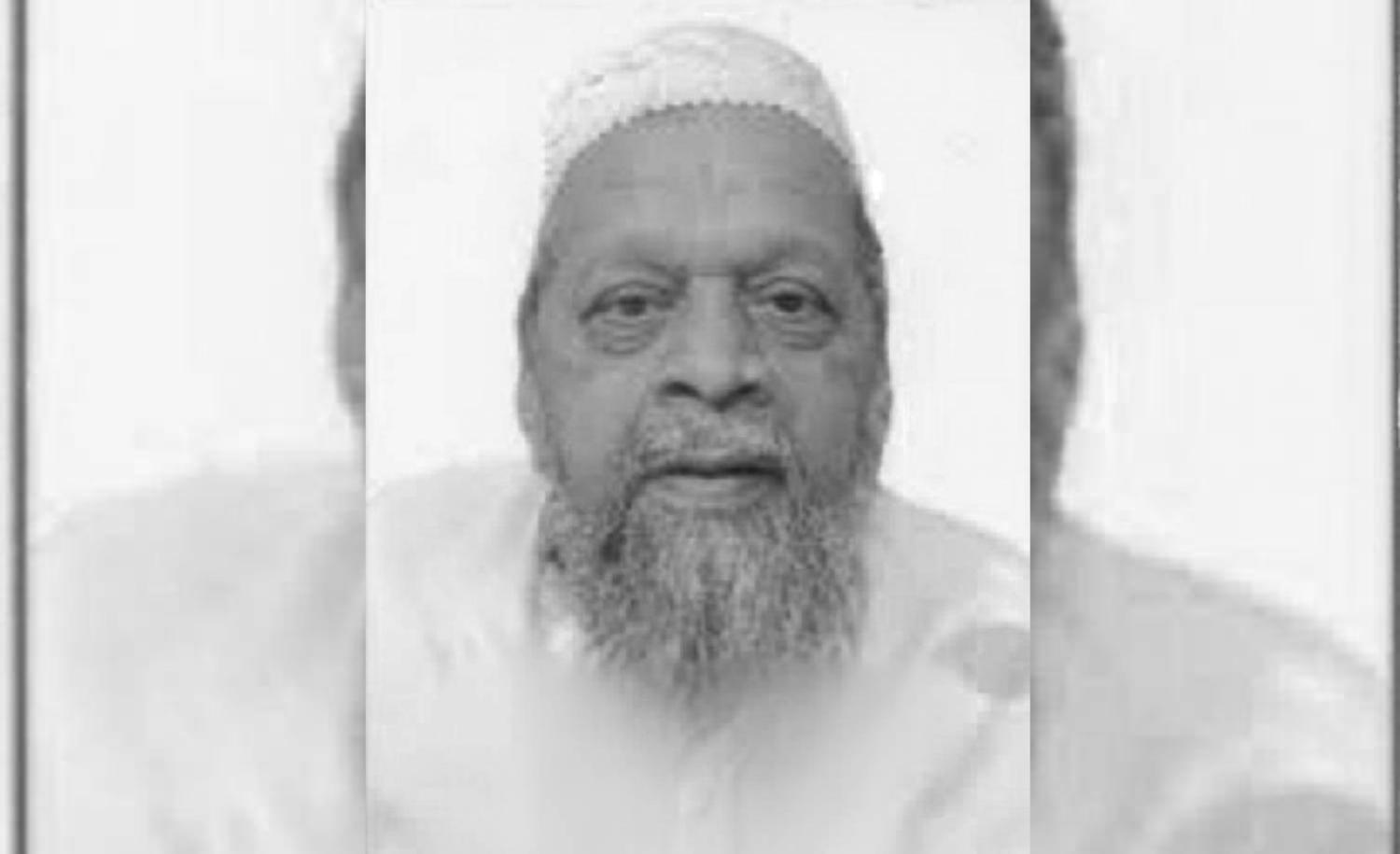
Syed Hasan Barmavar: A Compassionate Life of Service and Struggle (Part 2)

By Maulana Abdul Mateen Muniri, Bhatkal
During the 1970s, when employment opportunities opened up in the Gulf for people from the region, Syed Hasan Barmavar moved to Saudi Arabia in 1977 in search of livelihood, with the support of his cousin Mohammad Ismail Akrami.
He initially worked at a local restaurant owned by an Arab businessman, Sulaiman Dalali. Later, he began a small trading business in Al Jubail by sourcing garments and other goods from a store in Al Khobar run by the late Mohammad Ismail Kepa Saheb. With time, he partnered with a local Arab, Mohammad Al-Hamri, and established a shop named “White Shop,” where his relative Mohammad Ismail Akrami was also a شریک (partner).
His business flourished, and over the next decade, he achieved remarkable success, establishing around 13 clothing stores. During this period, he became widely known in Saudi Arabia as “Dhaklu Kepa” (Little Kepa), associated with the well-known Bhatkal trader Kepa Saheb.
However, changing circumstances, including the impact of the Iran-Iraq war, led to a gradual decline in business, and eventually, his shops had to close. He later shifted to Jeddah to restart his work and also spent a couple of years in Dubai around 1994, where he set up a trading office with the late Syed Tabrez Barmavar. By 1997, after years of struggle, he returned permanently to Bhatkal.
Return to Bhatkal and Social Contributions
After returning home, he dedicated his life to community service. The Islamic Welfare Society became one of his main areas of focus. When the organisation faced a financial crisis in 1988–89, he extended significant financial support to help stabilise it.
He also contributed generously to Shams English School, and his family continues to remain associated with such institutions. His interest extended to the activities of Majlis Islah-o-Tanzeem, where he actively worked to highlight irregularities in public institutions using legal provisions like the Right to Education (RTE) Act.
With the introduction of the Konkan Railway and Bhatkal’s inclusion in the rail network, he played an important role in advocating for better train connectivity and ensuring that key trains stopped at Bhatkal for the convenience of passengers.
He was also associated with the management of several religious and community institutions, including Majlis Millia Nawayath Colony, Usmaniya Mosque, and Masjid Umar Al-Jabri. He contributed significantly to the construction of Masjid Ibrahim in Jamiabad and had plans to establish a religious educational institution, even dedicating a building for this purpose.
Personal Life and Associations
He maintained a lifelong emotional connection with Jamaat-e-Islami and actively participated in its major programmes, even while living abroad. Whenever prominent members of the organisation visited Bhatkal, he often hosted them.
Known for his straightforward nature, he spoke his mind openly. While this honesty earned him many admirers, it also led some to maintain distance from him.
Personal Memories and Incidents
The author shares a close personal bond with the late Hasan Barmavar, noting that he treated his family like his own. He remained actively involved in supporting neighbours and relatives, helping them financially and emotionally until his final days.
The narrative also recalls the author’s involvement in religious and intellectual activities in Dubai during the late 1970s and 1980s, including managing an Islamic study circle and launching audio and video cassette series aimed at spreading Islamic teachings. Hasan Barmavar took great interest in these efforts and even purchased a video camera, which proved useful in recording important events, including a major student gathering in Bangalore.
One notable incident from 1987 highlights his passionate nature. He organised a public screening of a video lecture in Bhatkal, which led to objections from community leaders. Although this caused temporary tensions, the relationship eventually returned to normal, reflecting his ability to maintain bonds despite differences.
A Man of Faith and Emotion
A particularly moving memory recalls a night during a group outing when a sudden storm created a frightening situation. In that moment, Hasan Barmavar led heartfelt collective prayers with deep emotion—an image that has remained etched in the author’s memory for decades.
Though he appeared strong and assertive outwardly, he possessed a deeply soft and compassionate heart.
Final Reflections
Today, Syed Hasan Barmavar has departed from this world, entering a realm from which no one returns. His life will now be judged by the Almighty. There is hope that his good deeds will outweigh his shortcomings and that he will be granted the best of rewards.
He will be remembered for a long time, and prayers will continue to be offered for his elevated status in the hereafter.