Supreme Court Issues Notice to 10 BJP-Ruled States Over Anti-Conversion Laws
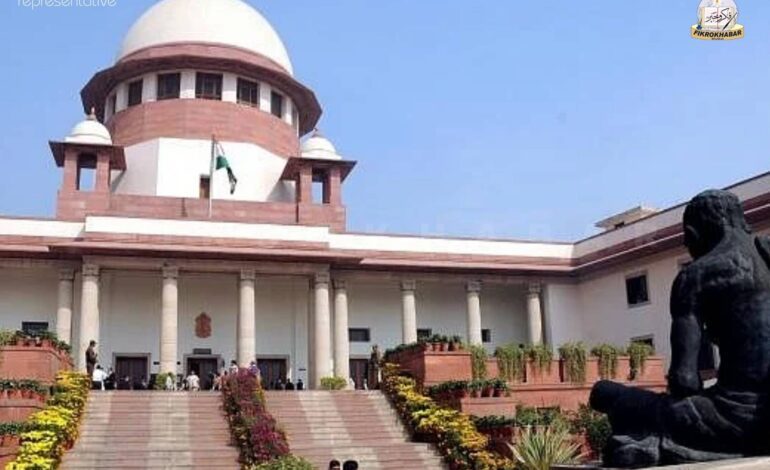

New Delhi, Sept 16 – The Supreme Court on Monday issued notices to ten states over petitions challenging the constitutional validity of anti-conversion laws enacted to regulate religious conversions. The states, most of which are ruled by the Bharatiya Janata Party (BJP), have been directed to respond within four weeks. The next hearing is scheduled six weeks from now.
A bench comprising Chief Justice B.R. Goyal and Justice Vinod Chandran heard the petitions, which argue that the laws violate fundamental rights and are being used to target religious minorities and interfaith couples.
The notices have been sent to the governments of Uttar Pradesh, Madhya Pradesh, Uttarakhand, Himachal Pradesh, Chhattisgarh, Gujarat, Haryana, Jharkhand, Rajasthan, and Karnataka.
While the court acknowledged the seriousness of the matter, it declined to grant an interim stay on the laws at this stage.
Petitioners Raise Concerns Over Misuse
Petitioners, including rights organisations and individuals, claim the laws are being misused to:
- Harass interfaith couples.
- Disrupt religious festivals and prayer gatherings.
- Enable third parties to file complaints without being directly affected.
Senior advocate Chandra Uday Singh, representing Citizens for Justice and Peace (CJP), said that these so-called “Freedom of Religion” laws are in fact restricting religious freedom. He pointed to recent amendments in Uttar Pradesh, where punishment for conversions linked to marriage has been increased to a minimum of 20 years, and provisions now allow third-party complaints—a shift he compared to controversial financial laws like the PMLA.
He also warned of increasing mob violence against those engaging in interfaith marriages or participating in minority religious practices.
Other Legal Voices Join In
Advocate Vrinda Grover, representing the National Federation of Indian Women, said that her client had filed a similar petition and supported the contention that the laws disproportionately impact religious minorities.
The court was also informed that the Gujarat High Court had stayed certain provisions of the Gujarat Freedom of Religion Act in 2021, and the Madhya Pradesh High Court had taken similar action. Both states have now challenged those stays before the Supreme Court.
Previous Observations by SC
In an earlier hearing, the Supreme Court remarked that religious conversion is a serious issue but should not be politicized. It had sought assistance from Attorney General R. Venkataramani on broader pleas demanding action from the Centre and states against alleged forced conversions.
Despite those concerns, today’s hearing saw a shift in focus towards the constitutional rights of individuals choosing their religion or partner, and whether state laws are unjustly infringing on those freedoms.