Supreme Court Denies Interim Bail to Kashmiri Leader Shabir Ahmed Shah in Terror Funding Case

New Delhi:
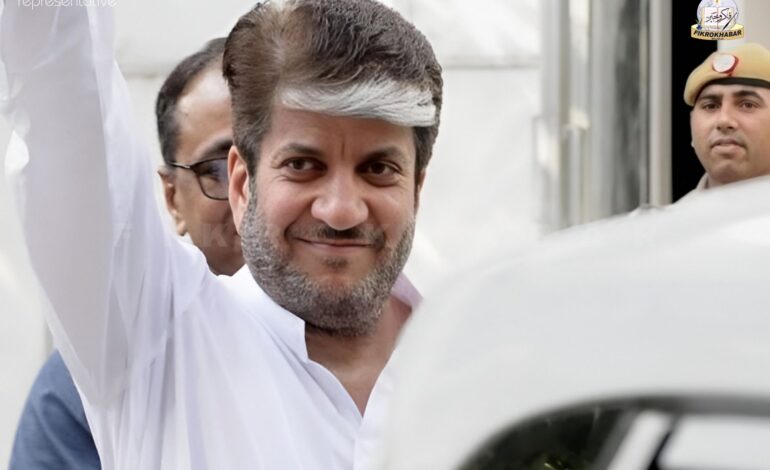
The Supreme Court of India on Tuesday refused to grant interim bail to senior Kashmiri political leader Shabir Ahmed Shah, who is currently in detention in connection with a terror funding case. The decision comes even as the court agreed to issue notice on Shah’s main bail application, Live Law reported.
Appearing for Shah, Senior Advocate Colin Gonsalves pleaded for his release on medical grounds, citing deteriorating health and prolonged incarceration. Gonsalves submitted that Shah, now 70 years old, could be confined to his home under medical supervision if granted temporary relief.
“His days of speeches are over,” Gonsalves told the bench of Justices Vikram Nath and Sandeep Mehta.
However, the bench was not inclined to pass an interim order for release at this stage.
Background of the Case
Shabir Ahmed Shah, the founder of the Democratic Freedom Party, was arrested in June 2019 and later named in the second supplementary chargesheet filed by the National Investigation Agency (NIA) on October 4, 2019.
The NIA has accused Shah of:
- Mobilising the separatist movement in Jammu and Kashmir,
- Paying tributes to families of slain militants,
- Receiving funds via hawala transactions,
- And raising money through cross-Line of Control (LoC) trade to allegedly finance subversive and militant activities.
Initially, Shah was booked under money laundering charges by the Enforcement Directorate (ED). However, the case was later expanded to include terror funding and alleged links to Pakistan—marking the first time Shah was formally charged with criminal offences, despite decades of prior detentions under emergency laws.
Challenging the Evidence and Prolonged Detention
Shah had earlier challenged a July 7, 2023 order of the Special NIA Court, which rejected his bail plea. However, the High Court upheld the decision.
In his current appeal, Shah argues that:
- His name does not appear in the original or first supplementary chargesheets,
- The evidence presented so far is circumstantial,
- And the case involves nearly 400 prosecution witnesses, making a speedy trial unlikely.
He has already spent 38 years in detention, mostly without formal conviction—making him one of the longest-serving political detainees in the region.
Family Allegations and Human Rights Concerns
Shah’s family has raised serious concerns about his treatment in custody. They allege:
- He was harassed and mistreated by escorting officers during a medical visit to Safdarjung Hospital on May 1, 2025,
- He has been denied phone contact with family for the past two years,
- And no family member was allowed to accompany him during medical emergencies.
In a controversial move, the prosecution had also named Shah’s wife, and in April 2019, summoned his daughter Sama Shah, who was only five years old at the time of the alleged offence in 2005.
Legal and Political Context
Shabir Shah has been previously detained under draconian laws such as the Terrorist and Disruptive Activities (Prevention) Act (TADA) and the Public Safety Act (PSA), which allow incarceration without formal charges or trial.
Despite his repeated arrests over the decades, the Indian government has yet to secure a conviction in any major case involving Shah. His prolonged detentions, lack of trial, and deteriorating health have drawn concern from human rights organisations, civil society groups, and international observers.
What’s Next?
While the Supreme Court has denied interim bail, it has agreed to hear Shah’s main bail application, with notices issued for response. The case is expected to return to court in the coming weeks.
Source: Live Law, Court Records, Family Statements.