Supreme Court Adjourns Hearing on Umar Khalid and Others’ Bail Pleas Till November 6
The top court deferred the matter after initial arguments in the Delhi riots “larger conspiracy” case.
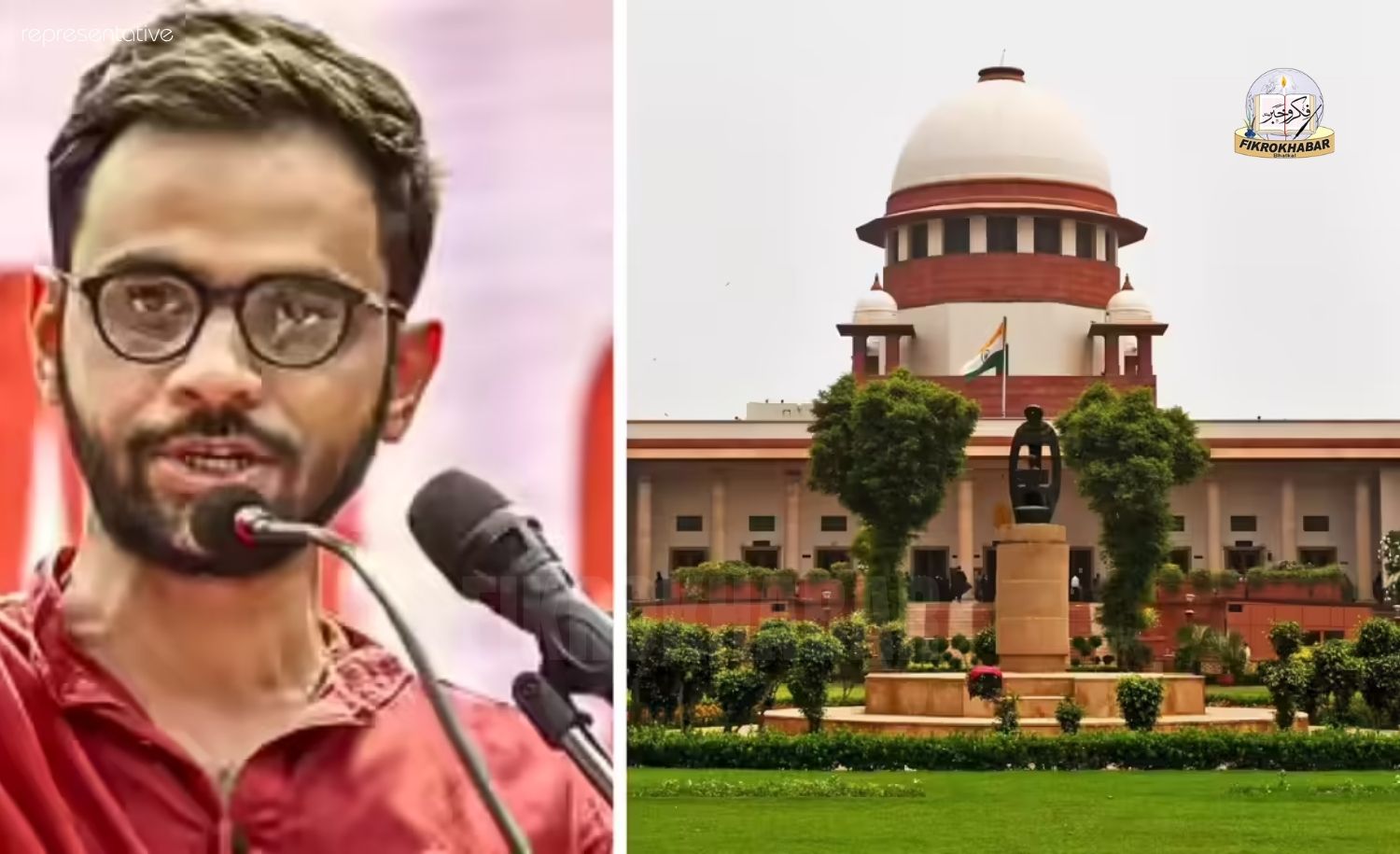

New Delhi: The Supreme Court of India on Monday adjourned the hearing of bail petitions filed by former Jawaharlal Nehru University scholar Umar Khalid and other activists accused in the 2020 northeast Delhi riots “larger conspiracy” case.
A two-judge bench comprising Justice Aravind Kumar and Justice N.V. Anjaria heard the initial submissions from both sides and directed that the next hearing be held on November 6 for a more detailed discussion.
Senior advocate Kapil Sibal, representing Umar Khalid, told the court that his client has been in custody for over five years, despite the investigating agency failing to produce any direct evidence linking him to violence or sabotage. He also pointed out that out of 116 FIRs registered in connection with the riots, 97 have resulted in acquittals, and several trial courts have raised serious doubts about the Delhi Police’s investigation.
Sibal argued that keeping the accused in prolonged detention without the trial even beginning is a clear violation of Article 21 of the Constitution, which guarantees personal liberty.
Senior advocate Salman Khurshid, appearing for co-accused Shifa-ur-Rehman, said his client had been “selectively targeted,” even though no eyewitness had accused him of any unlawful activity. Khurshid added that treating peaceful protest as a criminal conspiracy or an act of violence undermines democratic freedoms. Referring to Mahatma Gandhi’s philosophy of non-violence, he said that peaceful resistance against unjust laws is a citizen’s moral duty.
Another senior lawyer, Siddharth Aggarwal, told the bench that the prosecution has listed 350 witnesses against his client, Meeran Haider, but keeping him imprisoned for five years merely on allegations is unjust and disproportionate.
On the other hand, Additional Solicitor General S.V. Raju, representing the Delhi Police, argued that the accused themselves caused delays in the proceedings and are now “playing the victim card.” He claimed that the riots were not spontaneous but part of a “regime change operation” aimed at destabilizing the government and damaging India’s global image.
According to the police, the protests were deliberately organized during then-U.S. President Donald Trump’s visit to India to draw international attention. They claimed to possess eyewitness accounts, documentary records, and technical evidence pointing to a coordinated network. However, the court noted that these are still prosecution allegations, and conclusive proof is yet to be presented.
The February 2020 riots in northeast Delhi left 53 people dead and hundreds injured, with extensive damage to both public and private property. Following the violence, the police filed a “larger conspiracy” case under the Unlawful Activities (Prevention) Act (UAPA), arresting several student leaders, activists, and local residents.
Umar Khalid was arrested in September 2020, accused of orchestrating violence under the guise of anti-CAA protests. He and other accused maintain that they only participated in peaceful demonstrations that were later misrepresented as incitement to riots.
With the hearing now adjourned, both sides will present detailed arguments before the Supreme Court on November 6. The outcome of this case is expected to have wider implications for civil liberties, the application of UAPA, and the balance of state power in India.