Owaisi’s Early Acceptance of Bihar Poll Results Sparks Debate and Criticism
AIMIM chief faces questions for validating election results while major opposition parties remain silent.
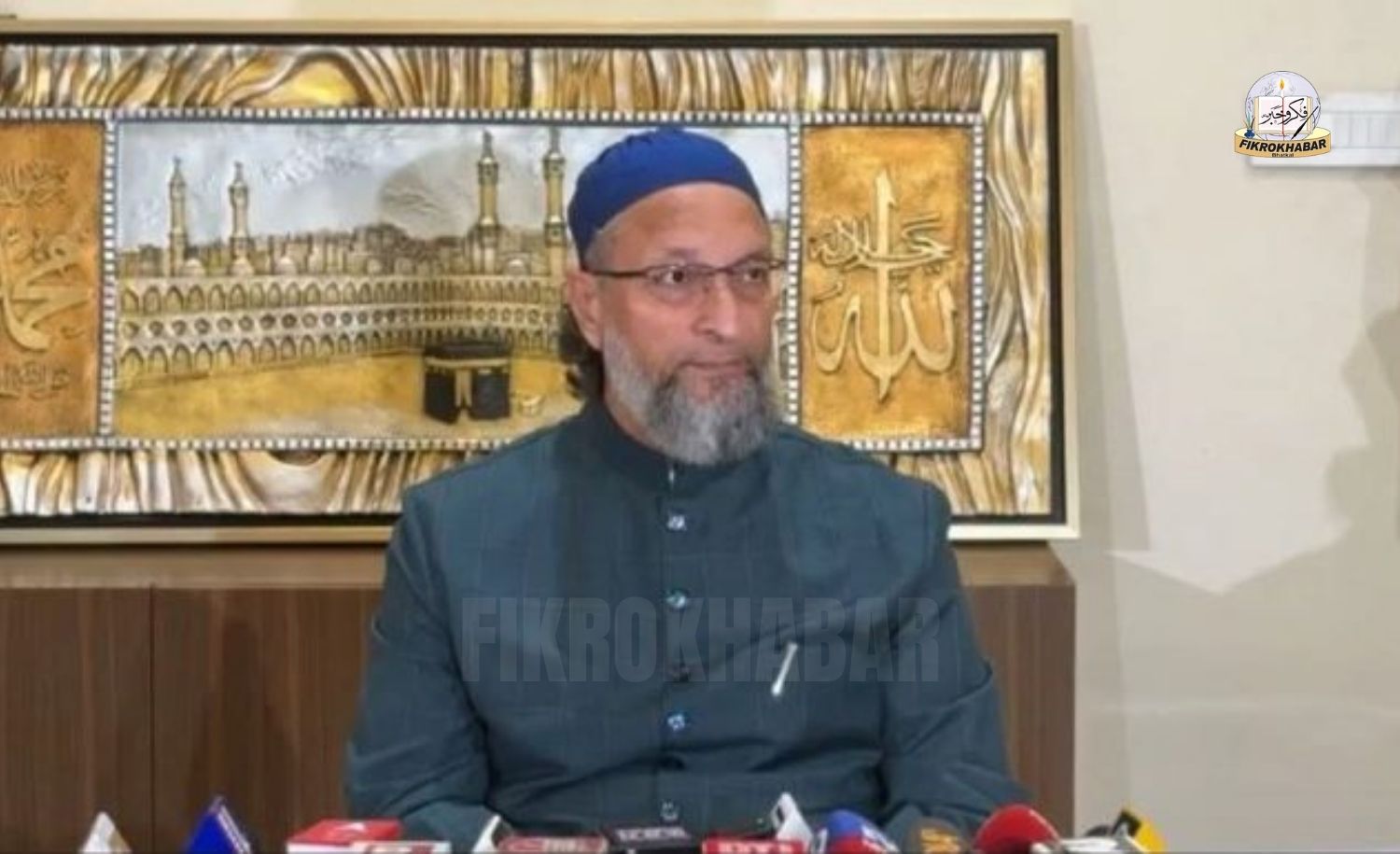

AIMIM president Asaduddin Owaisi stirred political debate on Thursday after becoming the first leader to publicly accept the Bihar election results. His statement came even before key opposition parties such as the Congress and the RJD issued any official reaction, raising questions about the timing and intent behind his prompt acceptance.
Critics argue that Owaisi’s move has provided unnecessary advantage to his political opponents, who are likely to accuse him of legitimising an electoral process that many in the opposition consider questionable. While the Congress and RJD may eventually accept the outcome, their delayed response reflects ongoing doubts about alleged irregularities in the polls.
What has triggered sharper criticism is Owaisi’s silence on the widespread allegations of election manipulation, vote tampering, and the misuse of State Intelligence Reports (SIR), accusations largely directed at Prime Minister Narendra Modi and Home Minister Amit Shah. Bihar was considered particularly vulnerable to such interference. Yet, Owaisi stated that the results represented the “will of the people,” effectively giving the Election Commission a vote of confidence at a time when its credibility is under intense scrutiny.
He also dismissed allegations of interference by central leaders through SIR-based mechanisms—comments that many find troubling, particularly when India’s electoral process is facing serious questions both domestically and internationally. Instead of demanding transparency, Owaisi’s stance appears to assist the Election Commission in countering criticism.
In this context, AIMIM’s victory in five seats may ironically work more in favour of the Election Commission than the Muslim community. The Commission can now point to Owaisi’s acceptance as proof that an opposition party with electoral gains trusts the process, potentially weakening the broader political momentum building against electoral malpractice.
Owaisi, known for his education and political awareness, is expected by many to understand the long-term implications of such decisions. History, they argue, will eventually judge today’s actions. For a leader who presents himself as a voice for the Muslim community, validating a contested electoral process raises uncomfortable moral and political questions.
The opinion among supporters is that while the aim has always been dignified, independent political representation, Owaisi’s current approach may weaken rather than strengthen that cause. Given that Muslims alone cannot form a government in any major state under the present political climate, critics ask why he is distancing himself from potential allies within the broader opposition.
Even if AIMIM wins 10 or 15 seats in multiple states, they argue, it remains unclear whether this would translate into meaningful political power especially if Owaisi alienates opposition parties who are already reluctant to align with him. If alliances could not be secured in his home state of Telangana, his strategy at the national level appears even more uncertain.