Owaisi Says Forcing Vande Mataram as Test of Patriotism Violates Constitution
AIMIM chief tells Lok Sabha that love for the nation cannot be tied to any religious symbol or song.
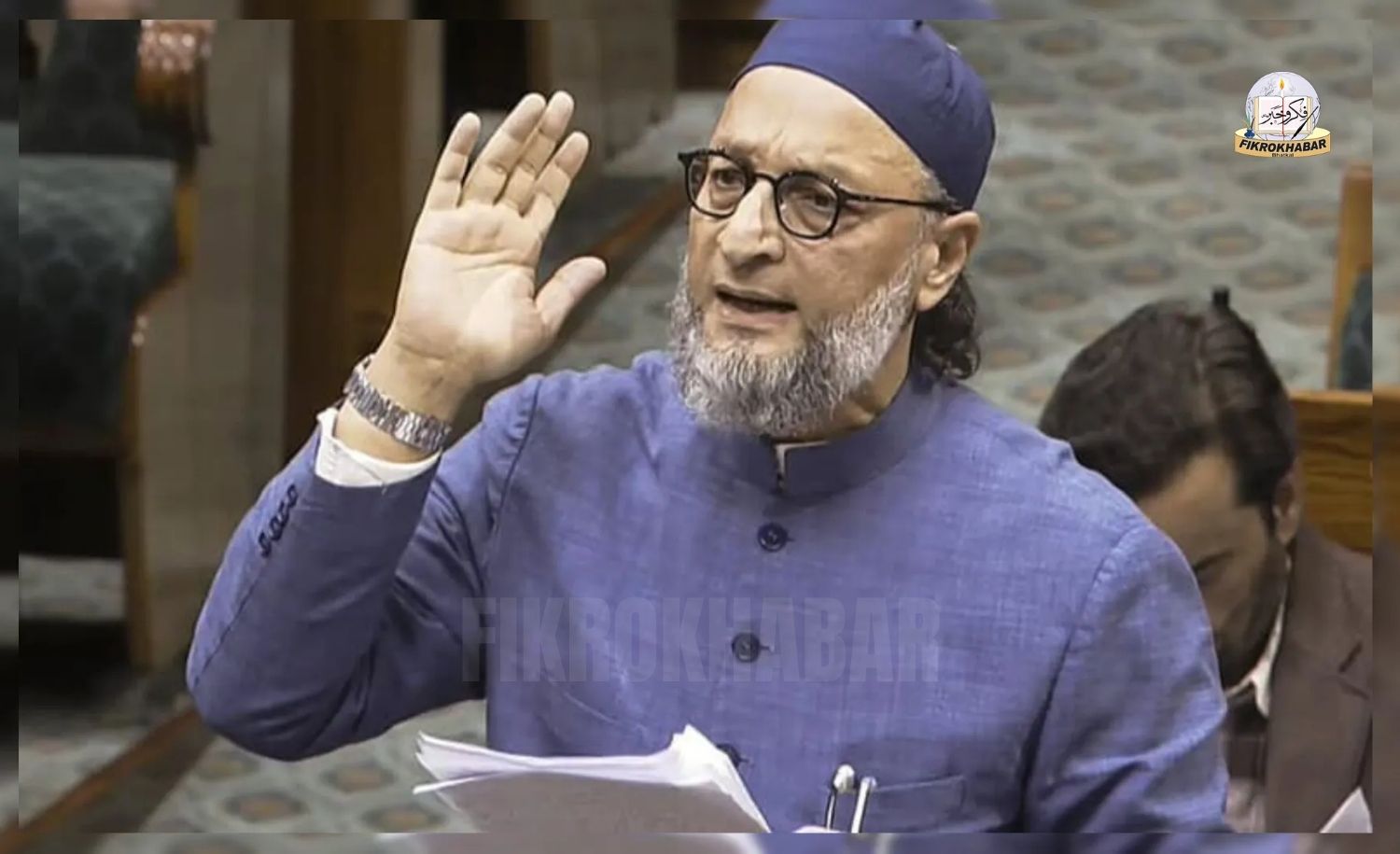

Hyderabad MP and AIMIM president Asaduddin Owaisi on Monday strongly criticized attempts to equate patriotism with the singing of Vande Mataram, saying such efforts go against the spirit of the Constitution and risk widening social divisions.
Speaking during a Lok Sabha discussion marking 150 years of the national song, Owaisi noted that the Constitution begins with “We, the People of India,” not with any religious reference. He stressed that the Preamble guarantees every citizen the freedom of thought, expression, belief, faith and worship, and no state institution can favor one religion over another.
“The Constitution gives equal rights to every citizen. These rights cannot depend on any religious symbol, ritual or text,” he told the House.
Referring to debates in the Constituent Assembly, Owaisi reminded members that certain objections to specific stanzas of Vande Mataram were discussed and addressed. However, he said, the idea of starting the Preamble with the name of a goddess was rejected outright because the framers wanted a secular foundation for the nation.
Owaisi also argued that Indian Muslims have historically opposed Mohammad Ali Jinnah’s two-nation theory, pointing out that this was why millions chose to remain in independent, secular India after Partition.
In a pointed historical reminder to the ruling benches, he said that in 1942 several leaders who are now hailed as champions of nationalism were part of coalition governments with Jinnah’s Muslim League in Sindh, Bengal and the North-West Frontier Province. Those governments, he added, helped recruit around 1.5 lakh Hindus and Muslims into the British Indian Army during World War II.
Citing Supreme Court judgments, Owaisi insisted that no one can be compelled to sing Vande Mataram. “Loving one’s country is essential, but patriotism cannot be measured through a religious ritual or a song. That would go completely against the letter and spirit of our Constitution,” he said.