Nine Years On, JNU Students March Demanding Justice and Answers in Najeeb Ahmed’s Disappearance
Students rally on campus, calling out institutional silence and demanding accountability as Najeeb Ahmed remains missing since 2016.
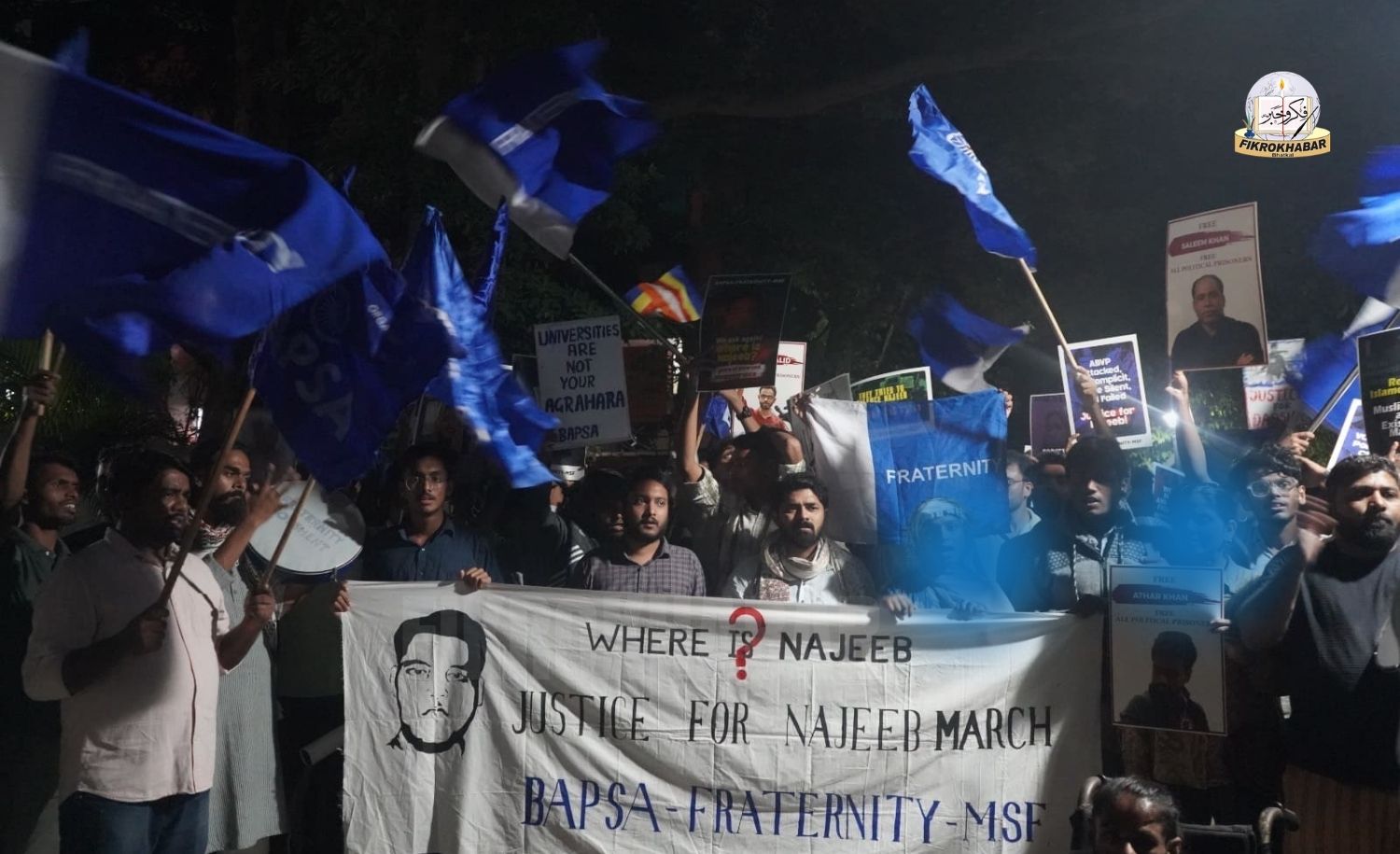

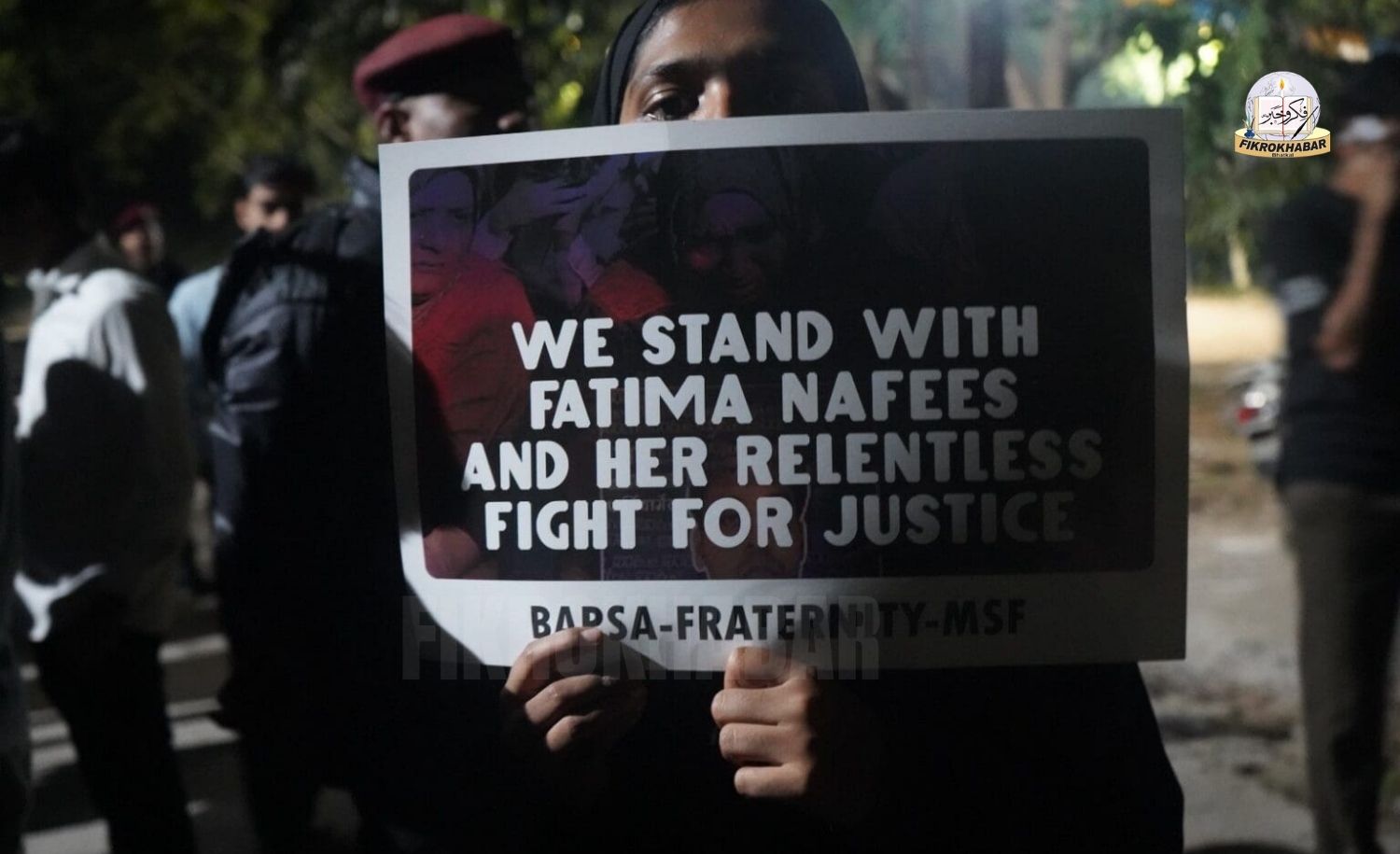
As October 15 marked nine years since the unexplained disappearance of Jawaharlal Nehru University (JNU) student Najeeb Ahmed, students across campus came together once again to demand answers and justice. The powerful “Justice for Najeeb” march, held Tuesday night, saw participation from groups like the Birsa Ambedkar Phule Students’ Association (BAPSA), Fraternity Movement, and Muslim Students Federation (MSF).
The question they raised, as haunting today as it was in 2016, echoed across JNU: “Where is Najeeb?”
Najeeb Ahmed, a first-year MSc Biotechnology student from Badaun, Uttar Pradesh, was allegedly assaulted by members of the Akhil Bharatiya Vidyarthi Parishad (ABVP), the student wing of the RSS, during a routine hostel election campaign. He vanished from outside his hostel, Mahi-Mandvi, on the night of October 14, 2016, and has never been seen since.
Despite investigations by the Delhi Police, Special Investigation Team, Crime Branch, and the Central Bureau of Investigation (CBI), Najeeb’s whereabouts remain unknown. In June 2025, a Delhi court accepted the CBI’s closure report, which concluded without finding any conclusive evidence or suspects.
At the Tuesday night march, students carried torches and raised slogans:
“Where is Najeeb?”, “Down with Delhi Police, CBI, and the Vice-Chancellor”, “Down with RSS and ABVP”, and “Justice for Najeeb”. The march started from Ganga Dhaba and passed through various campus locations, including the hostel from where Najeeb disappeared.
‘This is not an individual case, it’s a systemic crisis’
Speaking at the event, BAPSA JNU President Avichal Warke said the protest aimed to demand a simple but unanswered question: Where is Najeeb? He accused ABVP members of assaulting Najeeb and threatening to make him “disappear,” while also criticizing former JNU Students’ Union (JNUSU) leadership for endorsing a statement that labeled Najeeb “mentally unstable.”
Activist Yogendra argued that blaming victims, especially from marginalized communities, has become institutional practice. “This is not just about Najeeb. In every institution, Dalits, Adivasis, Muslims, and women are pushed to the edge blamed for their own distress instead of questioning the system that creates it,” he said.
Fraternity Movement’s Mohammed Alfauz Azmi also criticized the campus Left, accusing them of failing to support Najeeb and instead legitimizing the administration’s narrative. “Will they ever apologize for labeling him mentally ill?” he asked.
‘A planned conspiracy to silence Muslim students’
SIO National President Abdul Hafeez described Najeeb’s disappearance as a calculated move to instill fear in Muslim and marginalized students. “It wasn’t a small fight — it was a deliberate conspiracy,” he said, adding that “institutions failed the police lied, and the CBI abandoned the case.”
MSF’s Shahid noted that the disappearance continues to traumatize the student community. “Nine years have passed, and we still don’t know where one of our own is,” he said. “This isn’t just a tragedy — it’s a political weapon, a weapon of uncertainty.”
Shahid called the collective memory of Najeeb an act of resistance. “We don’t forget. We refuse to forget. Our memory is our fight.”
Fraternity Movement’s Lubaib Basheer said the silence around Najeeb’s case was not accidental but a reflection of institutional complicity. He alleged that Islamophobia has shaped both the media narrative and the handling of the case. “From day one, Najeeb was portrayed as unstable and violent — a narrative constructed to erase the reality of an Islamophobic assault.”
Basheer accused even the progressive student leadership at the time of failing Najeeb. “Instead of standing with a Muslim student under attack, they echoed the narrative of the administration.”
“For us, Justice for Najeeb is not nostalgia. It’s political conscience. It’s resistance,” he said.
Remembering, resisting, refusing to forget
Activist Roushan Kumar recited a poem remembering Najeeb, declaring that despite institutional silence, “Najeeb, you are alive in our songs, slogans, and revolution.”
Protesters also called for the release of anti-CAA activists jailed without trial, asserting that dissent is not sedition. Many also wore keffiyehs and raised slogans in solidarity with Palestine.
The JNU Students’ Union has also announced a candlelight vigil on Friday, October 17, demanding answers from law enforcement under the hashtags #WhereIsOurNajeeb and #BringBackNajeeb.
A legacy of impunity
According to multiple witness accounts, including Najeeb’s roommate, a group of ABVP members entered Room 106 of Mahi-Mandvi hostel around 11:30 PM on October 14, 2016, to campaign for a hostel election. What began as canvassing escalated into a violent assault, with reports of anti-Muslim slurs like “terrorist” and “Pakistani Mullah” used during the scuffle.
A JNU proctorial inquiry later found one ABVP member, Vikrant Kumar, guilty of physically assaulting Najeeb and using provocative, derogatory language.
The ABVP denied the allegations, claiming Najeeb had objected to a religious thread (janeu) worn by one of them — a claim investigators dismissed as a diversion.
Despite multiple investigative efforts including CCTV reviews, phone data extraction, sniffer dogs, and a ₹10 lakh reward no conclusive leads have emerged. None of the nine ABVP-linked students named by witnesses were arrested or seriously interrogated.
A mother’s hope
Najeeb’s mother, Fatima Nafees, remains at the heart of the fight for justice. In interviews, she has expressed both anguish and unshaken hope. She believes her son is alive, and in 2023, she shared that Najeeb’s father had planned to install a nameplate outside their home in Badaun with the names of their sons — so Najeeb could find his way home.
“These agencies failed me,” she said. “But I believe he is still among us.”
She has repeatedly written to authorities, asking them to search prisons and facilities across the country using Najeeb’s photo.
As the movement continues, Najeeb Ahmed’s disappearance has become more than just a missing person case it has grown into a symbol of campus violence, institutional bias, and what many see as systemic failure to protect marginalized students.