Muslim Communities Open Mosques and Madrasas for Punjab Flood Victims


Punjab: As devastating floods continue to ravage Punjab, affecting over 3.87 lakh people and submerging nearly 2,000 villages, Muslim communities across the region and beyond have stepped forward to offer large-scale humanitarian assistance. With more than 14 districts severely affected and 46 lives lost, this disaster is being called the worst in Punjab in decades.
Entire villages have been engulfed by rising waters from rivers like the Sutlej, Beas, and Ravi, destroying crops across more than 1.75 lakh hectares. Farmers, especially those growing paddy, have seen their fields wiped out just ahead of harvest season. Districts like Gurdaspur, Fazilka, and Ferozepur are among the worst hit.
Amid this humanitarian crisis, Muslim organizations and individuals have launched an extensive relief campaign. Mosques and madrasas across Punjab, Haryana, Uttar Pradesh, and Himachal Pradesh have opened their doors to shelter displaced people, while also coordinating the distribution of essential supplies.
In Haryana’s Mewat region, Muslims have initiated a door-to-door campaign, collecting food, clothing, medicines, mosquito nets, clean drinking water, and even fodder for animals. In Ujana village (Jind district), 150 quintals of wheat flour were collected and dispatched to Punjab in tractor trolleys.
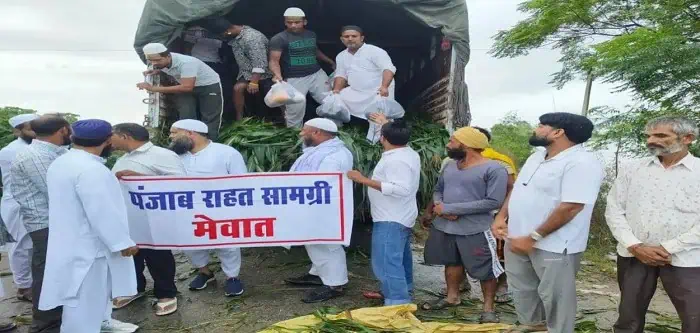
Madrasa Zeenat-ul-Uloom in Narayangarh, Ambala, has become a major hub for relief coordination. According to Maulana Shaukat Ali, over 2,500 food kits and 15 pickup vans loaded with supplies have already been sent to Punjab.
Muslims in Yamunanagar, Jamunanagar, and Ambala have contributed lakhs of rupees in cash, alongside several quintals of food supplies. Many madrasa students, local leaders, and mosque committees have taken an active role in organizing, packing, and transporting relief.
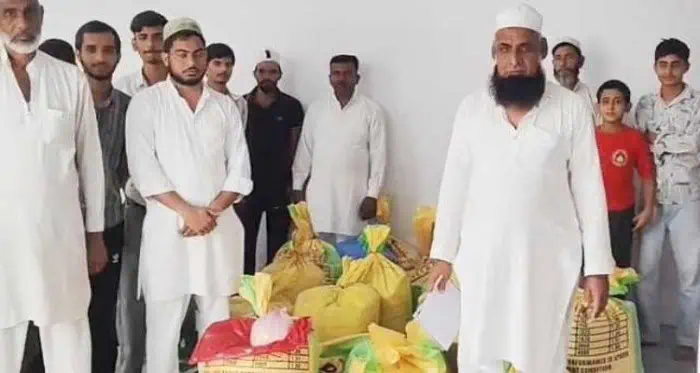
In Dayalpur (Punjab), a meeting of the Muslim community urged people to come forward. Local leaders including Haji Khushi Muhammad, Maulana Amanullah, and Maulvi Abdul Hameed personally visited flood-hit areas to understand needs on the ground — especially fodder and medicine for livestock.
The support has not been limited to Punjab and Haryana. In Uttar Pradesh, madrasa committees from Sewal Khas and Jani Khurd have raised over ₹2 lakh for relief materials. Locals are contributing ration and homemade wheat flour, with nearly nine vehicles scheduled to deliver aid to affected areas.
Anjuman Islamia Committee in Nahan, Himachal Pradesh also mobilized efforts. On Friday evening, four vehicles loaded with supplies left for Punjab. Committee president Bobby Ahmed stated that it was a collective duty to support those who have lost homes, livelihoods, and loved ones.
The Muslim relief efforts have also gained appreciation on social media. Devendra Pal, a Sikh community member, shared videos of aid being distributed through the Shahi Jama Masjid in Ludhiana, calling it a “flood of love” from Muslim brothers and sisters. “Our common kitchens are lit up by the unity of Sikh and Muslim communities,” he wrote.
This united effort of humanity and compassion has turned mosques and madrasas into centers of relief and hope for thousands affected by the disaster.