Hidden Israeli-Linked App on Budget Samsung Phones Raises Spyware Fears
Security researchers warn that the pre-installed, non-removable "AppCloud" can collect data, download files, and reactivate itself without user consent.


Users of Samsung’s budget and mid-range smartphones across West Asia and North Africa have uncovered a hidden, non-removable system app with concerning permissions — one that cybersecurity experts warn could be used for surveillance.
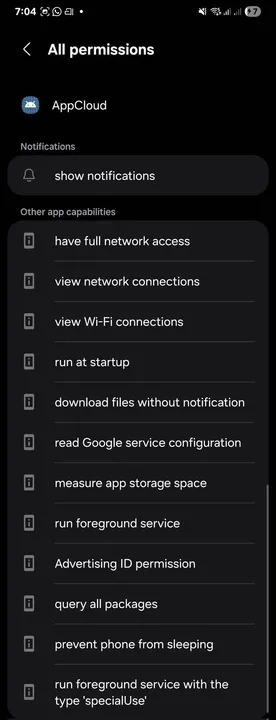
The app, called “AppCloud,” was developed by ironSource, an Israeli-founded software company now owned by US tech giant Unity. Samsung describes it as a “marketing tool,” but the app sits deep within the phone’s system software, cannot be uninstalled, and holds permissions that allow it to access network information, download files, and keep the device awake — all without appearing as an icon or asking for user consent.
According to the International Cyber Digest (ICD), the app reactivates itself after every system update, even if disabled. “The app is installed by Samsung on the phone. Even if you disable it, it keeps activating itself after every update,” the newsletter reported, calling it “spyware” due to its ability to collect data and receive capability-expanding updates.
The issue was first flagged by regional digital rights group SMEX, which criticized Samsung for “forced bloatware installations” tied to ironSource, warning that AppCloud is “deeply integrated” in ways ordinary users cannot control.
IronSource has a controversial history — its earlier flagship product, InstallCore, was often flagged by security vendors as a potentially unwanted application due to stealth installation methods. The company has been part of an Israeli tech ecosystem known for population-level tracking and behavioral targeting tools.
Samsung released a statement saying it “takes the protection of our users’ data very seriously,” but did not clarify why AppCloud cannot be removed or what specific data it accesses.
Critics note that the app appears mainly on budget models sold in regions with weaker privacy laws, raising concerns about digital inequality. “They’ve been able to do this largely in regions where privacy laws and regulatory oversight are weaker,” ICD noted.
Source: TRT World