Epstein Emails Point to 2019 Outreach to PM Modi, Links With BJP Figures and Indian Business Leaders
Newly released documents show Jeffrey Epstein sought political and business connections in India, including attempts to arrange a meeting involving Prime Minister Narendra Modi.

Newly published documents from the U.S. House Oversight Committee, along with around 18,000 emails obtained by Drop Site News, suggest that Jeffrey Epstein tried to build political and business ties in India in the years leading up to his 2019 arrest.
According to the correspondence, Epstein pushed for a meeting between Prime Minister Narendra Modi and former Trump adviser Steve Bannon in early 2019. He told Bannon that meeting Modi would be strategically important and later messaged that “Modi on board.”
On the day of Modi’s 2019 election victory, Bannon told Epstein he was preparing a one-hour program on Modi for Indian television. Epstein replied that Modi’s “focus wants to be stopping China.” Epstein kept encouraging the meeting, telling Bannon that the U.S. and India shared key strategic interests and warning him that he was “missing a great opportunity.”
Around this same period, Bannon appeared on Indian TV to discuss Modi and the growing importance of the U.S.–India partnership.
The documents also highlight India’s deepening ties with Israel during the late 2010s. After high-profile visits by Modi and Israeli Prime Minister Benjamin Netanyahu, India signed major defence contracts—including anti-tank and surface-to-air missile systems—making it Israel’s largest arms customer.
Emails and calendar entries published by Drop Site News show that Epstein maintained contact with senior BJP leader Hardeep Singh Puri between 2014 and 2017. At the time, Puri was vice president of the International Peace Institute (IPI), an organization headed by Epstein associate Terje Rød-Larsen. Epstein had at least five scheduled meetings with Puri, including appointments in New York. Puri later joined the Modi cabinet and now heads the Ministry of Petroleum and Natural Gas.
Epstein’s communications also included exchanges with businessman Anil Ambani, whose company Reliance Defence had partnered with Israel’s state-owned defence firm Rafael. In a March 2017 email, Ambani shared a news article about Modi’s upcoming U.S. visit. Epstein responded, “India Israel key, not for email,” and wrote separately that the visit was “part of Israel strategy.”
According to Drop Site, this correspondence coincided with a major expansion of India-Israel defence cooperation and matched Epstein’s broader pattern of involving himself in geopolitical and business networks linked to Israeli interests.
The documents further show Epstein’s attempts to engage with Indian investors as early as 2006, including interest in acquisitions in Dubai and ventures in India’s luxury market.
An older email resurfaced online this week, sparking controversy after Epstein wrote, “girls? careful I will renew an old habit,” in a thread where Puri’s name also appeared. Drop Site clarified that the message was unrelated to Puri and was misinterpreted on social media. A BJP leader later stated that the thread “contains no reference whatsoever to anyone being supplied with girls.”
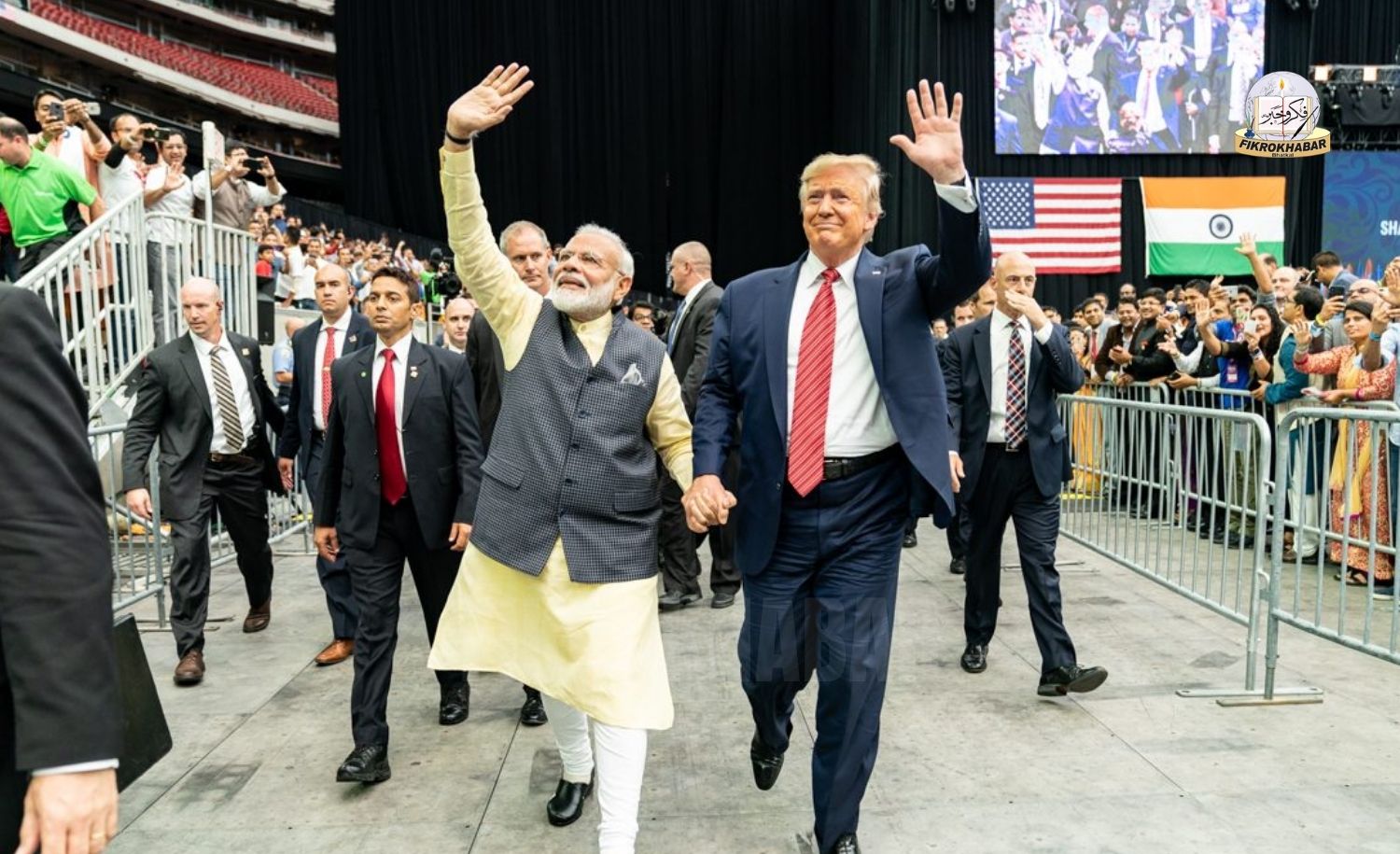
Epstein died in a Manhattan jail in August 2019. Only weeks later, Modi appeared alongside Donald Trump at the “Howdy Modi” event in Houston, where he delivered the line “Abki baar, Trump sarkar,” a remark that drew criticism in the U.S.
In a separate report, the Centre for Financial Accountability (CFA) found that Indian companies and state-owned enterprises are playing a growing role in supporting Israel’s wartime economy through investments and commercial partnerships.