Election Commission Begins Second Phase of Voter List Revision Across Nine States, Three UTs
Nationwide Special Intensive Revision aims to clean up electoral rolls and ensure accurate voter data ahead of upcoming elections.

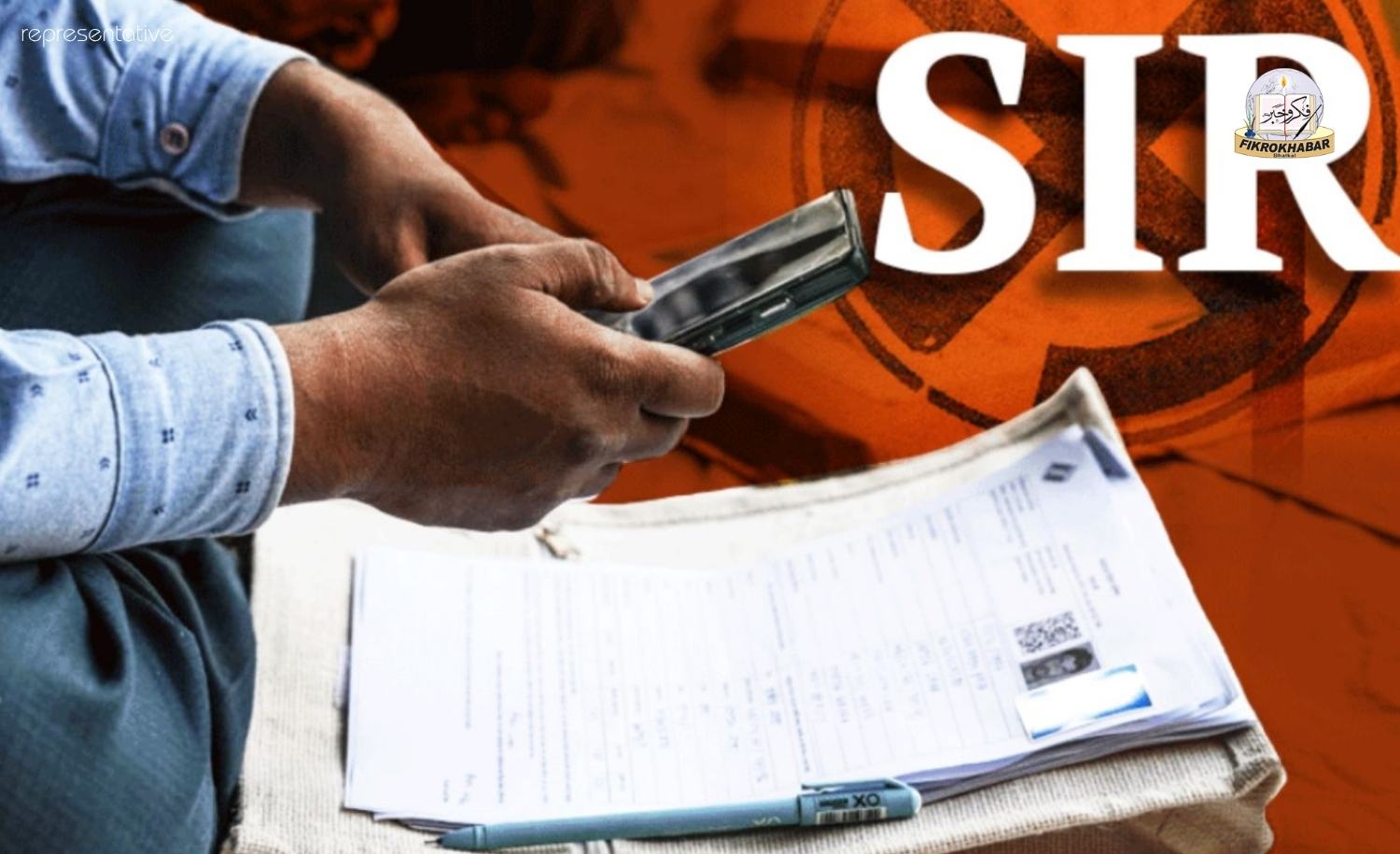
The Election Commission of India (ECI) has launched the second phase of its Special Intensive Revision (SIR) drive a large-scale initiative to verify and update the country’s voter lists across nine states and three Union Territories (UTs) starting Tuesday, November 4.
This nationwide revision aims to improve the accuracy, transparency, and reliability of India’s electoral rolls ahead of future elections.
The new phase follows the recently completed exercise in Bihar, conducted just before the first phase of the state’s Assembly polls. During that process, over 68 lakh names were removed from Bihar’s voter list after thorough verification, as part of the ECI’s effort to delete duplicate, shifted, or deceased entries.
The current phase of SIR will cover nearly 51 crore voters across Tamil Nadu, Kerala, West Bengal, Uttar Pradesh, Madhya Pradesh, Rajasthan, Chhattisgarh, Goa, Gujarat, Puducherry, Andaman and Nicobar Islands, and Lakshadweep. Several of these regions including Tamil Nadu, Kerala, West Bengal, and Puducherry — are due for Assembly elections in 2026.
According to the Commission’s schedule, the enumeration and verification process will continue until December 4. Draft electoral rolls will be published on December 9, and citizens can submit claims and objections from December 9 to January 8, 2026. Hearings and verifications are expected to be completed by January 31, 2026, with the final rolls set to be released on February 7, 2026.
Chief Election Commissioner Gyanesh Kumar, speaking earlier in October, praised the efforts of voters and officials in Bihar for the successful completion of the first phase. He described the SIR exercise as a “purification drive” essential for safeguarding the integrity of India’s electoral rolls.
The CEC also noted that India has conducted eight similar nationwide revisions between 1951 and 2004, with the last one taking place more than 20 years ago. Political parties, he added, have repeatedly requested periodic verification drives to ensure that only genuine voters remain on the rolls.
As part of the process, enumeration forms will be printed and distributed in all participating states and UTs. Once the verification begins, the respective electoral rolls will be temporarily frozen to allow for accurate updates and checks.