Economy, Global Deals to Infiltration Claims: Six Key Points from PM Modi’s Rajya Sabha Speech
Prime Minister highlights 11 years of governance, attacks Opposition amid noisy protests in the Upper House.
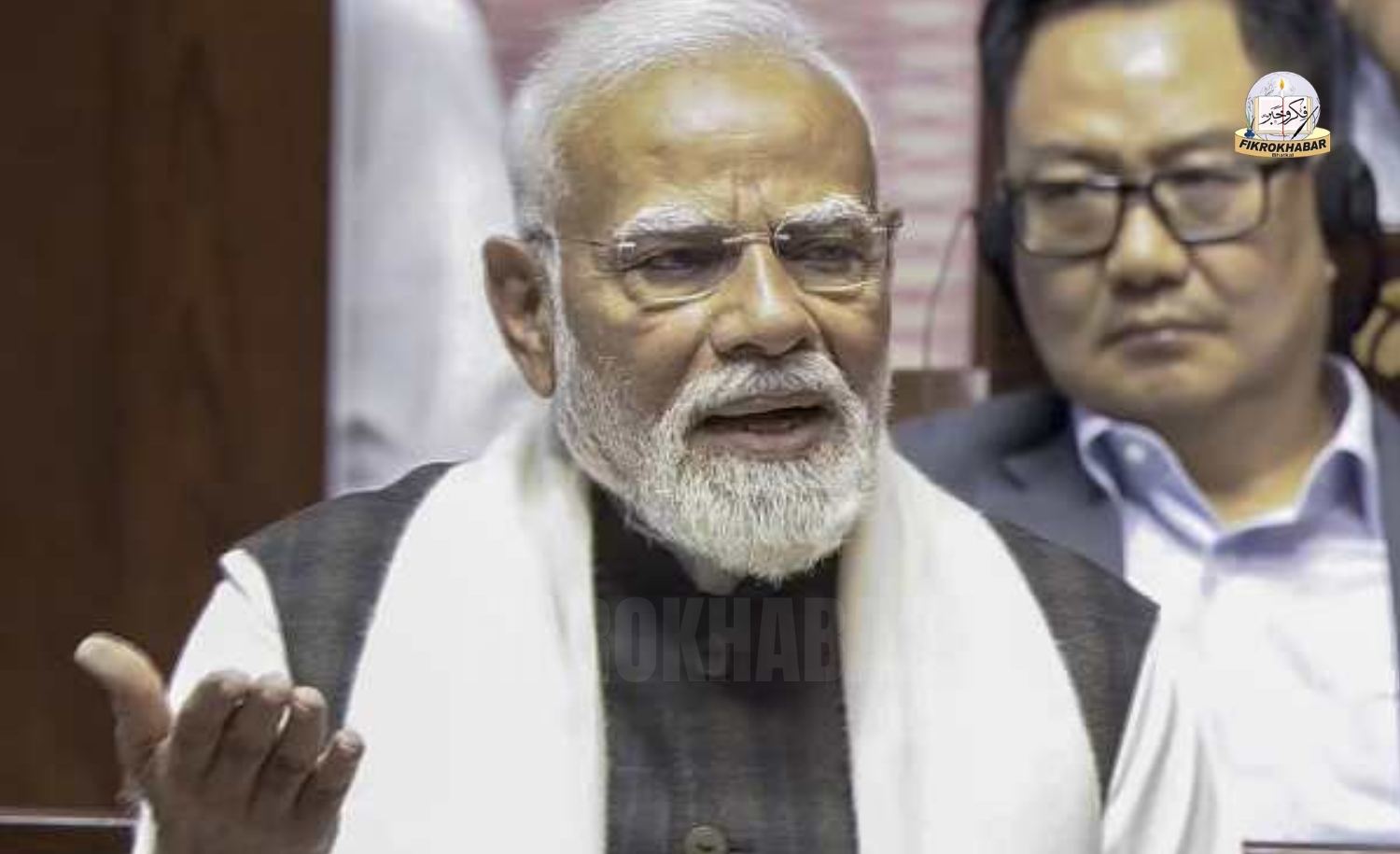

Prime Minister Narendra Modi on Wednesday used his speech in the Rajya Sabha to defend his government’s 11-year record, highlighting economic growth, governance reforms and India’s rising global profile, while sharply criticising the Opposition for what he called negativity and disruption.
Replying to the Motion of Thanks on the President’s Address, Modi described his tenure as a phase of major structural reforms and global repositioning. His address took place amid repeated interruptions and walkouts by Opposition members, adding to the tense atmosphere in Parliament.
Here are the six main takeaways from his February 5 speech:
1. India’s economy through “three numbers”
The Prime Minister explained India’s economic journey using three figures — 6, 11 and 3. He said India was once the world’s sixth-largest economy, slipped to the 11th position due to policy stagnation, and has now risen to third place globally under his government.
According to Modi, this turnaround was the result of sustained reforms, political stability and decisive leadership. He stressed that India was now focused on rapid and large-scale growth rather than slow, incremental progress.
2. Global confidence and future-focused trade deals
Modi said India’s global standing had improved significantly, with many countries viewing it as a stable and reliable partner. He referred to several trade agreements signed in recent years and described the proposed India–European Union agreement as the “mother of all trade deals”.
He argued that at a time when many economies are facing inflation and slow growth, India has emerged as a bright spot due to its macroeconomic stability and reform-driven policies.
3. Banking reforms, PSUs and social progress
The Prime Minister claimed that his government had fixed long-standing problems in the banking sector, stating that non-performing assets were now at historically low levels.
He also spoke about the revival of public sector undertakings, saying many PSUs that were once loss-making had returned to profitability. On the social side, Modi highlighted targeted health initiatives to tackle diseases such as encephalitis and trachoma, pointing to improved delivery of welfare schemes.
4. Sharp attack on the Congress
Modi launched a strong attack on the Congress, accusing the party of lacking vision and direction. He said his government had inherited and corrected decades of poor governance.
Responding to political slogans aimed at him, Modi said attempts to politically bury him would fail, adding that such statements reflected frustration within the Opposition.
5. Criticism of TMC over governance and infiltrators
Turning to the Trinamool Congress, Modi accused the West Bengal government of protecting illegal infiltrators instead of addressing the problems faced by citizens.
He alleged that the state administration was approaching courts to shield infiltrators while ordinary people continued to suffer, remarks that drew protests from Opposition MPs.
6. Disruptions, walkouts and pointed remarks
The Prime Minister’s speech was repeatedly interrupted by sloganeering and walkouts. At one point, Modi remarked that some members had “got tired and left”, underlining the confrontational mood in the House.
His Rajya Sabha address came a day after similar disruptions in the Lok Sabha prevented him from delivering a full reply there, an unusual situation during the Motion of Thanks debate.