DMK Moves Supreme Court Against ECI’s Voter List Revision, Calls It a “De Facto NRC”
Tamil Nadu’s ruling party accuses Election Commission of exceeding its powers through citizenship-style verification under the Special Intensive Revision exercise.


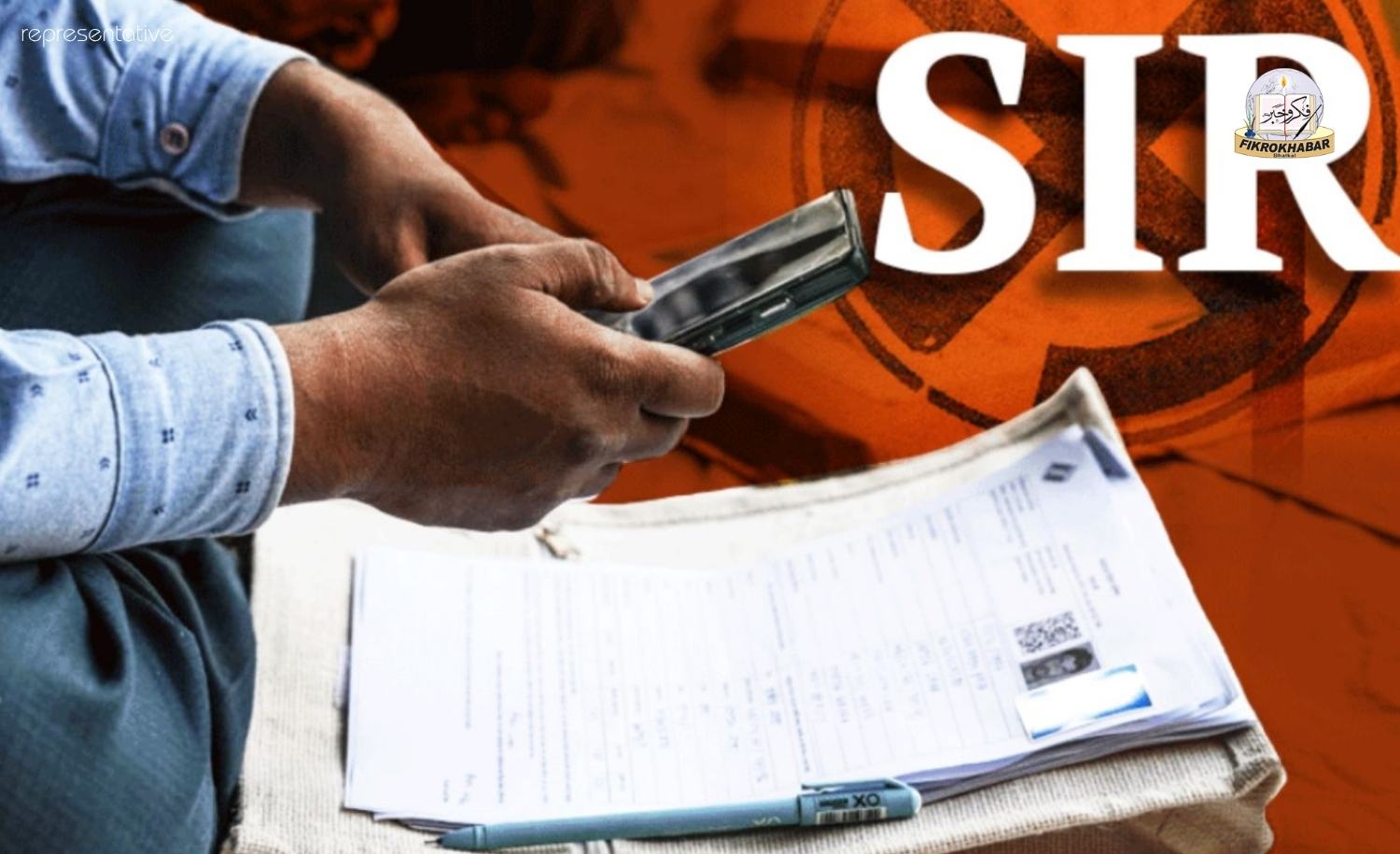
The Dravida Munnetra Kazhagam (DMK) has approached the Supreme Court, alleging that the Election Commission of India’s (ECI) ongoing Special Intensive Revision (SIR) of electoral rolls amounts to a “de facto National Register of Citizens (NRC)” and poses a threat of large-scale voter deletions.
In a writ petition filed under Article 32, the DMK claimed that the ECI’s orders issued on June 24 and October 27, 2025, represent “constitutional overreach” by introducing citizenship-type verification that goes beyond the Commission’s mandate.
The party pointed out that Tamil Nadu had already completed its Special Summary Revision (SSR), with final rolls published on January 6, 2025, and ongoing provisions for regular updates. Despite this, the ECI directed a fresh SIR under Article 324 of the Constitution and Section 21 of the Representation of the People Act (RPA), 1950.
According to the DMK, the SIR requires voters to resubmit documents from a restricted list of 13 IDs—excluding common proofs such as Aadhaar, ration cards, PAN, and voter IDs—to confirm their eligibility. The party argued that verifying citizenship is the sole responsibility of the Union Government under the Citizenship Act, 1955, and that no such provisions exist in the RPA, 1951, or the Registration of Electors Rules, 1960. It also said the ECI introduced these changes without the parliamentary notification mandated under Section 28(3) of the RPA.
The petition further alleged that Booth Level Officers (BLOs) have been given broad powers to label voters as “absent,” “shifted,” or “duplicate” based on neighbourhood inquiries, leading to automatic deletions if voters fail to respond. Additionally, Electoral Registration Officers can refer “suspected foreign nationals” to citizenship authorities, bypassing standard legal procedures.
The DMK expressed concern that the timeline for the SIR set to conclude by February 7, 2026—coincides with the monsoon and festival season, limiting citizens’ ability to appeal deletions. The claim-and-objection window, from December 9, 2025, to January 31, 2026, reportedly overlaps with the verification period, making redress difficult.
Citing Bihar’s example—where over 68 lakh names were deleted during a similar drive—the DMK warned that the SIR could disenfranchise poor, migrant, and marginalized voters, as well as women and youth. The party argued that the ECI’s orders violate Articles 10, 14, 19, 21, and 326 of the Constitution, which safeguard equality, the right to vote, and the federal structure. It has urged the Supreme Court to strike down the SIR directives as unconstitutional.
Reacting to the development, Tamil Nadu Chief Minister and DMK President M.K. Stalin said his party would “resist disenfranchisement and defeat #VoteTheft,” accusing the ECI of using “opaque tactics” to erase voters who oppose the government.
Meanwhile, Tamilaga Vettri Kazhagam (TVK) leader Vijay criticized the DMK for “political hypocrisy,” noting that Kerala’s assembly had passed a resolution against the SIR while Tamil Nadu’s had not. He urged opposition parties to unite in challenging the voter roll revision.