Congress Working Committee Meets to Plan Action Against Centre Over New Rural Jobs Law
Top Congress leaders discuss strategy after MGNREGA is replaced by VB-G RAM G Act.
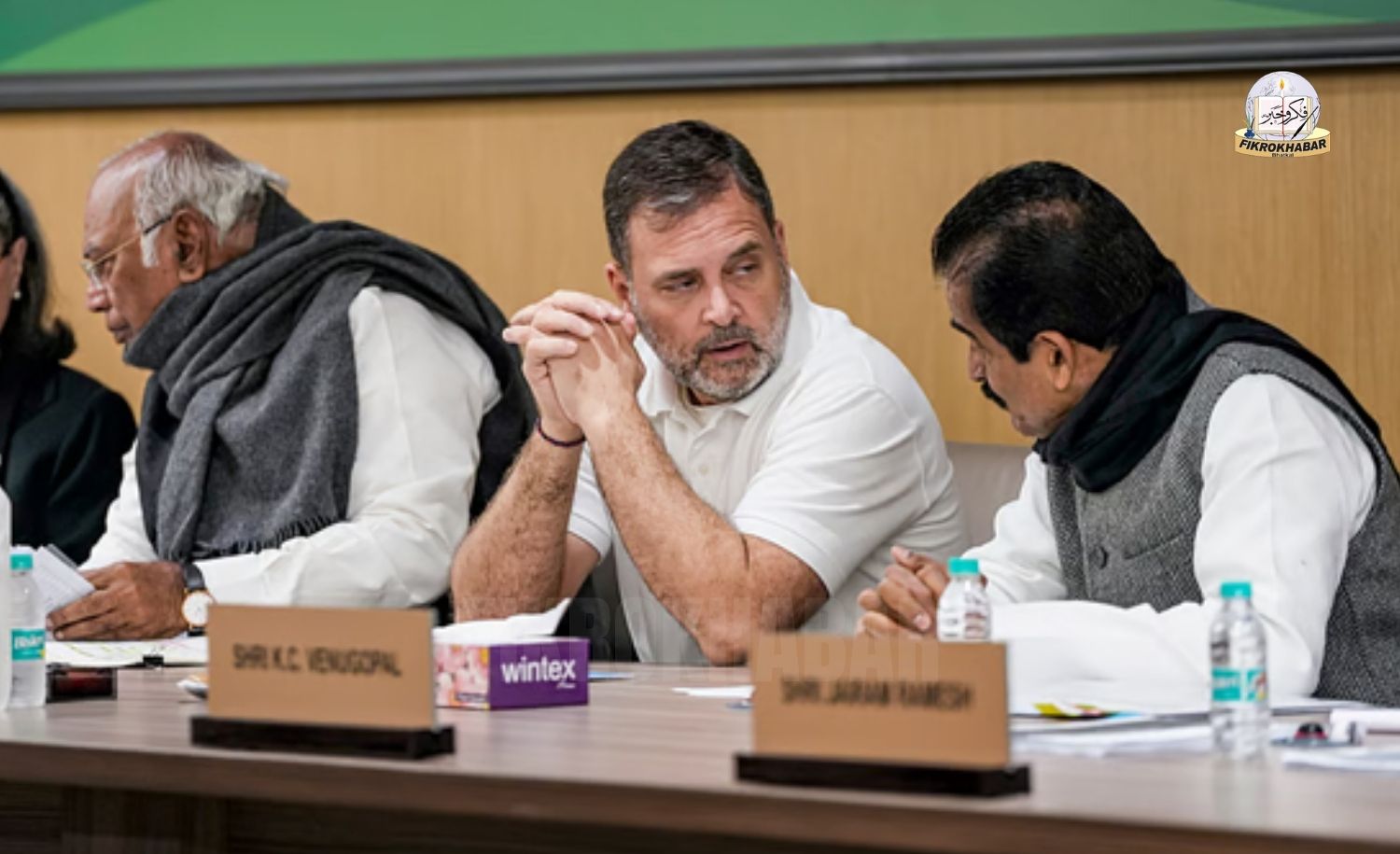

Senior Congress leaders on Saturday attended an important meeting of the Congress Working Committee (CWC) in New Delhi to discuss the current political situation and decide the party’s next course of action against the central government.
The meeting focused mainly on the government’s decision to repeal the Mahatma Gandhi National Rural Employment Guarantee Act, 2005 (MGNREGA) and replace it with the new Viksit Bharat–Guarantee for Rozgar and Ajeevika Mission (Gramin) Act (VB-G RAM G).
The extended CWC meeting was attended by Congress president Mallikarjun Kharge, Congress Parliamentary Party chairperson Sonia Gandhi, and Leader of Opposition in the Lok Sabha Rahul Gandhi. Chief Ministers from Congress-ruled states—Karnataka, Telangana, and Himachal Pradesh—were also present, along with presidents of Pradesh Congress Committees (PCCs) from across the country.
The meeting comes at a crucial time, ahead of Assembly elections scheduled next year in Assam, Kerala, West Bengal, Tamil Nadu, and Puducherry. Party leaders are expected to discuss election strategy as well as the broader political roadmap.
According to party sources, the Congress is preparing an action plan to challenge the Centre over the scrapping of MGNREGA, a flagship rural employment scheme introduced during the UPA government. The new VB-G RAM G law was passed during the recently concluded winter session of Parliament and has already received the assent of President Droupadi Murmu.
The Congress and other opposition parties have criticised the move, arguing that removing Mahatma Gandhi’s name from the scheme is disrespectful and undermines the legacy of a landmark social welfare programme.
Under the new law, a statutory guarantee of 125 days of wage employment per financial year has been provided to rural households whose adult members are willing to do unskilled manual work. However, unlike MGNREGA, which was fully funded by the Centre, the new scheme requires shared funding between the Centre and states in a 60:40 ratio.
Opposition leaders have expressed concern that the funding structure could weaken rural employment support and place additional financial pressure on state governments.