CM Siddaramaiah Slams Governor’s Brief Assembly Address, Hints at Supreme Court Move
Karnataka CM accuses Governor of constitutional violation over refusal to read Cabinet-approved speech


Karnataka Chief Minister Siddaramaiah on Thursday strongly criticised Governor Thaawar Chand Gehlot for delivering only a two-line address to the State Legislature, calling it a violation of constitutional norms and indicating that the government may approach the Supreme Court over the matter.
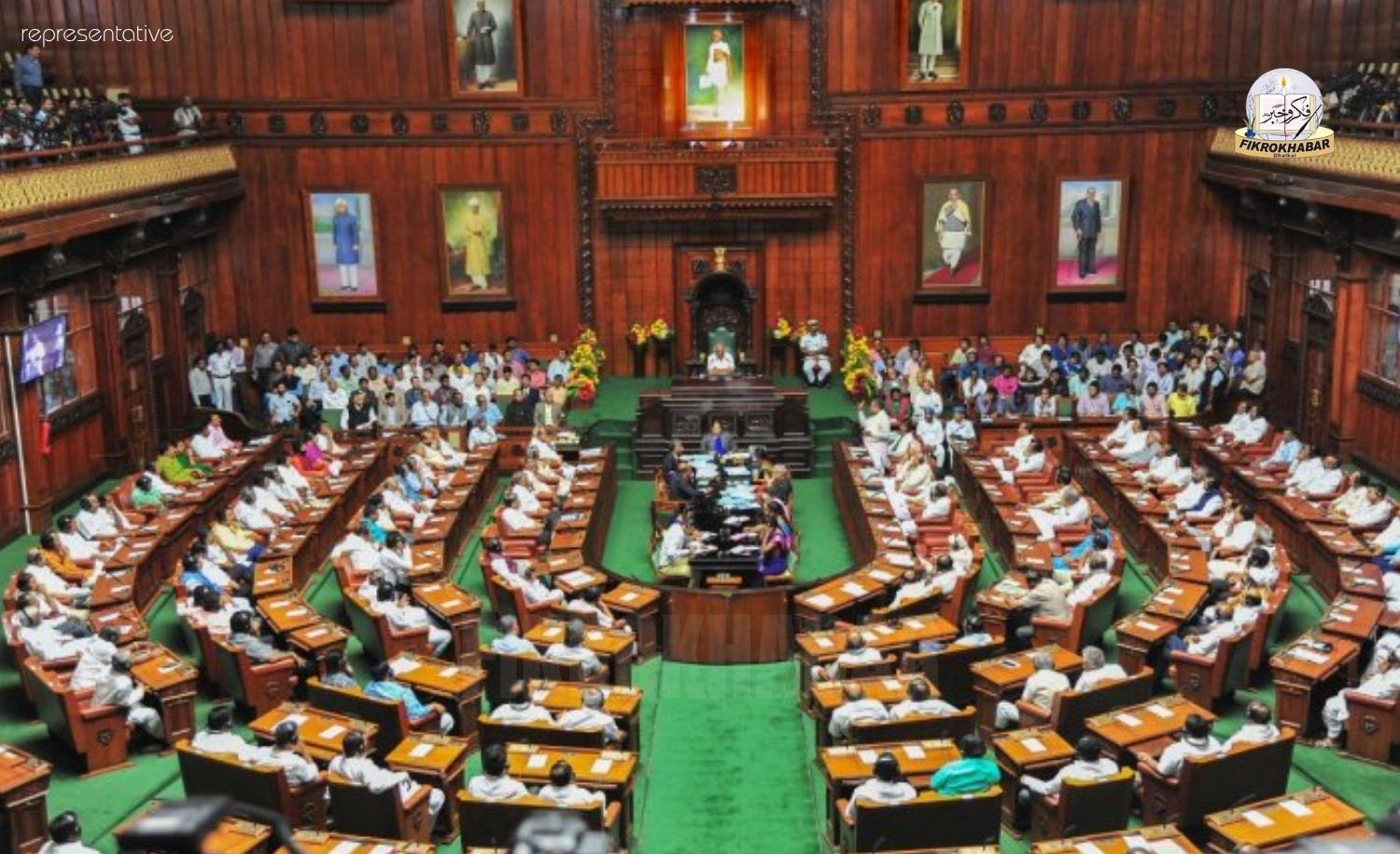
The controversy unfolded during the customary address to the joint session of the Karnataka Legislature. Instead of reading the full speech prepared and approved by the state Cabinet, the Governor offered a brief greeting and concluded the address abruptly.
Speaking to reporters after the session, Siddaramaiah accused the Governor of failing to fulfil his constitutional responsibilities. He alleged that the Governor had acted under pressure from the Union government and described his conduct as unconstitutional.
“The Governor has violated the Constitution by not reading the speech prepared by the elected government,” the Chief Minister said. Referring to Articles 176 and 163 of the Constitution, Siddaramaiah stated that the Governor is bound to deliver the address drafted by the Council of Ministers and cannot substitute it with his own version.
According to the Chief Minister, the Cabinet-approved speech included criticism of the Union government’s newly introduced VB-G RAM G (Viksit Bharat – Guarantee for Rozgar and Ajeevika Mission – Gramin) Act and demanded the restoration of the Mahatma Gandhi National Rural Employment Guarantee Act (MGNREGA), 2005.
“Instead of reading the Cabinet’s speech, the Governor delivered a speech of his own. This clearly violates constitutional provisions,” Siddaramaiah said, adding that the government would stage a protest and was examining legal options, including approaching the Supreme Court.
The Chief Minister also compared welfare policies introduced during the United Progressive Alliance (UPA) government with the new legislation. He said earlier laws such as the Right to Employment, Right to Food, Right to Education and Right to Information were rooted in the directive principles of state policy.
He argued that MGNREGA empowered local panchayats to plan and implement employment programmes, while the new VB-G RAM G Act centralises decision-making at the Centre. “Under the earlier framework, local bodies decided the work. Now, the Centre controls everything. Decentralisation has been weakened,” he said.
The standoff began a day earlier when Governor Gehlot reportedly objected to more than 11 paragraphs in the draft speech prepared by the Congress-led government, particularly sections criticising the Union government over the new Act.
On Thursday, the Governor read only the final line of the address, stating that the government was committed to accelerating economic and social progress in the state, before ending the session and leaving the House.
His abrupt exit led to loud protests by ruling party legislators and further highlighted the growing tension between the Karnataka government and Raj Bhavan.