AIUDF Faces Crucial Test as It Goes Solo in Assam Assembly Elections 2026
After a major setback in 2024, the party banks on rebuilding its core support without Congress alliance.
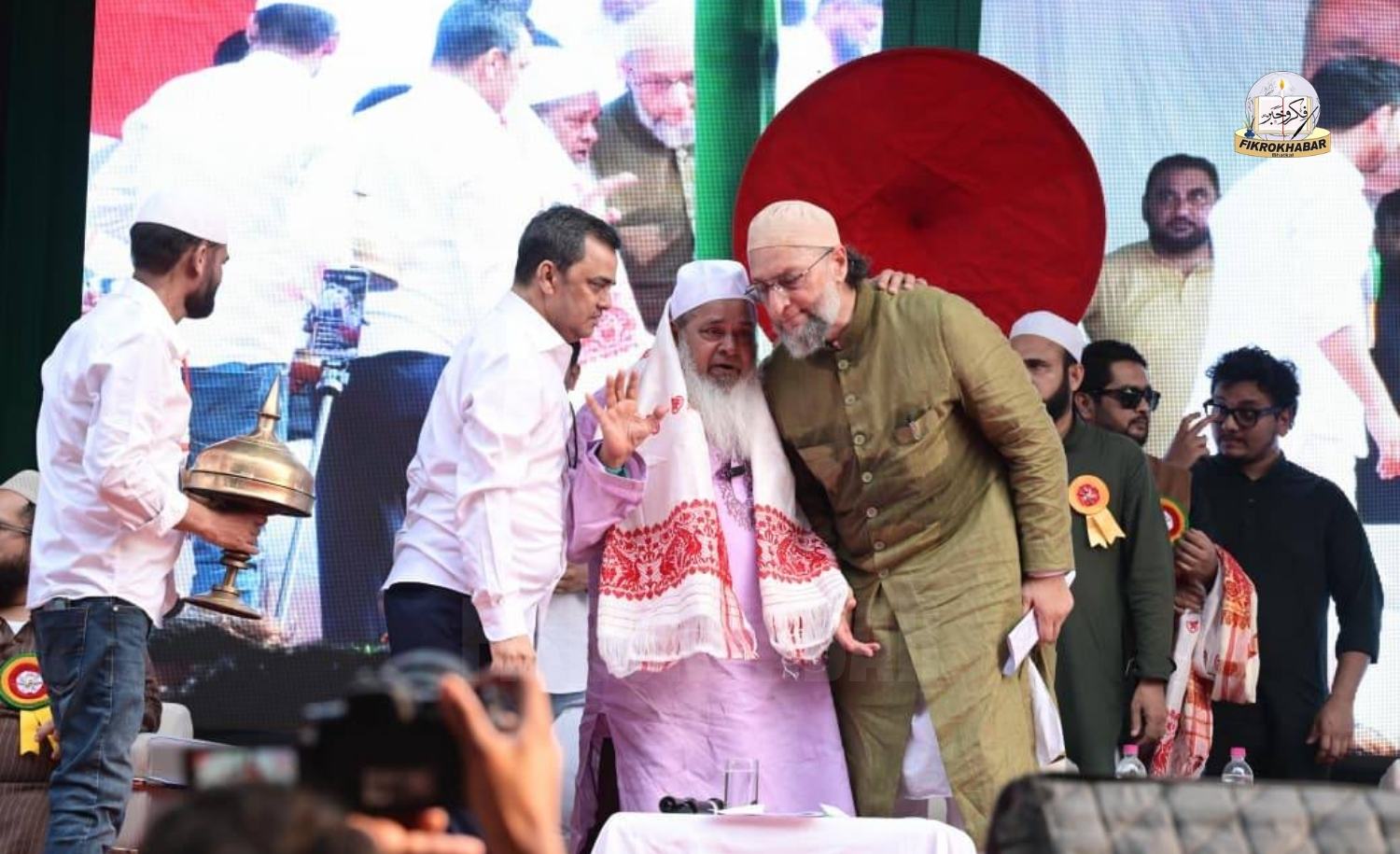

As Assam heads to Assembly elections on April 9, the All India United Democratic Front has chosen to contest independently after failing to secure an alliance with the Congress led bloc. The decision comes at a time when the party is trying to recover from a major political setback.
In the 2024 Lok Sabha elections, AIUDF suffered a crushing blow when its chief Badruddin Ajmal lost the Dhubri seat by a margin of nearly 10 lakh votes to senior Congress leader Rakibul Hussein. The defeat was particularly significant as Dhubri had long been considered Ajmal’s stronghold.
Determined to regain its footing, the party is now focusing heavily on its traditional support base, especially in minority dominated constituencies. As part of its strategy, Ajmal has brought in Asaduddin Owaisi to campaign across the state, hoping his appeal will energise voters and translate into electoral gains.
The AIUDF, which won 16 seats in the 2021 Assembly elections, remains the third largest party in the state after the BJP and Congress. This time, it is fielding 29 candidates, including Ajmal himself from Binnakandi, signalling a push to consolidate its core voter base.
The party was formed in 2005 following the scrapping of the Illegal Migrants (Determination by Tribunals) Act, 1983 by the Supreme Court. The move created political discontent among sections of the Muslim community, particularly the Miya community, who felt alienated. Ajmal stepped in to fill this gap, positioning AIUDF as their political voice.
AIUDF made an impressive debut in the 2006 Assembly elections by winning 10 seats. It expanded further in 2011, securing 18 seats and emerging as a major opposition force. Over time, the party made significant inroads into Congress’s traditional Muslim vote base across constituencies such as Dhubri, Barpeta, and Hojai.
However, its influence has fluctuated over the years. In the 2014 Lok Sabha elections, despite a slight dip in vote share, the party increased its tally to three seats. Yet, dissatisfaction grew among its supporters, who felt the party failed to effectively address key concerns such as NRC issues, D voter cases, and eviction drives.
This discontent was reflected in the 2016 Assembly elections, where AIUDF’s seats dropped to 13. The Congress also began regaining ground among Muslim voters, especially as the BJP strengthened its position in the state.
In 2019, AIUDF tried a limited contest strategy to avoid splitting opposition votes, but it managed to win only one seat. The decline continued into 2024, worsened by constituency delimitation that altered key voter demographics in areas like Dhubri and Barpeta.
In the 2021 Assembly polls, AIUDF briefly aligned with Congress as part of a broader alliance against the BJP. Though the party performed well individually, winning 16 out of 20 contested seats, the alliance failed to secure power. The partnership soon collapsed amid political differences and mutual distrust.
Ahead of the 2024 Lok Sabha elections, Congress refused to partner with AIUDF, citing concerns over its image. The party’s leadership also faced criticism from Congress, which accused it of indirectly helping the BJP by dividing votes.
Now, with shifting voter preferences and a visible tilt of Muslim votes toward Congress, AIUDF finds itself at a critical juncture. By contesting alone and bringing in leaders like Owaisi, the party is attempting to revive its relevance and rebuild trust among its traditional supporters.
The outcome of the 2026 Assembly elections will be crucial in determining whether AIUDF can reclaim its political space or continue to lose ground in Assam’s evolving political landscape.